 EN
EN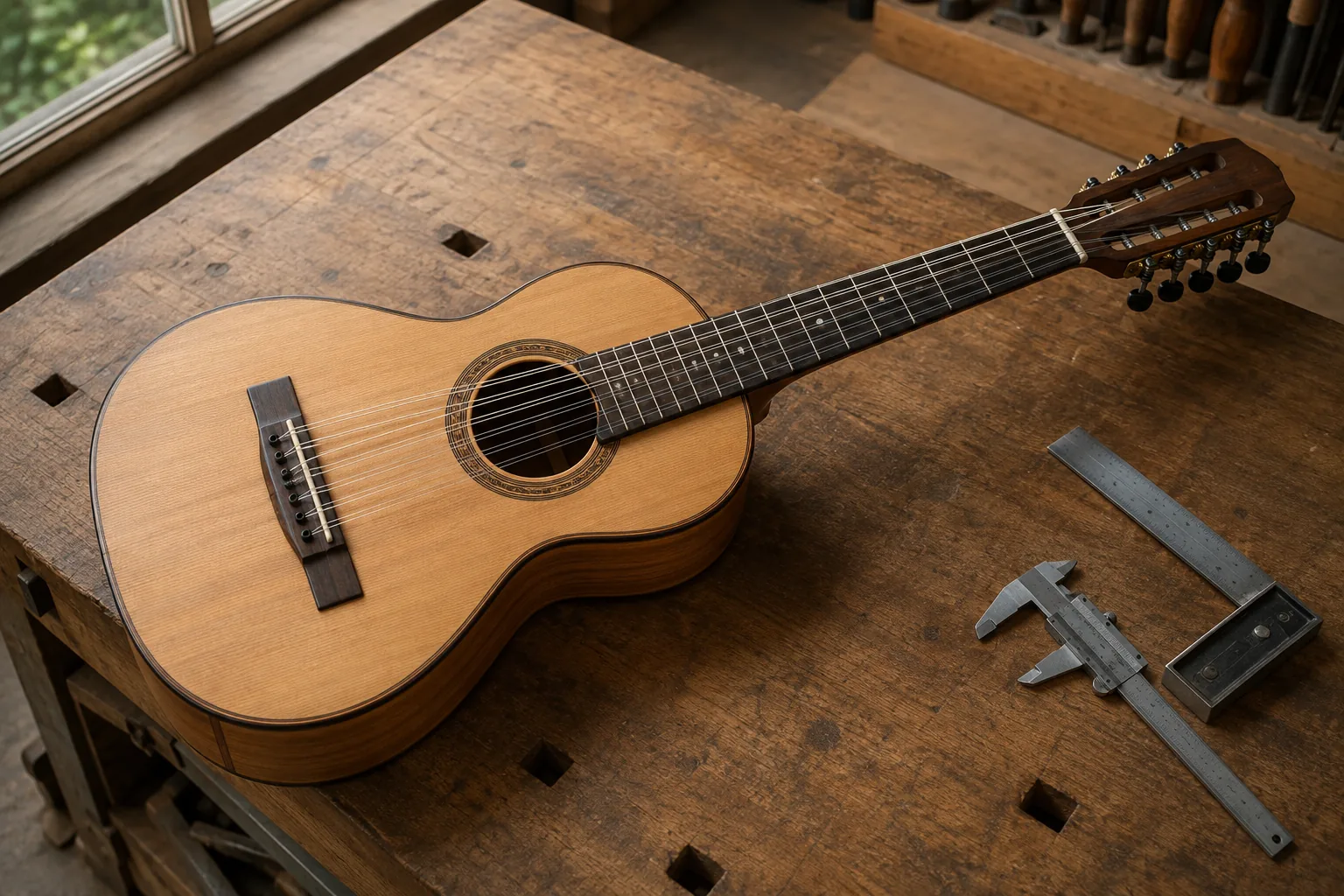
A viola caipira order can go wrong before anybody cuts wood.
The trouble often begins with the name. One buyer writes “Brazilian viola.” Another sends a photograph and calls it a ten-string guitar. A supplier sees ten tuners and assumes the rest. By the time the first sample arrives, both sides may have been discussing different instruments.
For a retail buyer, the safest starting point is simple: identify the instrument as a viola caipira, show the five-course layout, state the tuning and string set, and attach measured dimensions or an approved reference. Do not expect the product name to carry the whole specification.
The short answer: a useful viola caipira brief covers instrument identity, ten strings arranged in five courses, tuning order and octaves, string gauges, scale length, body dimensions, neck and nut, bridge, materials, finish, electronics, labeling and packaging. Every open choice should be settled on the sample record before production.
Start with the correct instrument identity
The viola caipira belongs to a Brazilian musical tradition. The Institute of State Historical and Artistic Heritage of Minas Gerais describes the instrument as commonly having ten strings arranged in five double or triple courses and notes that it is known by several regional names. It also recognizes the variety of tunings and playing traditions around the instrument. That cultural context is useful for buyers because it explains why a generic “small ten-string guitar” brief is not enough.
Use the full name viola caipira in the product brief, quotation and sample label. “Brazilian ten-string guitar” can help an English-speaking buyer understand the category, but it should remain a supporting description. The bare word “viola” is risky in English because many readers will think of the bowed orchestral instrument.
The word “Brazilian” also needs care. It can describe the instrument type and intended market. It does not prove that the product was manufactured in Brazil. Country-of-origin information on the instrument, packaging and retailer listing must remain accurate.
One naming line in the project sheet can prevent months of confusion:
Product type: Viola caipira, ten strings in five paired courses, built to the approved drawing and tuning reference.
That sentence does not finish the design. It makes sure everyone has entered the same conversation.
Five courses are more useful than a string count alone
Ten strings can be arranged in more than one way. The course layout tells the factory and the retailer how those strings work together.
A common viola caipira has five paired courses. Each pair needs its own spacing at the nut and bridge. The distance inside a pair affects how the strings feel under the pick. The distance between courses affects fretting, chord work and the usable width of the fingerboard. A drawing that marks only ten evenly spaced lines misses this relationship.
Ask the supplier to show:
- The number of courses and strings per course.
- The order used to number the courses.
- Pair spacing at the nut and bridge.
- Overall outer-string spacing.
- Nut and saddle slot arrangement.
- Tuner layout and string path through the headstock.
Check the same items on the physical sample. The headstock may look balanced in a photograph while the inner strings rub against adjacent posts. At the bridge, one course may spread wider than the rest. Small spacing errors become much more obvious when a player moves between chords and single-note lines.
This is why “ten strings” should be treated as an identity check, not a completed setup specification.
Write the tuning so nobody has to guess the order
Viola caipira players use more than one tuning. A government cultural source in Brazil specifically notes the multiplicity of tunings associated with the instrument. A buyer should therefore avoid the phrase “standard viola tuning” unless the project file defines exactly what that means.
Record the tuning with four details:
- The notes for all five courses.
- Whether the list runs from the lowest-sounding course to the highest, or in the opposite direction.
- The octave relationship within each pair.
- The exact string set or approved gauges used for the sample.
The string set and tuning belong together. They determine working tension and influence the nut slots, saddle, relief and action. If the sample is approved using one string set and production ships with another, the setup has changed even if the dimensions on the drawing have not.
Retail support depends on the same information. Store staff need a clear tuning card and a replacement-string reference. If those materials are prepared after production, somebody may copy an unrelated tuning from the internet. It is better to approve the customer-facing tuning diagram with the sample.
Choose a reference that the factory can measure
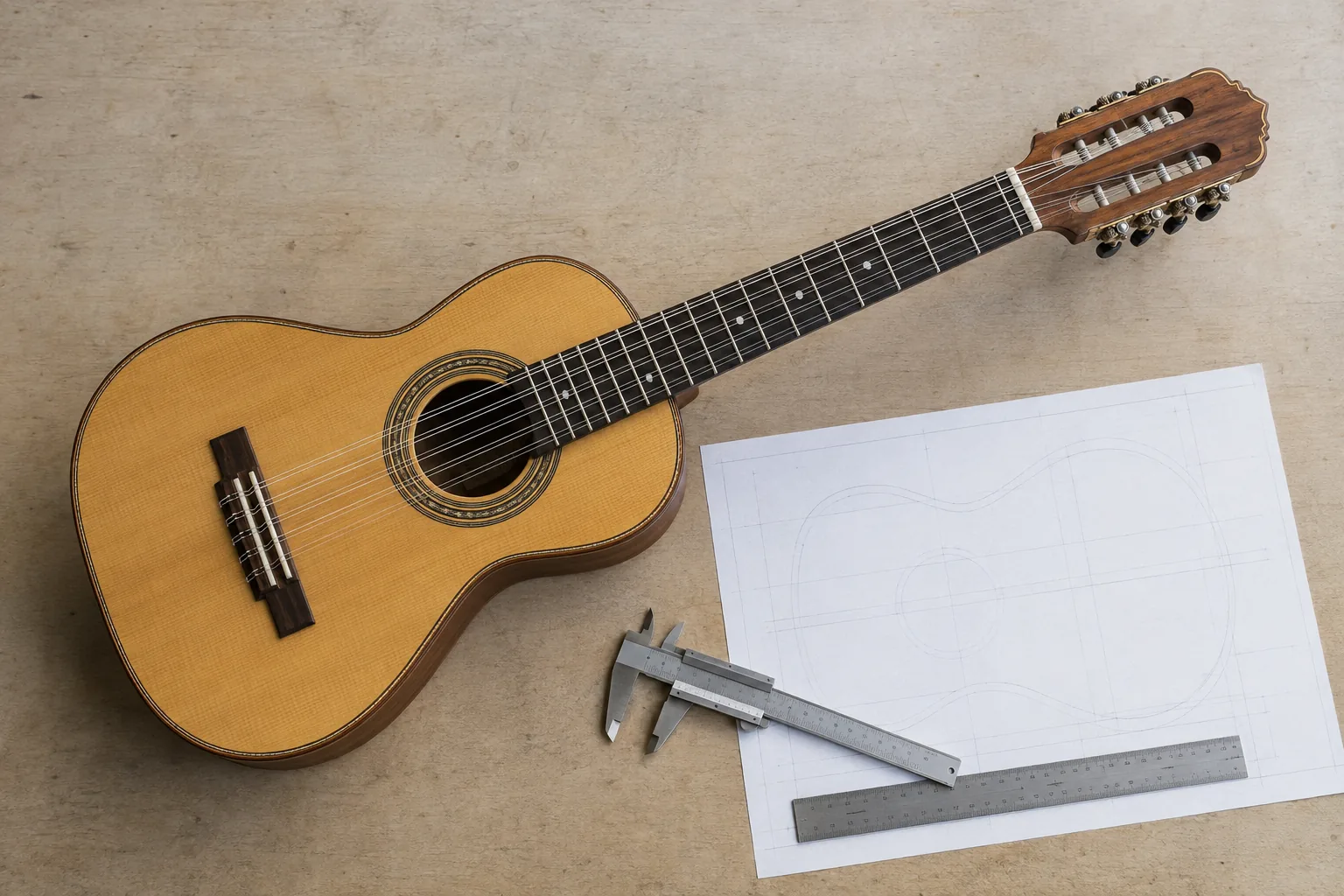
Photographs are useful, but they do not reveal scale length, body depth or course spacing. A perspective image can also make a compact body look larger or a neck look shorter.
The strongest references are:
- A physical instrument that may be measured and documented.
- A complete buyer-owned drawing.
- A previous sample with a dated change list.
- A commercially available reference used only to explain market expectations, without copying protected branding or distinctive artwork.
State what the reference controls. Perhaps it defines the body outline but not the neck profile. Perhaps the headstock shape is only a proportion guide and the new project needs original branding. A reference without those boundaries invites the supplier to copy details the buyer never intended to keep.
The sample development guide explains how to turn reference material into a controlled approval record.
The minimum specification sheet
A practical specification sheet does not need decorative language. It needs fields that can be checked.
| Field | What the buyer should define | What to verify on the sample |
|---|---|---|
| Product identity | Viola caipira and intended market | Name, model code and course layout match all documents |
| String layout | Ten strings, five courses, pair spacing | Correct string path, nut slots, saddle slots and tuners |
| Tuning and strings | Notes, order, octaves and approved set | Sample is tuned and evaluated with the recorded set |
| Scale and frets | Scale length, fret count and body joint | Measurements and fret positions match the drawing |
| Body | Outline, length, widths and depth | Shape and dimensions match the approved reference |
| Neck | Material, profile, nut width and reinforcement | Feel, relief and alignment meet the approved method |
| Top, back and sides | Species or material plus solid/laminated construction | Actual sample matches the quotation wording |
| Bridge and saddle | Material, layout and compensation approach | Location, contact, string path and intonation are checked |
| Finish | Color, sheen, binding, rosette and permitted variation | Appearance is reviewed under consistent lighting |
| Electronics | Acoustic or electroacoustic system and test method | Output, controls, jack and installation pass the agreed test |
| Branding | Original logo files, positions and label text | Correct revision and accurate origin information |
| Packing | Bag or case, protection, carton and included items | Packed sample uses the approved components |
The OEM specification sheet guide provides a useful structure for this record. Adapt the fields to the viola caipira rather than forcing the instrument into a standard six-string guitar template.
Decide whether the range needs one model or several
Retailers often ask for several versions too early. Acoustic and electroacoustic models, different finishes and different wood constructions can quickly turn one new category into many stock-keeping units.
Begin with the customer and the shelf, not the option list. Ask:
- Are customers already familiar with the viola caipira, or will staff need to explain it?
- Will most players use the instrument acoustically, on stage or in both situations?
- Does the store need an accessible first model, a step-up model, or both?
- Which finish can be represented accurately in online photographs?
- Can the store support replacement strings and basic setup questions?
One well-documented model is often more useful than three models whose differences are difficult to explain. If two versions are needed, write a short reason for each one. For example, the acoustic model serves classroom and home use, while the electroacoustic model serves performers who need a direct output. Then give each version its own model code and approval record.
Do not turn “solid top” or “all solid” into a vague quality badge. Define exactly which component is solid and use the same wording in the quotation, label and retail listing. Natural wood will vary in grain and color, so include an acceptable range rather than approving one attractive photograph. The natural wood variation guide explains how to record that range.
Planning a viola caipira range?
Send Vinesmusical the intended market, reference instrument or drawing, course layout, tuning, string set, acoustic or electroacoustic direction, branding and packaging needs. We can review the information that should be settled before sampling. Send your project requirements.
Treat electronics as a separate model decision
An electroacoustic viola caipira needs more than a pickup name in the quotation.
The buyer should define the pickup or system type, control location, output jack, battery access where applicable and the equipment used for testing. The factory should confirm that installation does not interfere with braces, create loose internal wiring or introduce an avoidable rattle.
On the sample, test every control through its working range. Move the cable gently at the jack and listen for intermittent output. Play every course both acoustically and through the agreed amplifier or interface. Check whether the amplified balance hides or exaggerates one course.
Do not borrow an electronics promise from a reference brand. An official product page may show that the market includes electroacoustic Brazilian viola models, but its components and claims belong to that product. Your project needs its own approved system and test record.
If the line includes both acoustic and electroacoustic versions, confirm that the product pages and cartons cannot be confused. A pickup suffix added only at the end of a long model code is easy to miss in a warehouse.
Approve appearance under repeatable conditions
Dark wood, gloss finish and decorative marquetry can look very different under showroom lights, daylight and a phone camera. A buyer who approves appearance from one edited image may reject an acceptable production unit later.
Record the finish name, sheen and reference. Photograph the sample under neutral light from the front, back, sides, neck and headstock. Add close views of binding, rosette, bridge and logo. If natural wood is visible, document acceptable variation.
Check the neck separately from the body. A satin neck and gloss body may be intentional. It may also be an unrecorded assumption. The finish approval guide gives a repeatable method for reviewing color and sheen.
Keep cultural decoration original and properly authorized. A traditional-looking motif found online is not automatically free to copy. If the brand wants marquetry or a regional visual cue, provide artwork it owns or commission a new design.
Inspect the sample as a player and as a retailer
The physical sample has two jobs. It must work as an instrument, and it must arrive as a saleable product with accurate information.
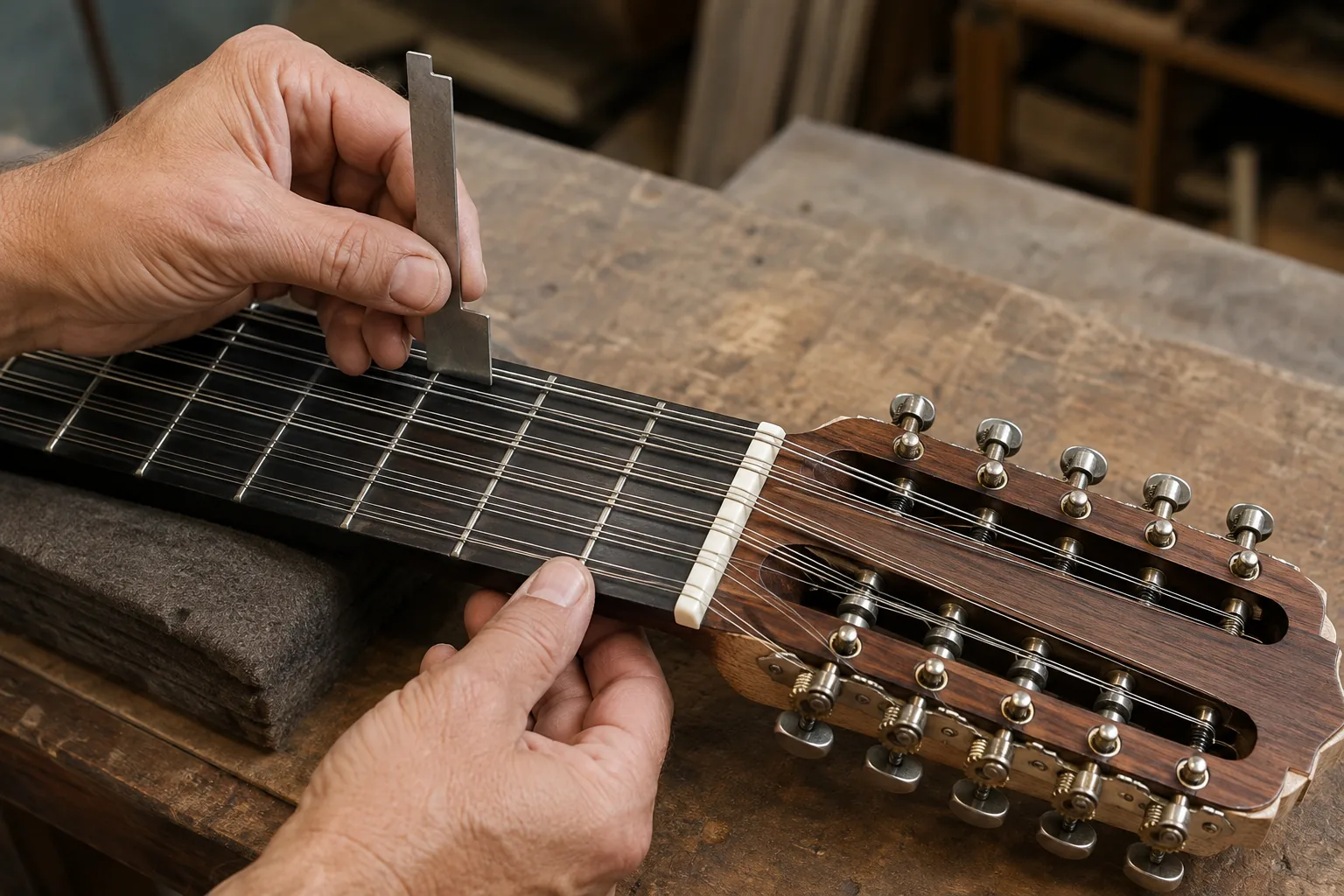
First confirm the document revision. Measure the scale, body and nut. Count ten strings and five courses. Check the tuner layout and string path. Make sure the installed string set matches the sample sheet before judging action or tuning stability.
Tune the instrument using the written tuning order. Play every fret on every string. Listen for buzzes, dead notes, uneven response and sympathetic noises. Check fret ends by hand. Observe whether each pair remains comfortably aligned when fretted and picked.
Retune several times and note any slipping or binding. Do not diagnose every tuning issue as a tuner problem. Nut slots, string installation and contact points can also contribute.
Check intonation using the method agreed in the project. The buyer and factory should use the same tuner, tuning reference, playing pressure and measurement points. A number without a method is difficult to reproduce.
Finally, read the label, carton and tuning card as a customer would. Confirm the product is called a viola caipira, not a ukulele, orchestral viola or unspecified ten-string guitar. Check that origin information is accurate and that the replacement-string guidance matches the approved setup.
Viola caipira sample-inspection checklist
Identity and documentation
- Product name, model code and revision match.
- Ten strings are arranged in the approved five-course layout.
- Tuning diagram states course order and octave relationships.
- Country-of-origin wording is accurate.
- No borrowed brand name or unauthorized artwork appears.
Dimensions and construction
- Scale, body dimensions, nut width and fret count match the drawing.
- Neck alignment and bridge position match the approved reference.
- Quoted top, back, sides, neck and fingerboard construction is present.
- Binding, rosette and other visual details match the recorded revision.
Setup and playability
- The approved string set is installed.
- Pair spacing is consistent at the nut and bridge.
- Relief and action are checked using the agreed method.
- Every fret and every string plays cleanly.
- Tuning stability and intonation pass the recorded test.
- Tuners, nut and bridge allow a clean string path.
Electronics, finish and packing
- Electronics pass the agreed output and control test, if fitted.
- Color and sheen sit within the approved range.
- Logos and labels use the correct files.
- Bag, case, carton and accessories match the packing list.
- The packed sample protects the headstock, bridge and body edges.
Compare quotations by scope, not by one total
Two quotations can use the same product name and cover different instruments.
Put the important fields side by side: string and tuner layout, scale, construction, finish, electronics, accessories, carton, sample scope, documentation and after-sales procedure. Mark every assumption. If one quotation includes a bag and another does not, that is a scope difference, not simply a price difference.
Ask how the approved sample will be translated into production instructions. The answer should include controlled drawings, material references, finish standards, setup method and model-specific packing. A good-looking sample is not enough if the production team cannot reproduce the decisions behind it.
Do not ask for a price before the product identity is clear. A fast quotation based on an available ten-string platform may look efficient, but it can hide the cost of correcting the wrong design later.
Prepare the retail information before the order ships
The product page, sales sheet and carton should use the same facts. Prepare at least:
- Full product name and model code.
- Ten-string, five-course description.
- Approved tuning diagram and string reference.
- Verified materials and construction wording.
- Acoustic or electroacoustic features.
- Measured size and scale information.
- Included bag, case and accessories.
- Accurate origin and importer information.
- Basic care, setup and warranty contact route.
If the store also sells Brazilian cavaquinhos, connect the categories without merging them. The Brazilian cavaquinho sourcing guide explains why related instruments still need separate specifications and retail descriptions.
Review packaging with the finished information inside. A tuning card for another model is a small print error that can create a large number of customer questions. The packaging approval guide covers both protection and pack-out accuracy.
Frequently asked questions
Is a viola caipira the same as any ten-string guitar?
No. Ten strings are only one part of the identity. A common viola caipira uses five courses and belongs to specific Brazilian playing and tuning traditions. The buyer should also define scale, body, tuning, string set and setup.
Is “Brazilian viola” a safe English product name?
It can be supporting language, but “viola caipira” is clearer. The bare word “viola” commonly refers to the bowed orchestral instrument in English. Product pages should explain the category without implying an unverified country of manufacture.
Does every viola caipira use the same tuning?
No. Multiple tunings are part of the instrument’s practice. The project must state the notes, course order, octave relationships and approved string set rather than relying on “standard tuning.”
Should a retailer start with acoustic or electroacoustic models?
Choose from the intended customers and use. An electroacoustic model adds pickup, controls, jack placement and testing requirements. If both versions are needed, give them separate model codes and approval records.
What should be approved before a production order?
Approve the physical sample together with its drawing, materials, course layout, tuning, string set, setup method, finish range, electronics test, branding, retail information and packing. A sample without the matching document revision is incomplete.
Can a supplier recommend specifications?
Yes, but recommendations should be written as proposals and approved by the buyer. The supplier should not silently replace missing fields with a different ten-string product platform.
Conclusion
A successful viola caipira project starts with respect for the instrument’s identity and attention to ordinary production details. Ten strings must become five clearly defined courses. A tuning name must become an unambiguous diagram. A reference photograph must become measured, approved information.
That work makes the sample easier to judge, quotations easier to compare and retail information easier to trust. It also gives the factory a better chance of repeating the approved result.
If you are planning a viola caipira model for retail or distribution, send Vinesmusical your market, reference, course layout, tuning, string set, model direction, branding and packaging requirements. Contact us to review the project brief before sampling.