 EN
EN Español
 Português do Brasil
 Français
 Deutsch
 Русский
A short-scale electric bass can give a product range a more compact playing option; a long-scale model can serve customers looking for a familiar full-scale format. Neither should be chosen by age label or scale length alone. Wholesale buyers need to compare reach, neck feel, balance, the intended setup and the role each model will have in the store.
That is a different question from asking which bass is “better.” A retailer may need both, but stocking both only makes sense if staff can explain the distinction and the instruments genuinely serve different buying needs. Two body colours do not establish two useful product roles.
This guide focuses on assortment decisions. The electric bass OEM specification guide covers the linked production dimensions. Here, we consider why a buying team might choose a scale direction before turning it into a controlled model brief.
Understand what scale length actually describes
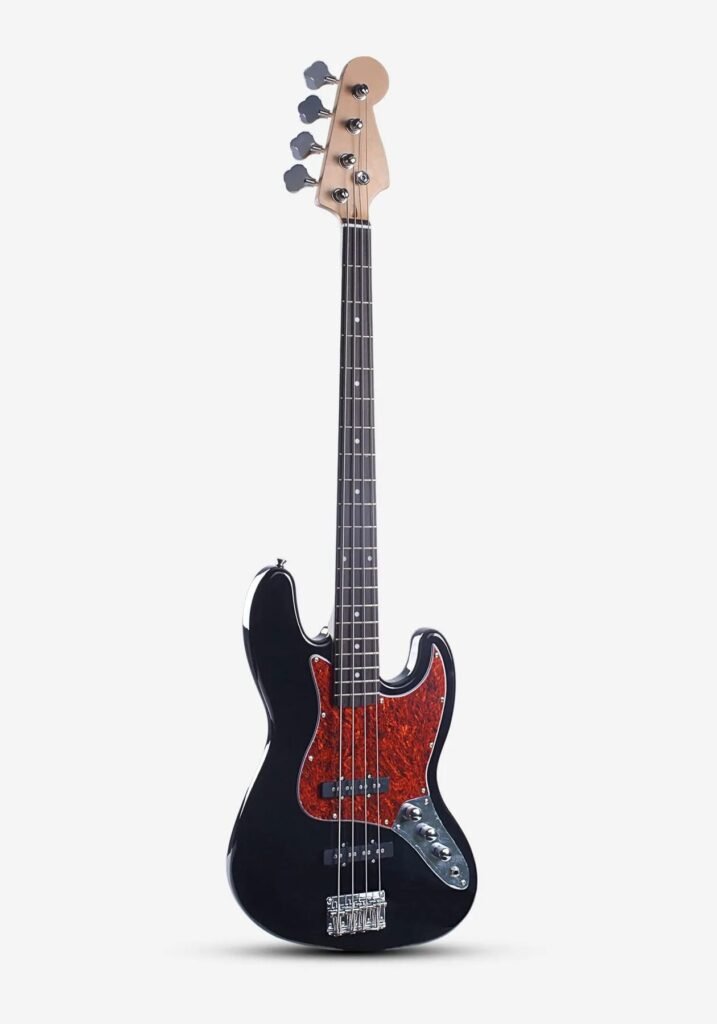
Scale length concerns the instrument's vibrating string length. It is not the total length of the bass and cannot be determined simply from the size of the body in a catalogue image.
Fender's short-scale overview describes familiar examples around 30 inches for short scale and 34 inches for long scale. Those are useful industry reference points, not definitions that remove the need to confirm an actual model, and not specifications promised for Vinesmusical products.
Treat labels such as short, medium and long as the beginning of the conversation. Record the approved length in a controlling unit and identify the actual model. If a supplier uses a different naming convention, resolve that before comparing quotations or publishing product data.
A smaller-looking body does not prove a shorter scale. A large headstock or different bridge placement can change overall dimensions without changing the playing length. Keep scale, overall size and packaging measurements in separate fields.
Shorter reach can be useful without defining the customer
A shorter scale reduces the distance between corresponding fret positions. That can make certain reaches more manageable for some players. It does not guarantee comfort, because neck width, depth, profile, body position and technique still matter.
Do not describe every short-scale instrument as a children's bass. Adults may prefer the compact feel or choose it for a particular product application. Conversely, a young player does not automatically need a short scale if another instrument fits the situation well.
Ask the buying team to identify the need it is trying to serve. Is the request coming from players who find the first-position reach difficult, from guitarists adding bass, or from a retailer seeking a compact alternative? These are hypotheses to investigate, not market facts to publish without evidence.
For a school-oriented range, have the proposed sample reviewed in the intended setting. Consider how the player holds it and how staff will identify the model. The school and rental sourcing guide covers the programme-wide brief beyond scale selection.
Long scale can be familiar, but familiarity is not a complete brief
A long-scale model can offer a recognizable starting point for many bass customers. That familiarity can help retail staff explain the range, but it should not become a claim that every established player needs the same length.
The instrument still needs a defined neck, hardware layout, setup and balance. A familiar scale does not tell the buyer whether the bass feels substantial or slim, whether the body sits comfortably on a strap or whether its electronics match the intended use.
When replacing an existing model in a retail range, compare the features that customers actually recognize. The replacement may share a scale label but differ enough in profile and body position to serve a different audience.
For a new private-label programme, decide whether the long-scale instrument is intended as the central model or as one option among several. That role influences the sample questions and catalogue description; it should not be left until after the quotation is approved.
Compare playing feel under controlled conditions
Scale is one factor in how the instrument feels. With the same string construction, tuning and other relevant conditions, changing vibrating length changes the tension relationship. However, complete basses can use different configurations and setups, so a buying team should not predict the final feel from scale alone.
Review the proposed finished instrument in its intended tuning. Record the installed configuration and any temporary substitutions. The purpose is to assess the bass as supplied, not to create a separate accessories article.
If a short-scale sample feels too loose for the intended use, investigate its complete setup and specification. If a long-scale sample feels demanding, investigate reach, profile and action rather than immediately declaring the scale unsuitable.
Ask reviewers to describe the task and the observation. “Difficult to reach the lower positions while standing” points toward a different issue from “the neck feels too deep.” That detail helps the supplier understand what should change and what should remain fixed.
Check balance in a playing position, not only on a stand
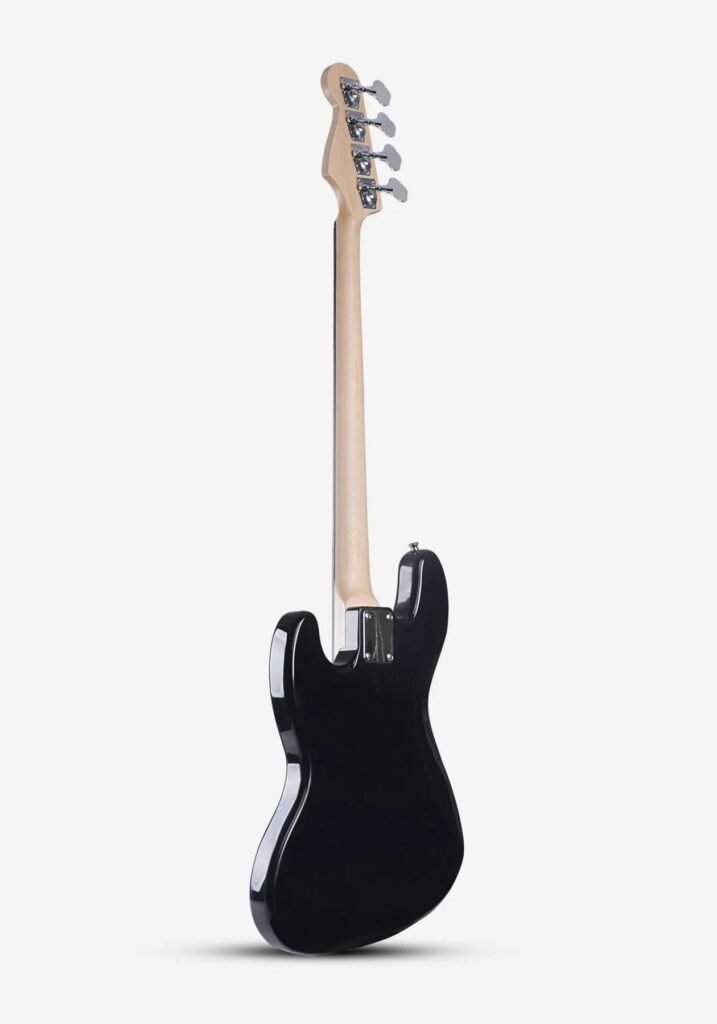
A compact bass is not automatically well balanced. The body outline, mass distribution, strap-button locations, neck and hardware all contribute to how it sits. Total weight alone does not describe that relationship.
Use the proposed hardware and strap locations when reviewing balance. A sample assembled with temporary components may not represent the final instrument. Record any substitutions before interpreting the result.
Observe the instrument seated and standing where both positions matter to the intended customer. Check the reach to the lower positions and the way the body sits against the player. Do not use a dramatic catalogue pose as evidence of comfort.
Balance also affects how a retailer demonstrates the bass. If staff need to support the neck continuously during a normal trial, the buying team should understand that before using a comfort-led description. A proposed correction should be evaluated as a complete instrument, not only as a lighter body.
Give each scale option an identifiable job in the assortment
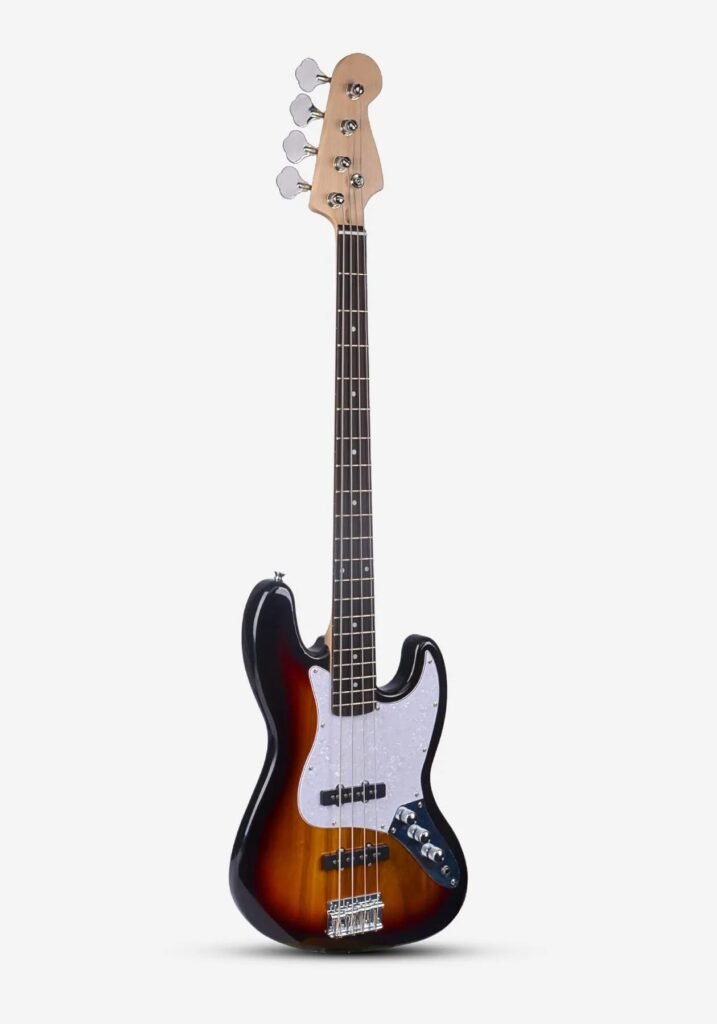
A useful range starts with the decision a customer can understand. One option may be a compact alternative; another may be the main full-scale model. The distinction needs to remain meaningful when the instruments are displayed together.
Avoid a simple ladder where short scale means beginner and long scale means professional. That explanation can misrepresent the product and narrow the audience unnecessarily. Experience level and scale preference are different questions.
Keep other differences visible. If one model is passive and another active, or one uses a different pickup arrangement, explain those features independently. Otherwise staff may attribute every difference in sound or price to scale.
The wholesale assortment planning guide provides the broader inventory framework. Use scale to define a useful choice within that framework rather than adding variants simply to make the catalogue longer.
Building an electric bass range? Send Your Requirements with the target customers, existing assortment and scale directions you want to compare. We can review the product brief before sampling decisions are fixed.
Do not assume a five-string direction from scale alone
A buying team considering five strings needs a separate model review. Scale length interacts with the intended tuning and complete instrument setup, but string count does not establish one compulsory scale.
The neck, spacing, pickup coverage, bridge and headstock layout need to be appropriate for the proposed format. Adding a string to a four-string image is not a specification and should not be accepted as a product-development shortcut.
Keep a five-string model out of the comparison if it changes too many variables at once. A four-string short-scale sample versus a five-string long-scale sample can help buyers compare two products, but it cannot isolate scale as the reason for every observed difference.
If the brief includes an extended-range model, state what needs to be demonstrated during sample review. Do not promise that longer scale automatically produces a particular low-note result. Evaluate the actual instrument and record the conditions.
Translate the range decision into a model brief
Once the buying team has chosen a direction, convert it into a record that sampling and production can follow. A model name, scale label and photograph are not enough.
| Item | What the buyer should define | Why it matters |
|---|---|---|
| Range role | Intended customer and sales channel | Gives the model a reason to exist |
| Scale | Approved length and controlling unit | Keeps geometry and product copy aligned |
| Format | String count and intended tuning | Prevents assumptions about the layout |
| Neck | Width, depth, profile and spacing | Separates reach from hand feel |
| Balance | Body direction, strap locations and hardware | Represents the playing position |
| Setup | Approved review conditions | Makes comparison meaningful |
| Retail data | Dimensions, images and naming | Helps customers identify the option |
| Packing | Actual overall dimensions and support | Avoids assuming compact scale means compact carton |
Acceptance limits belong to the project. This table is a briefing framework, not evidence that a particular model or production run meets those requirements.
Connect it to the OEM specification sheet so the scale choice remains linked to electronics, finish, branding and packaging. Avoid separate message threads carrying conflicting versions.
Packaging needs the complete instrument's dimensions
A short scale may contribute to a compact product, but carton size also depends on the body, headstock, packing system and included items. Do not forecast shipping savings from the scale label alone.
Ask for the proposed packed dimensions and confirm the configuration they describe. If the packaging changes between quotations, record that change before comparing freight assumptions. An overall-length photograph is not the same as a validated packing plan.
The instrument must also be supported correctly inside its packaging. A shorter neck does not justify loose packing, and reusing a carton from another model needs review. Identify the actual instrument and packing revision in the approval record.
The packaging approval guide covers the wider process. Any proposed transport test or protective performance claim needs evidence tied to the actual packing system.
Make retail descriptions useful instead of absolute
Product copy should say what has been confirmed and explain the intended choice. “Compact scale option” can be useful when the dimensions support it. “Perfect for small hands” promises an outcome that cannot be established for every player.
List the scale consistently across the product page, catalogue and labels. Keep overall dimensions separate. Where relevant, explain that customers should assess neck feel and playing position rather than selecting solely from a size category.
Use images that represent the actual model. Two instruments photographed at different sizes can make a scale comparison misleading. A diagram can explain the principle, but it should be clearly identified as illustrative rather than a measured comparison of the products being sold.
Retail staff also need a simple demonstration sequence. Let the customer compare reach and balance, then explain other confirmed differences. Avoid presenting a subjective tonal preference as a technical rule about every short- or long-scale bass.
Approve the sample without duplicating the whole inspection programme
The scale-selection review should answer whether the model fits its intended role. It is not a replacement for sample approval or pre-shipment inspection. These stages involve different decisions.
Use the electric bass sample approval checklist for the complete sign-off. Record the agreed scale, the model's range role and any corrections that remain open.
After approval, keep the model and revision identifiable in the order. If the scale, neck geometry or hardware changes later, review the consequences before treating it as the same approved product.
At shipment inspection, verify the actual order against its approved criteria. The electric bass pre-shipment guide belongs to that later stage. It should not be rewritten into a second scale-choice article.
Review the range after real customer feedback arrives
Treat the first assortment decision as a documented starting point, not proof of permanent demand. Ask retailers to separate questions about reach from questions about sound, price, finish or electronics. Otherwise a request for a different bass may be incorrectly recorded as a request for another scale.
Use that feedback to review the model's role before expanding the range. Preserve the approved instrument data even if the merchandising language changes. A new marketing description should not silently authorize a different scale or neck on the next order.
Frequently asked questions
Is a short-scale electric bass only for children?
No. A compact playing option may interest adults as well as younger players. Decide from the intended customer's needs and the actual sample. Avoid using age as a substitute for reach, neck feel and playing-position review.
Does long scale always produce better sound?
No. The complete design, configuration, setup and player's expectations matter. A sample comparison can support a product choice, but it does not prove a universal sound ranking between scale categories.
Is overall length the same as scale length?
No. Scale concerns the vibrating length; overall dimensions include other parts of the instrument. Record both independently. Packaging decisions need the actual overall and packed dimensions.
Should a retailer carry both scale options?
Only if each serves a useful role supported by the retailer's evidence and customer needs. Define the difference staff can explain, then evaluate the proposed models. Do not add both simply because the categories exist.
Can the same sample approve both versions?
Not if the versions have different geometry or configurations requiring review. Each proposed model needs an identifiable specification and appropriate sample approval. Shared cosmetics do not make the instruments technically interchangeable.
Conclusion: choose the range before choosing the label
The strongest scale decision connects a customer need to a complete instrument. It explains why the model is in the range and what sampling must demonstrate. That helps a wholesale buyer avoid both an unnecessary variant and an oversimplified product claim.
Use scale as a clear part of the brief, then review reach, neck feel, balance and setup together. Preserve the result in the model record so the retail explanation and production reference remain aligned.
Explore the Electric Bass product line for the core category. Contact Us with your target customers and proposed scale options. Project suitability, available specifications and commercial terms should be confirmed before an order is agreed.