 EN
EN Español
 Português do Brasil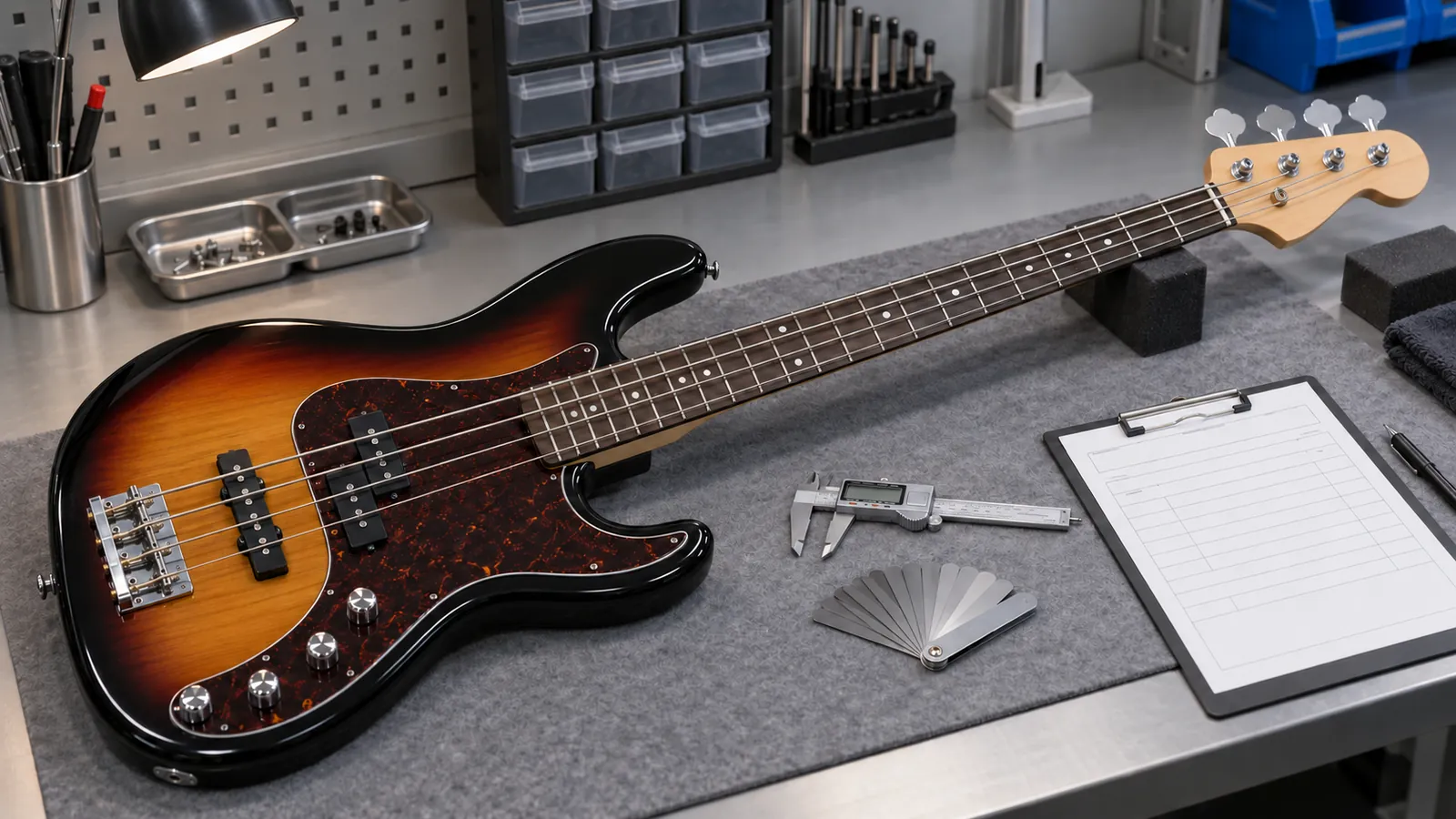
An electric bass sample should not be approved because it “looks good” or plays well for one person. For an OEM buyer, sample approval is a controlled decision: does this exact unit represent the product, appearance, setup, electronics, packaging and documentation that production should follow?
The most useful approval package combines four things: a revision-controlled specification, the physical sample, objective review records and a written list of accepted deviations. If any of those are missing, the sample may be attractive but still be a weak production reference.
This checklist focuses on the approval stage between specification development and mass-production control. It does not prescribe universal numerical tolerances. Those values must come from the buyer's confirmed product brief, target market and approved measurement method.
Images in this guide are AI-generated illustrations. They do not document factory tests or real customer projects.
Define what kind of sample you are approving
“Sample” can mean several different things. Before inspection, write down its purpose.
- A construction sample tests the basic platform and build concept.
- An appearance sample focuses on color, finish, branding and visible details.
- A functional sample checks setup, electronics, hardware and use.
- A packaging sample checks protection, pack-out, labels and included materials.
- A final approval sample is intended to combine the accepted requirements into the production reference.
One physical instrument may cover more than one purpose, but the approval record should say so. Otherwise, a construction sample with temporary hardware can accidentally become the reference for production appearance.
Do not let the sample outrank the specification by accident
The sample and specification should agree. If they do not, the buyer must decide which one controls and update the record. “Follow sample” is risky when internal construction, component identity or hidden wiring cannot be seen later.
The approval sheet should list the specification number, revision date, artwork revisions, sample identifier and review date. Photograph the sample from consistent angles and label those photos with the same identifier.
Confirm product identity before detailed inspection
Start with the basics. Is this the model that was requested?
Verify the body style, string count, scale or size reference, neck and fingerboard description, pickup layout, bridge type, control layout, finish, color, branding and included accessories against the approved files. Record any supplier-proposed equivalent rather than silently accepting it.
This first check prevents teams from spending time evaluating setup on a unit that already represents the wrong product configuration.
Use the electric bass specification guide to organize the requirements before review. The Electric Bass product range provides a starting point for model discussions, while the approved project file controls the sample.
Review the neck, frets and setup as a system
Electric-bass playability depends on related parts. Neck condition, fretwork, nut slots, bridge position, strings, relief, action and intonation influence one another. Approving a single measurement without the rest of the setup context can be misleading.
Use the buyer's agreed method to review:
- neck straightness and adjustment function;
- fret seating, ends and playing-surface condition;
- nut workmanship and string path;
- bridge installation and saddle adjustment range;
- action and relief at the defined tuning and measurement points;
- intonation behavior where applicable;
- buzzing, choking or dead-note concerns found during the defined review;
- stability after normal setup adjustments.
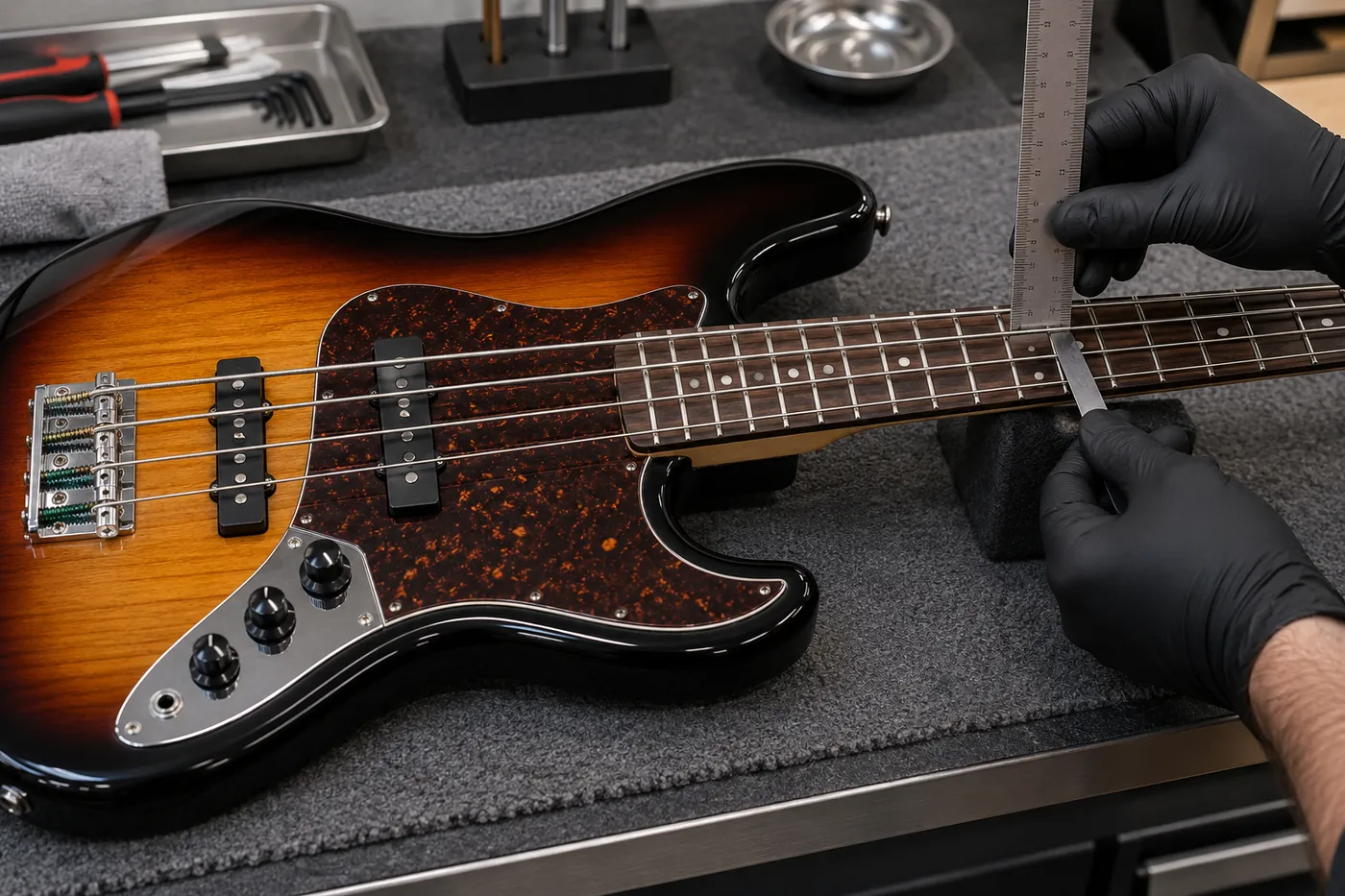
Keep the measured result beside the corresponding specification item. A technician should be able to repeat the review using the same tuning, measurement point and instrument condition, rather than interpreting a photograph alone.
Record the test condition
Document the string type or approved equivalent, tuning, room condition if relevant, measurement tool, measurement location and person performing the review. When two teams measure in different conditions, they can report different results on the same instrument.
Do not copy generic setup figures from the internet into an OEM approval form. A buyer can define its own target range after confirming the intended player, string choice, construction and service policy.
Inspect hardware installation and adjustment range
Hardware review is not only cosmetic. Check that tuners operate consistently, fasteners are seated correctly, strap buttons are secure, bridge components adjust normally and knobs or plates do not interfere with use.
Look for misalignment that could become a production pattern: string path relative to the fingerboard, pickup position under the strings, bridge centering, control plate fit and screw placement. Photograph the accepted arrangement.
If the quotation allows an equivalent component, the approval record should identify the exact sample component or its acceptance criteria. Otherwise, “equivalent” can expand into an uncontrolled category during production.
Test the electronics in the intended control states
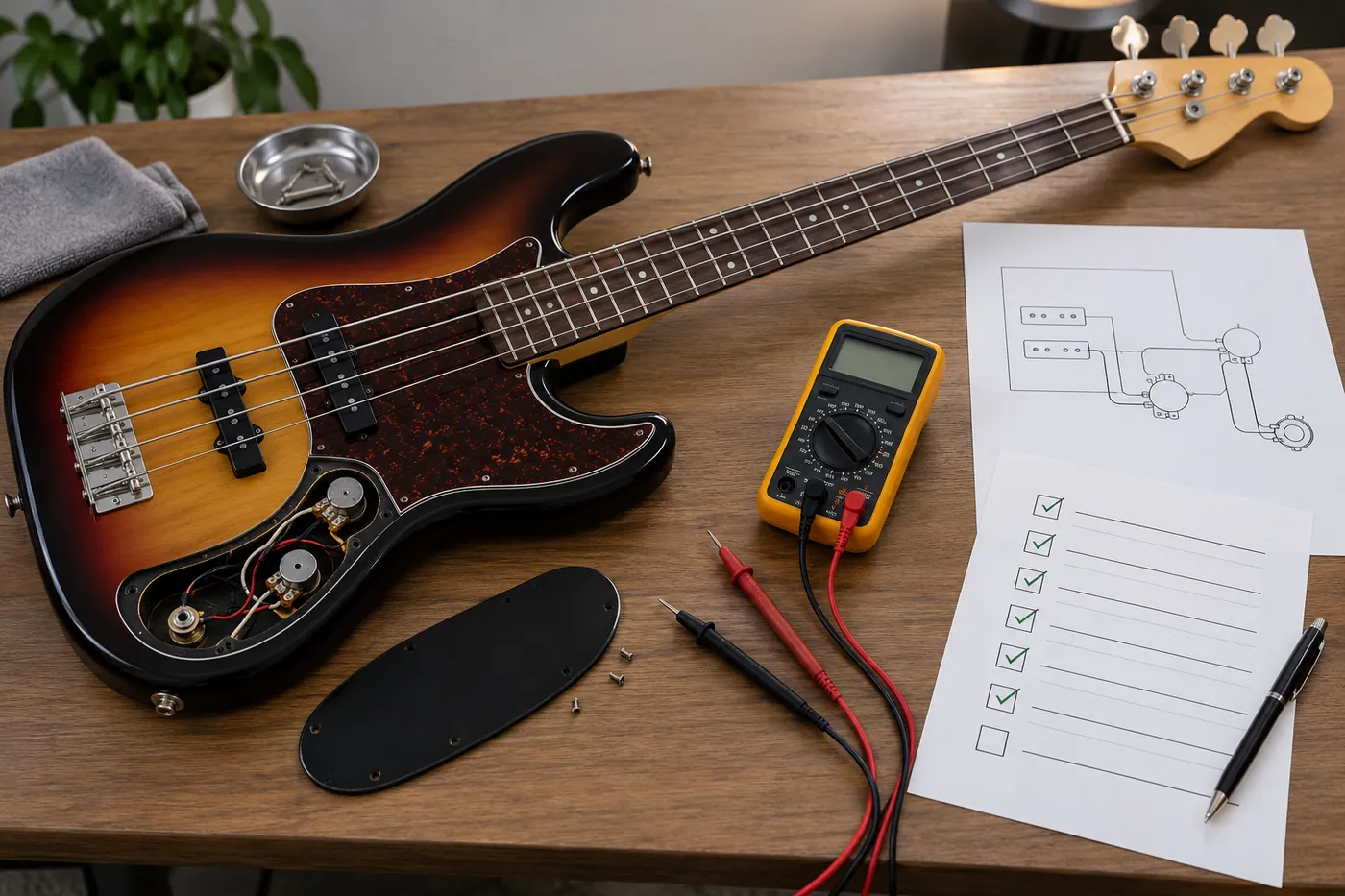
For passive or active basses, the test plan should match the agreed circuit. Check every switch, pot, jack and power-related function included in the design. Listen for signal interruption, scratchy operation, unexpected noise and mechanical looseness. Verify that controls work in the intended direction and that the physical layout matches the artwork or specification.
Where electrical measurements are required, define the instrument, method and acceptance criteria in the project file. An illustration or a verbal claim is not a test report.
Check service access, not just the initial sound
Open cavities only when this is part of the approved review and can be done safely. Inspect routing cleanliness, shielding approach where specified, wire restraint, soldering condition, jack mounting and access for normal service. The buyer should document what is expected rather than relying on a general statement such as “clean wiring.”
Approve finish and cosmetic workmanship against references
Color approval needs a controlled reference. Compare the sample with the dated color target, finish panel or documented visual standard under consistent lighting. Record acceptable natural variation separately from unacceptable defects.
Review body and neck surfaces, binding or edge transitions, hardware finish, cavity covers, inlays, fretboard appearance, headstock face, logo placement and printing quality. Inspect areas that are easy to miss in marketing photos: neck pocket, joint transitions, side surfaces, rear edges and inside cutaways.
If the finish changes with light or wood grain, take photographs from multiple angles. The written record should say what was accepted, not just “color OK.”
Check branding, labels and legal information
Brand artwork must match the correct revision. Confirm size, location, orientation, color and application method for each mark. Review model labels, serial-number location, warning labels and packaging information required by the buyer's market.
Do not ask a supplier to confirm regulatory content that the buyer has not approved. Market-specific claims, marks and importer information should come from the responsible party and be controlled as artwork.
Treat packaging approval as a separate testable scope
The bass can pass functional review and still fail the program if packaging is incomplete or unstable.
Approve:
- contact points and surface protection;
- neck and body restraint;
- accessory placement;
- bag, case or wrap details when included;
- carton dimensions and board specification when confirmed;
- labels, marks and barcode position;
- pack-out sequence;
- the condition in which the instrument should arrive for inspection.
If transport testing is required, define the method and evidence. Do not convert a single undamaged sample delivery into a general performance claim.
Create a deviation register
Most development samples include open points. That is normal. The problem is allowing those points to disappear into email history.
Use a deviation table with:
- item number;
- specification reference;
- observed condition;
- required correction or accepted deviation;
- responsible party;
- evidence needed;
- deadline or next sample stage;
- closure status.
Separate three decisions: approved as shown, approved with a documented deviation, and not approved. Avoid ambiguous comments such as “please improve.” State what the next evidence must demonstrate.
Reviewing an electric-bass OEM sample? Send the current specification, sample photos and open-point list through Contact Us. Include the model revision and the decisions you need to close before production.
Decide what becomes the production reference
After review, identify which evidence production must follow. This may include the signed sample, current specification, artwork package, color reference, packaging sample and deviation register. Store them as one approval set.
If the physical sample will be retained, seal or identify it so it cannot be confused with another unit. If buyer and supplier each hold a reference, confirm that they represent the same revision. Photograph serial or sample identifiers without exposing confidential customer information in public materials.
Build an approval evidence pack
Keep the sign-off material together instead of spreading it across email, messaging apps and personal folders. A practical evidence pack can include the approval sheet, current specification, artwork register, dated photographs, measurement record, electronics checklist, packaging photographs and closed deviation table. The buyer should be able to reconstruct why the sample was approved without relying on one employee's memory.
Name files by project, model, sample identifier and revision. Mark superseded documents so they cannot be mistaken for current instructions. Where a photo demonstrates a specific feature, connect it to the relevant checklist item rather than storing an unlabeled image gallery.
For example, if the review finds a loose jack, identify the sample, photograph the mounting, describe the symptom and record the required correction. Close the item with evidence from the corrected unit. A photograph of a different model or an undated message saying that the issue was fixed should not close that specific approval item.
This discipline also protects the supplier. When a later team asks why a visible variation was accepted, the written record can show whether it was an approved natural variation, a documented exception or a production defect.
Approval is not permission for uncontrolled substitution
The production agreement should require review of changes that affect the approved product. Component availability can change, but a proposed alternative should be documented and evaluated before use when it affects function, appearance, compliance or customer expectations.
Connect sample approval to production inspection
The sample checklist should become the foundation of production and pre-shipment inspection. Not every development observation needs to be measured on every unit, but critical features need a repeatable control method.
Map each approval item to one of these controls:
- specification or bill-of-material verification;
- approved-sample comparison;
- in-process check;
- final functional check;
- appearance inspection;
- packaging verification;
- pre-shipment sampling and report.
The buyer should define responsibility, evidence and escalation. A final inspection cannot recover a requirement that was never communicated to production. The electric bass pre-shipment inspection guide covers the later release decision; sample approval establishes the reference that inspection will use.
Hold a short cross-functional sign-off
Before final approval, bring together the people responsible for product, quality, packaging and purchasing. The meeting does not need to be long, but it should close contradictions. Product may approve the appearance while quality still lacks a measurement method; purchasing may believe an accessory is included while packaging treats it as optional.
Use the meeting to read back the current revision, confirm every open deviation, identify the production reference and assign the first production-stage evidence. Record the decision and the names or roles authorized to approve changes. A clear twenty-minute sign-off can prevent weeks of disagreement later.
Signs that approval is not ready
Pause approval when:
- the specification revision is unclear;
- the sample contains temporary parts that are not listed;
- setup was changed but not recorded;
- the electronics layout differs from the current diagram;
- color is accepted only from a phone photo;
- branding artwork is not final;
- packaging has not been reviewed;
- open points have no owner or closure evidence;
- the supplier and buyer hold different reference versions.
Stopping at this stage is usually less expensive than debating the same issue during production.
Electric-bass sample approval checklist
Use this summary at the sign-off meeting:
- Confirm sample purpose and identifier.
- Confirm specification and artwork revisions.
- Verify model identity and visible configuration.
- Review neck, frets, nut, bridge and setup by the agreed method.
- Check tuner, bridge, strap-button and control installation.
- Test every electronics function included in the design.
- Compare finish and branding with controlled references.
- Review labels, accessories and packaging.
- Record deviations with owners and evidence.
- Identify the complete production reference set.
- Map approval items to production and shipment checks.
- Obtain written sign-off from the authorized buyer contact.
FAQ
Is one electric bass sample enough for approval?
It depends on the project and the purpose of the sample. One unit may demonstrate several requirements, but it should not be assumed to prove production consistency. The buyer should define the evidence needed for each risk.
Should the buyer approve a sample with open issues?
Only if every open issue is recorded as an accepted deviation or a required correction with clear closure evidence. Avoid a general approval message followed by an informal problem list.
What is the difference between a golden sample and an approval sample?
Teams use these terms differently. Define them in the project. A production reference should identify the exact unit, specification revision and deviations that control manufacturing and inspection.
Must action and relief use fixed universal values?
No. The appropriate targets depend on the approved product, strings, player profile and measurement method. Use project-specific values rather than generic figures presented as universal rules.
How should electronics be approved?
Test every intended control state, record the circuit or component scope, and define any electrical measurements in the project file. Also review mechanical mounting and service access where required.
What happens if a component becomes unavailable after approval?
The supplier should propose the change with supporting information. The buyer then decides whether document review, a component sample or a new instrument sample is needed before approval.
Conclusion
Sample approval is a handover from product development to controlled production. The strongest approval record is specific enough to guide manufacturing, inspection and future reorders, while honest enough to show what remains unresolved.
Vinesmusical is a B2B finished-instrument manufacturer founded in 2014. It reports about 80 employees, monthly capacity of about 7,000 guitars and 13 years of OEM/ODM experience. The company owns a 10,000-square-meter, five-floor facility and has third-party BSCI certification plus a third-party in-depth factory audit report. Buyers should still verify the documents and project controls relevant to their own purchase.
Send your requirements: use Contact Us or email info@vinesmusic.com with the electric-bass specification revision, sample purpose and open-point list. Ask for a response tied to that exact scope.