 EN
EN Español
 Português do Brasil
 Français
 Deutsch
 Русский
Choose satin or gloss acoustic guitars by the product's intended appearance, handling feel, retail presentation and care requirements—not by assuming one finish always sounds better. For a wholesale order, state the finish separately for the top, back, sides and neck, then approve an identifiable reference before treating the choice as a production requirement.
A product team can agree that a guitar should look natural and still disagree about the sample. One person may mean visible grain under a reflective clear surface. Another may expect a subdued, low-sheen finish. Both have used the same word while imagining a different product.
The useful discussion starts earlier than final cosmetic inspection. What role will the model have in the range, what will the customer see online and in store, and what must remain consistent when the order is repeated? This guide focuses on those buying decisions. The finish approval guide covers the wider production approval process.
Satin and gloss describe appearance, not the whole coating system
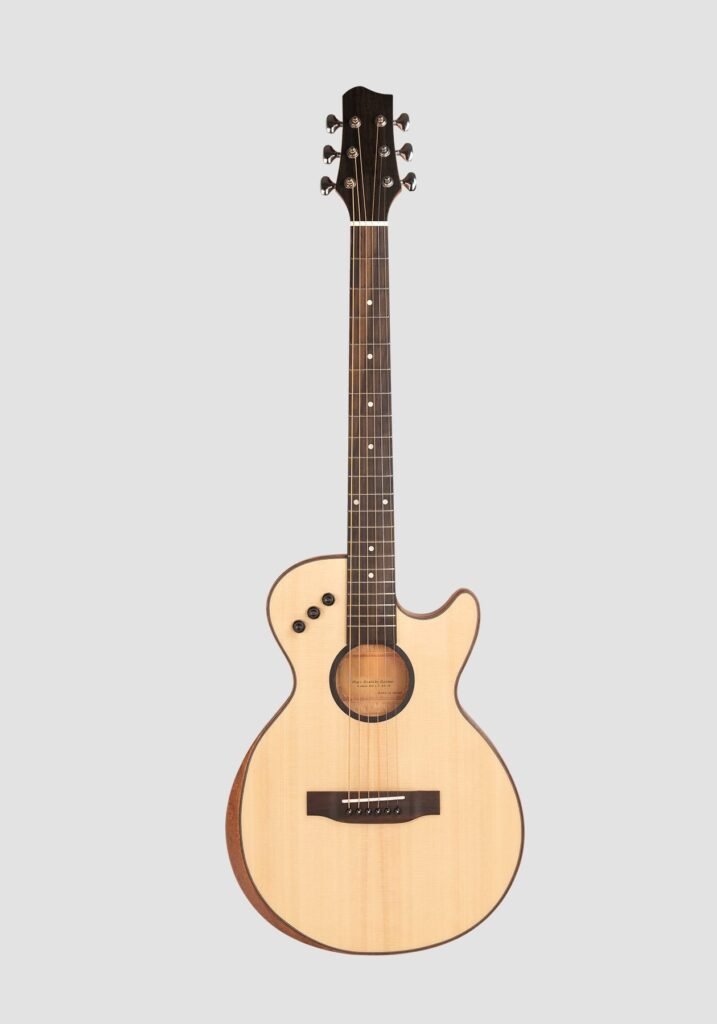
Gloss generally gives a more reflective surface. Satin describes a lower-sheen appearance. Neither word, by itself, tells the buyer which coating material, preparation process or film thickness has been used.
Matte and satin are also not dependable synonyms across suppliers. One catalogue's satin may look more reflective than another supplier's matte reference. Open-pore describes a surface character that should be clarified separately rather than assumed from a low-sheen label.
Taylor's public finish explanation separates gloss, satin and varnish processes in its own range. That example shows why a surface label should not be treated as a complete coating specification. Taylor's materials and process details are not Vinesmusical's production method.
Ask the supplier to explain the proposed finish for the particular model. If material or durability information matters to the order, identify what documentation or sample evaluation is needed. Do not convert a marketing label into a chemical or performance claim.
Decide what the model should communicate on the shelf
A gloss instrument may present a more reflective visual character; a satin instrument may offer a quieter surface appearance. These are useful descriptions, but “premium” and “budget” are commercial positions, not properties guaranteed by sheen.
A satin model can be positioned carefully and made with substantial attention to detail. A gloss model can still be an entry-level product. Construction, fretwork, setup, component choices, documentation and service all contribute to the customer's assessment.
Before choosing a finish, write a short range statement. Is this model meant to be an understated everyday acoustic, a visually distinctive display product, or a consistent school and rental instrument? Treat those as planning examples, not claims about established market demand.
Then ask whether the proposed finish supports that role. A finish should help the product make sense, not become an extra variant with no clear purpose. Buyers who already carry many similar models may benefit more from simplifying their explanation than from adding another colour-and-sheen combination.
Separate the body's appearance from the neck's feel
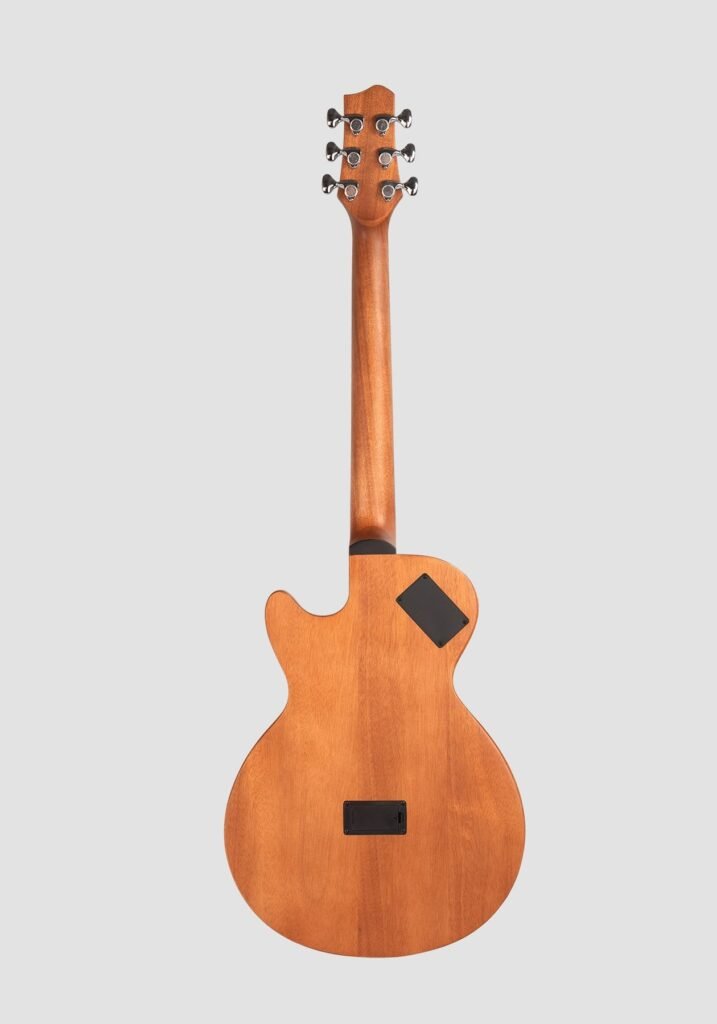
A gloss body does not require a gloss neck. Record these decisions individually. A supplier may offer a body and neck combination that differs from the catalogue photograph, and the buying team needs to notice that before approval.
Neck feel is personal and affected by the surface, profile, handling conditions and the player. Avoid describing satin as universally fast or gloss as universally sticky. A practical sample review is more useful than repeating those claims.
Have reviewers handle the proposed instrument in a normal playing position. Ask for observations about the neck rather than a general preference for a photograph. Keep setup and neck geometry comparable when the team is trying to isolate the finish decision.
If the body and neck receive different treatments, confirm where the transition appears. The heel, headstock and binding areas need clear instructions. Otherwise the model may have an unintended visual boundary even though each finish word is technically correct.
Do not promise a tonal result from the sheen label
Finish can be part of an instrument's construction, but “satin” does not prove thin coating, and “gloss” does not prove excessive coating. An acoustic guitar's response cannot be reduced to the amount of reflected light on its top.
If sound is important to the selection—and it should be—compare the actual samples under consistent conditions. Record construction differences and setup rather than presenting a subjective impression as an isolated finish test.
Do not claim that one sample is louder because it is satin if its top, bracing, body dimensions or setup also differ. That comparison cannot identify the finish as the cause. A buying team may still choose the sample it prefers, but the catalogue explanation should not overstate what the comparison established.
For a new range, a defensible description usually explains the confirmed finish and construction while leaving room for the player's evaluation. Buyers gain more from a truthful product description than from a universal “better tone” slogan.
Compare wood appearance under repeatable light
Transparent surfaces interact with the wood beneath them. Grain and colour variation may remain visible in both satin and gloss. The finish selection does not make natural wood identical across a batch.
Use comparable photographs when discussing the visual direction. Keep the camera angle, lighting and exposure reasonably consistent. Include more than a straight-on image, because reflections and sheen are often easier to evaluate as the surface changes angle.
A close-up is useful for texture, while an overall view shows whether the top, back, sides and neck belong together visually. Approving only an attractive top photograph can leave the rest of the instrument unresolved.
Where a finish reveals natural grain, agree the acceptable visual range separately. The wood variation guide explains why grain selection and cosmetic approval deserve their own record.
Think about online presentation before fixing the finish mix
Online buyers cannot handle the guitar, so the photographs and written description carry more of the decision. A reflective surface can be difficult to photograph consistently. A low-sheen surface can also lose its character under flat lighting.
The answer is not to remove all reflections digitally or increase saturation until the instrument looks more expensive. Use honest images that describe the finish buyers will receive. Make sure retouching does not erase surface character or imply a different colour.
If two finish variants share a listing, show which image belongs to each option. Similar natural colours can make a satin and a gloss model look interchangeable in a thumbnail. Clear variant names and supporting detail photographs reduce that ambiguity.
Ask the product team to review the listing alongside the approved sample. A photograph should support the specification. It should not quietly become a competing reference that production is expected to reproduce despite editing and lighting differences.
Planning an acoustic guitar assortment? Send Your Requirements with the intended sales channel, body style and finish direction. Include any separate neck treatment so the sample discussion starts with the complete product.
Include care guidance in the product decision
Care instructions should match the actual finish system. Do not recommend one polishing routine for every surface or assume that a product intended for gloss is suitable for satin.
For example, Taylor's cleaning guidance distinguishes its gloss and satin surfaces and cautions against wax or heavier polishes on satin areas. That is guidance for Taylor instruments; the supplier's advice for the proposed instrument must be checked independently.
For a wholesale programme, request a concise care statement before artwork is finalized. It should identify acceptable cleaning methods and relevant cautions in language retail staff can explain. Avoid promising that the finish will never show marks or change with handling.
Consider how the instrument will be demonstrated in store. A frequently handled display unit may not remain visually identical to an untouched boxed unit. Have the service team review realistic maintenance expectations rather than describing ordinary handling as a guaranteed manufacturing fault.
Ask for comparable quotations, not a presumed price difference
Satin is not automatically cheaper in every project, and gloss is not automatically the higher-cost option under every production method. Material, preparation, surface treatment, appearance requirements and order conditions all influence the quotation.
When comparing options, keep the rest of the specification aligned. Ask the supplier to identify what changes between the two finish proposals. If the construction, branding or packaging also changes, a price difference cannot be attributed solely to sheen.
Discuss the desired appearance before requesting an exact quote. “Natural finish” can cover several interpretations, and a quotation based on the simplest interpretation may not cover the final requirement.
The OEM pricing factors guide provides the broader framework. This article does not establish a price range, minimum order quantity or delivery commitment for either finish.
Use a finish map that fits on one page
A finish map links the buying decision to a usable sample reference. It does not need to prescribe every workshop operation. It needs to make the intended surface clear and identify which questions remain open.
| Area | Define before sampling | Preserve in the approval record |
|---|---|---|
| Top | Colour, grain visibility and sheen | Approved visual reference |
| Back and sides | Matching or contrasting treatment | Relationship to the top |
| Neck | Surface direction independent of body | Handling review and transition |
| Headstock | Face and rear treatment | Branding relationship |
| Binding and edges | Boundary and appearance | Clear detail photographs |
| Care | Supplier-confirmed guidance | Final retail instructions |
Give each model and finish combination an identifiable revision. If the team approves a gloss top with satin back and sides, do not reduce that to “gloss guitar” in the production notes. The short label can conceal the difference that made the model appealing.
The acoustic OEM checklist helps connect the map to construction, sample development and the rest of the order brief.
Keep the range manageable when adding variants
Each finish variant brings more than another photograph. It can affect product codes, samples, labels, inventory identification and the explanation retail staff give customers. A small assortment is easier to understand when each version has a defined role.
Start with the demand evidence you actually have. Retailer requests, questions from importers and feedback from sample reviews can support a finish direction. They do not justify claiming that a finish is the favourite of an entire market.
If the evidence is weak, treat the variant as a proposal. Review it before committing the range to many combinations of shape, colour, electronics and sheen. Additional choice can create confusion when the team cannot explain why the options differ.
Reorders deserve the same discipline. Retain the visual reference, finish map and model identification so a later purchase does not depend on the memory of the person who handled the first order.
Give service and purchasing the same reference
Finish selection often involves several people: purchasing approves the sample, marketing prepares photographs, and service handles the questions after delivery. Give those teams the same reference rather than separate edited images and informal descriptions.
If an issue is reported, request the model identification, photographs under useful lighting and a description of the surface condition. Those details help distinguish a colour mismatch from a handling mark or an unsuitable cleaning method. They do not establish the cause on their own, but they make a responsible review possible.
Keep the supplier's care advice with the approved product information. If a retailer proposes different instructions, check them before printing. A convenient generic care card should not override the guidance for the actual coating.
This is also why a finish sample should remain identifiable after launch. The buying decision needs to support both the next purchase and the discussion when a customer asks what to expect.
Questions wholesale buyers ask about satin and gloss
Is satin the same as unfinished wood?
No. A satin appearance does not establish that wood is unfinished. Ask for the proposed coating and surface description. Low sheen and open grain should be explained separately rather than inferred from the word satin.
Does a satin acoustic guitar always sound better?
No. Sheen alone cannot establish coating thickness or tonal performance. Evaluate the actual guitar and recognize other construction and setup differences. Do not use the surface label as a substitute for sample review.
Can a gloss body have a satin neck?
A project can specify different treatments for different areas, subject to the supplier's review. Record the neck and body separately and approve the transition. Do not assume that one catalogue label describes every surface.
Which finish is easier to sell online?
There is no universal answer. The model's position, customer preference, photographs and clarity of the listing matter. Use consistent images and explain the confirmed finish honestly instead of making a market-wide claim from one example.
Should satin and gloss use the same care instructions?
Not without checking the actual finish system. Ask the supplier for appropriate guidance for each surface. A general polishing instruction can be unsuitable for a mixed-finish model.
What should be sent with an enquiry?
Send the target acoustic model, sales channel, colour direction and a finish map for the top, back, sides, neck and headstock. Identify the reference that should control approval and explain any unresolved care or appearance questions.
Conclusion: make the finish a clear product choice
Satin versus gloss becomes a useful buying decision when it explains the role of the guitar, the customer's handling experience and the surface that production is being asked to supply. It becomes an unreliable shortcut when it stands in for quality, sound or price.
Choose the appearance deliberately, keep the neck treatment explicit and approve a reference that the next order can still follow. The product team, factory and retailer should be describing the same instrument.
Browse the Acoustic Guitar product line for the core category. Contact Us with your wholesale brief and finish references to discuss the proposed project. Final capabilities, commercial terms and sample requirements need to be confirmed for that project.