 EN
EN Español
 Português do Brasil
 Français
 Deutsch
 Русский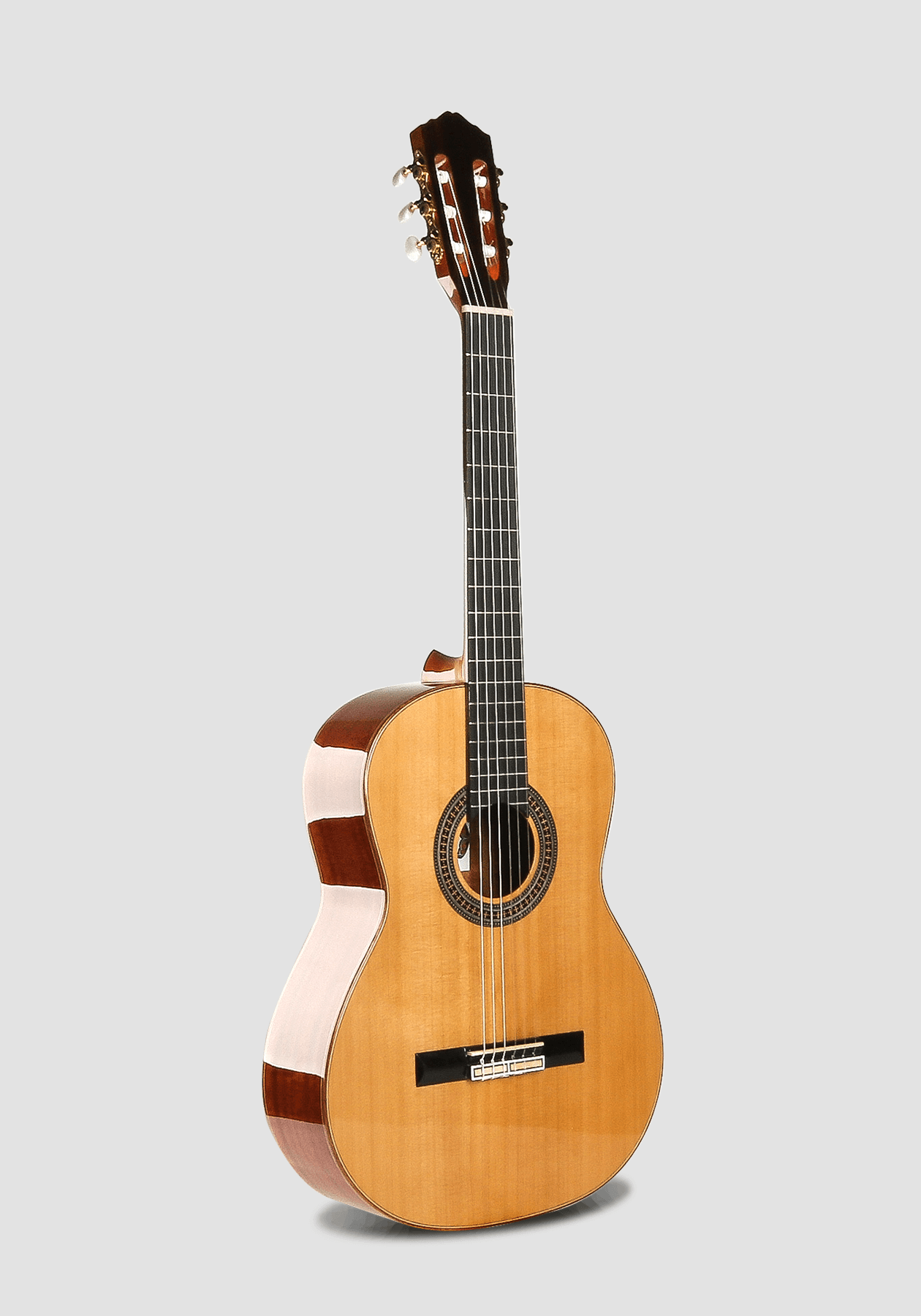
A classical guitar neck cannot be specified by nut width alone. An OEM buyer needs to define the neck's outside width, the distance between the outer string centres, the remaining edge clearance and the profile that sits in the player's hand. Those dimensions should be reviewed together on a sample made for the intended customer.
That sounds more involved than asking for a “comfortable neck,” but it makes sampling much more useful. If the first guitar feels wrong, the team can identify whether the issue is width, spacing, depth, setup or reach. Without that distinction, the next instruction is often just “make it slimmer,” and a second sample may solve the wrong problem.
This guide is for brands, importers and wholesale product teams deciding how a classical model should fit their range. It is not a recommendation that every customer needs the same neck, and the dimensions discussed are not promises about an available Vinesmusical model.
Begin with the customer the model is meant to serve
Before drawing a narrower neck, ask why the buyer wants it. A traditional classical player may value space for independent finger movement. A guitarist moving from a steel-string instrument may prefer a different neck feel. A school buyer may be concerned about reach and consistency across a teaching programme. These are different product briefs.
Age labels are not enough. Hand size, playing habits, posture and experience vary within any age group. A guitar described as suitable for younger players should still be evaluated as a complete instrument, rather than approved because its neck appears small in a photograph.
Write the intended user in a sentence that the sample team can act on. For example, an illustrative brief might describe a nylon-string model for adult players moving from steel-string guitars, while retaining enough spacing for the intended repertoire. That sentence explains a design direction. It does not establish the final dimensions or claim that the model has passed a comfort test.
Keep body size and neck decisions separate at this stage. The classical guitar size guide covers assortment choices across smaller and full-size instruments. Here, the question is what the hand encounters on the selected model.
Nut width and string spacing are two different measurements
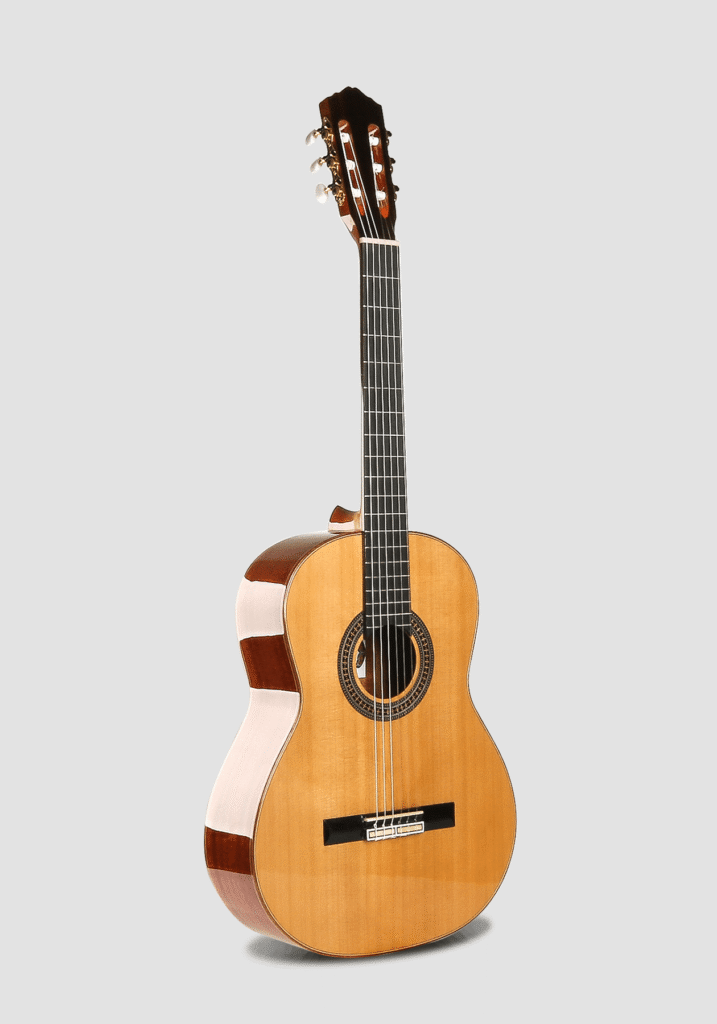
Nut width normally describes an outside dimension across the nut. Nut string spacing describes the string layout. A supplier's specification may give the span between the outer string centres, individual spacing, or another measurement convention. Confirm which one is being used before comparing numbers.
A useful public example is Córdoba's classical specification listing, which lists nut width and nut string spacing separately. These are that manufacturer's model specifications, not a universal classical standard and not Vinesmusical's specification.
The practical lesson is simple: an outside width does not tell you where the strings sit. Two instruments can have the same nut width but different playing room. Equally, a narrower nut can retain similar spacing only by reducing the space left near the outside strings.
Record the measurement convention
Ask for a sketch identifying the relevant points. If the brief uses outside string centres, label them explicitly. If it uses gaps between strings, explain whether those gaps are measured between edges or centres. A clear drawing prevents a number from being interpreted differently by procurement, sampling and inspection teams.
Avoid converting casually between rounded inches and millimetres. Choose the controlling unit and keep the other unit as a reference. The approval record should say which value takes priority if the rounded conversion differs.
Keep edge clearance visible
The outer strings need usable space before the fingerboard edge. The exact requirement depends on the neck design, fret ends, setup and playing evaluation. It should not be replaced by an arbitrary tolerance copied from another model.
During sample review, check the string path beyond the nut. An instrument may look centred at the first fret yet leave less room on one side farther along the neck. Record the location and condition rather than describing the entire neck as “too narrow.”
Neck depth changes the meaning of “narrow”
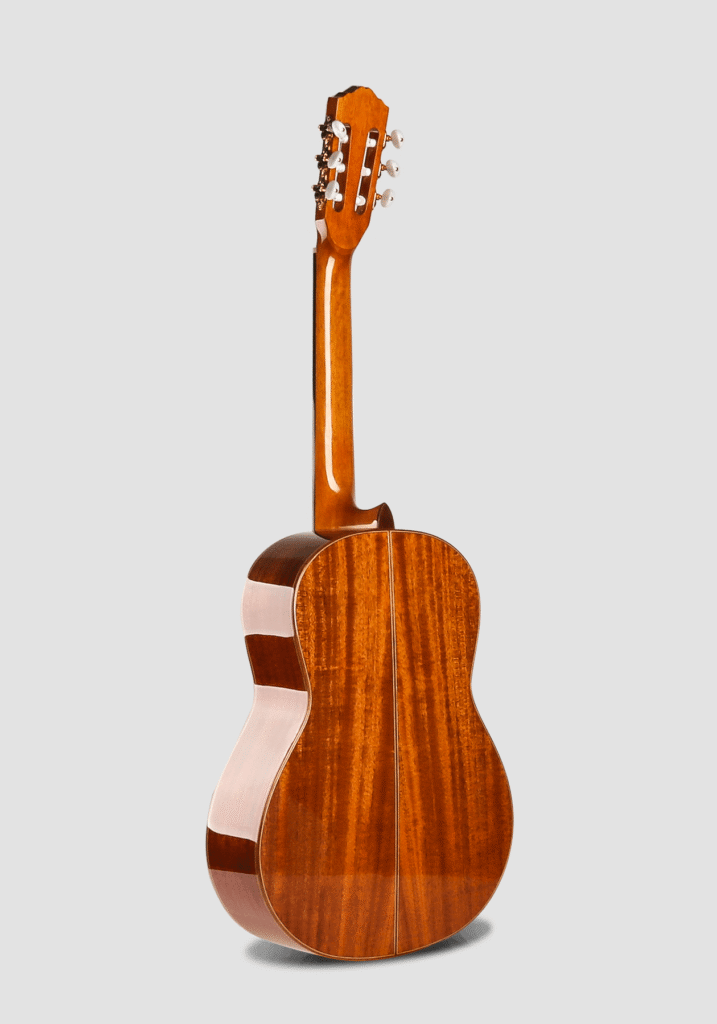
A narrow neck with substantial depth may feel more demanding than a slightly wider neck with a different profile. The shoulders matter too: they determine how the palm and thumb meet the sides, not just how a caliper measures the centre.
Treat width, depth and profile as separate fields. When one changes, review whether the others should remain fixed. Otherwise a request to reduce width can quietly become a request for a completely different neck shape.
Use agreed measurement locations. A neck thickness recorded at one fret cannot be compared directly with a measurement taken elsewhere. Include the location on the drawing and explain the measurement method so the figure can be reproduced.
An approved physical sample is particularly helpful for profile. Photographs communicate appearance well, but they cannot fully describe the contact surface of a neck. If a reference instrument is used, identify the features being referenced without asking for another brand's protected design or branding to be copied.
Finish belongs in the discussion as well. A surface that feels comfortable during a brief demonstration may feel different after longer handling. Record observations under comparable conditions; do not turn one person's preference into a claim that a particular finish is always easier to play.
Follow the neck from the nut to the body
The neck widens along the string path. Buying teams therefore need more than a measurement at its narrowest point. Define width at agreed positions, the fingerboard's end and the transition into the body. Then review how that geometry works with the intended scale and bridge layout.
For a traditional classical model, a familiar appearance does not eliminate these checks. For a crossover-style nylon-string model, do not assume that changing the nut alone gives the intended feel. The profile, fingerboard geometry and body access may be part of the same product decision.
The heel transition can affect access without changing the nut width. A cutaway can change access too, but it does not automatically solve hand comfort in lower positions. Separate those observations in the sample notes so a body change is not proposed for a neck-spacing issue.
Consider where the intended customer will actually spend time on the instrument. A brief focused on lower-position comfort may need a different review from one centred on upper-fret access. Both deserve a clear description rather than a broad “easy playing” claim.
Do not use neck width to compensate for poor setup
High action, uneven fretwork or unsuitable nut-slot work can make a neck feel difficult even when the geometry suits the player. Changing the width before checking those conditions may add development work while leaving the original problem untouched.
Review the sample in the intended tuning and with the agreed installed configuration. Record action, relief where applicable, fret condition and any temporary setup changes. These are checks on the finished instrument, not a reason to turn the article into an accessories buying guide.
If two samples are being compared, bring them to comparable review conditions. A neatly prepared sample and a poorly prepared sample do not provide a fair width comparison. A player may report that the first one feels easier when the difference is mostly setup.
The classical guitar sample approval guide covers the wider approval process. Use it alongside a neck-specific record rather than creating a second competing standard.
Build a small comparison instead of requesting many variants
A useful sample comparison begins with one question. Is the team choosing between neck-width directions, evaluating profile, or checking whether the outer strings have enough usable space? Trying to change all three at once makes the result harder to interpret.
Where practical, keep construction and setup comparable while changing the feature under review. Label the samples clearly. A note saying “Sample B feels better” is difficult to use later if B has no revision record and several dimensions have changed.
Ask reviewers to describe the task that caused difficulty. Was the issue reaching across the neck, keeping a finger clear of an adjacent string, holding a position, or approaching the upper frets? Specific observations are more useful than a general score for comfort.
Do not pretend that a small review group represents an entire country or all beginners. It can help identify a product direction and obvious problems. Any broader claim about customer preference needs its own evidence.
Working on a classical guitar range? Send Your Requirements with the intended customer, model references and the neck features you want to compare. We can review the project brief before the sample specification is fixed.
Put the decision in one controlled neck brief
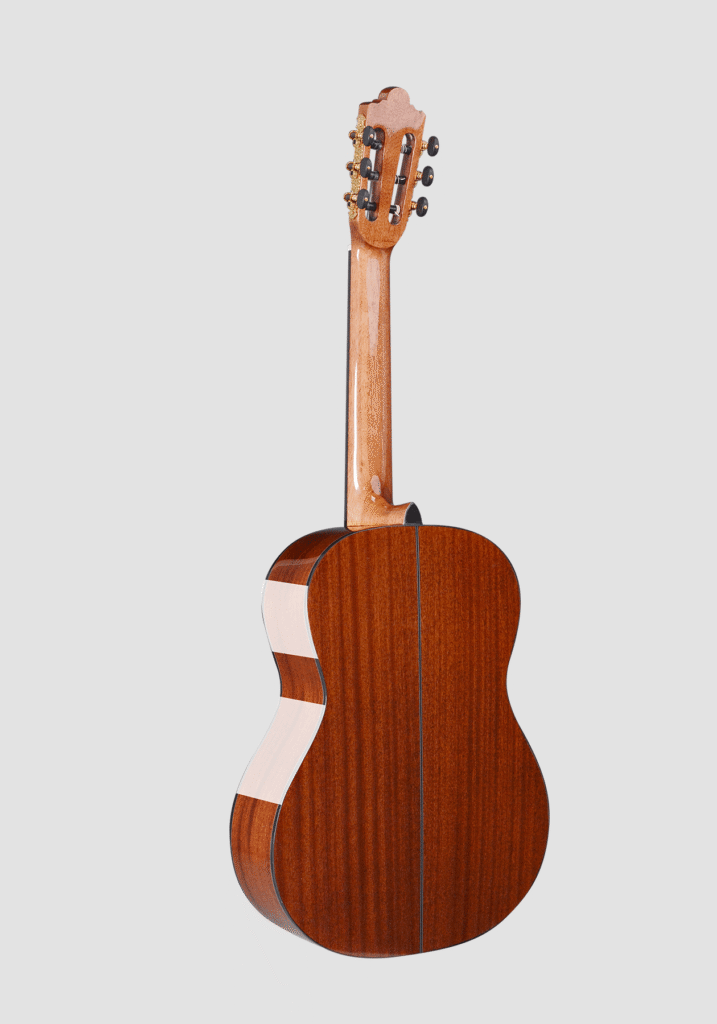
The neck brief should be short enough to use during sampling but precise enough to survive a change of staff. Combine the measurements, drawing references and evaluation notes under one model and revision.
| Decision | Record in the brief | Confirm on the sample |
|---|---|---|
| Intended customer | Channel, use and player direction | Review tasks match that customer |
| Nut width | Controlling unit and measurement points | Outside dimension at the agreed location |
| String layout | Centres or gaps; named convention | Layout and usable edge space |
| Neck geometry | Width, depth and profile references | Dimensions plus hand contact |
| Taper and access | Agreed fret positions and heel reference | Consistent path along the neck |
| Setup | Intended configuration and review conditions | No unresolved setup issue distorts comparison |
| Approval | Revision, reviewer and open corrections | Production reference is identifiable |
This table is a recording framework, not a universal pass/fail checklist. Acceptance limits should be agreed for the actual model. A number copied from another guitar cannot establish what is suitable for this order.
Use the OEM specification sheet guide to connect this neck brief to the rest of the instrument. The body, materials, finish and branding still need their own approved fields.
Give each model a clear role in the range
Offering two neck directions can make sense when they serve different customers. It makes less sense when the only explanation is that one measurement is slightly smaller. Retail staff need language that describes the choice honestly and helps a customer try the right instrument.
A traditional model and a crossover-oriented model should not be sold as interchangeable solely because both use nylon strings. Explain the intended feel and confirmed design features without declaring either one universally easier or more professional.
For a school programme, consistency may matter more than a long list of options. Students and teachers need to identify the model, and replacement orders should preserve its approved neck direction. Keep the range manageable before discussing additional cosmetic variants.
For an importer serving several channels, separate the model brief from the market claim. A design may be proposed for a particular channel, but that does not prove demand. Use enquiries, retailer feedback and actual product evaluation to decide whether it deserves a place in the assortment.
Prepare catalogue copy from the approved instrument
Catalogue copy should follow approval, not lead it. Publish the dimensions that have been confirmed, with consistent units and labels. If nut width and string spacing are both listed, use the same definitions as the inspection record.
Avoid phrases such as “perfect for every beginner.” They promise a result the neck dimension cannot guarantee. A more trustworthy description explains the intended player direction and invites the customer to evaluate fit.
Check the photographs too. A front view can suggest a different width because of perspective. Detail images should help explain the actual product, not create a visual comparison between two instruments photographed at different distances.
If a later revision changes the neck, update the product data and approved sample record together. Otherwise the buying team may inspect one version while the retailer is selling another. That mismatch is preventable with disciplined revision control.
Questions procurement teams often ask
Is one nut width correct for every full-size classical guitar?
No. The chosen width should fit the model's intended customer and work with spacing, profile and setup. A full-size label does not establish a complete neck specification. Review the actual drawing and sample rather than treating one familiar number as compulsory.
Does a narrower neck always feel easier?
No. A narrower neck can reduce one kind of reach while reducing space between strings or near the fingerboard edge. Depth, shoulders, action and playing habits also matter. Evaluate the whole neck under controlled conditions before deciding.
Can a buyer approve neck width from photographs?
Photographs can document a measurement when the method is clear, but they cannot replace the complete geometry record or a meaningful playing review. Profile and feel are especially difficult to approve from one image. Use photos as supporting evidence, with the agreed measurements and reference sample.
Should smaller classical guitars use proportionally smaller necks?
Not automatically. Scale, body and neck dimensions should suit the intended product. Uniformly reducing every dimension may produce spacing or feel that does not meet the brief. Approve each size as its own model.
What should change when the sample feels uncomfortable?
Identify the problem before selecting the correction. Check setup first, then distinguish width, spacing, profile, taper and access. Document the proposed change and the features that must remain unchanged so the next sample tests a clear hypothesis.
Conclusion: approve the relationship, not just the number
The most useful neck-width decision explains who the guitar is for and how its dimensions work together. It gives the sample team something measurable, the reviewer something specific to test and the retailer a product description that can be defended.
That is more valuable than choosing the narrowest neck or repeating a familiar specification. Once the design direction is settled, keep it connected to the full model brief and its approved revision.
Vinesmusical works with B2B guitar projects across classical guitars and the other core product lines. Contact Us with your intended customer, neck requirements and sample-review questions. We will discuss the proposed project without assuming a standard MOQ, fixed lead time or unreviewed specification.