 EN
EN Español
 Português do Brasil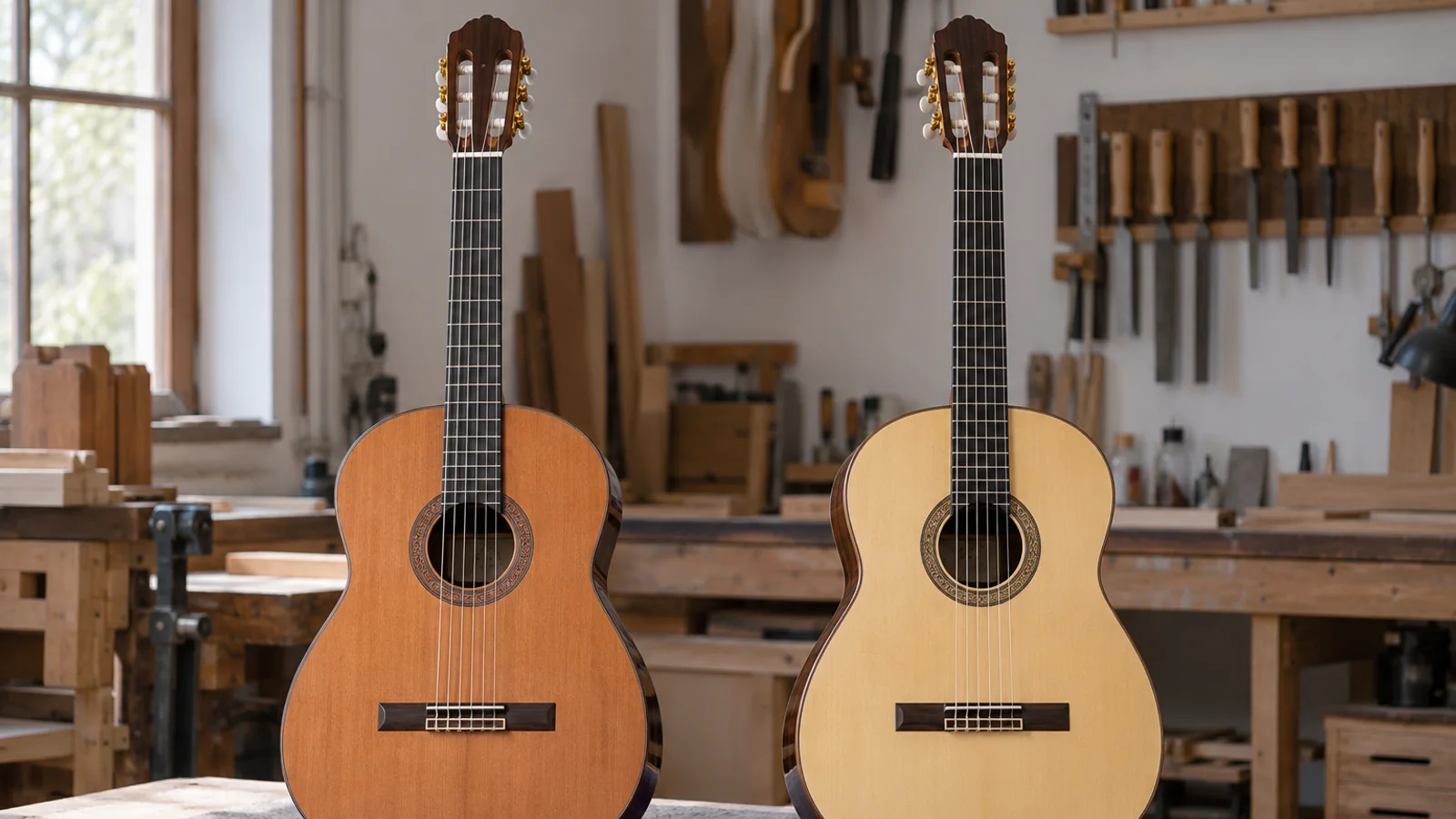
Choosing between cedar and spruce is not just a question of which top looks better in a catalogue. For a wholesale buyer, the decision affects product positioning, visual approval, material documentation, sample comparison and the way a supplier controls the specification in production.
The short answer: start with the customer and price position, then define construction before species. State whether the top is solid or laminated, how the visible surface should be graded, what natural variation is acceptable and how the sample will be evaluated. Compare complete guitars under the same setup and playing conditions. Do not treat “cedar” or “spruce” as a promise of one fixed sound.
This guide is written for importers, distributors, music-store groups and private-label brands buying finished classical guitars. It explains how to turn a broad wood preference into an approval record that a factory can follow.
Decide what role the model fills in the range
Before discussing wood, decide where the guitar belongs.
A student classical guitar, a step-up retail model and a more traditional solid-top instrument may all use cedar or spruce, but they do not need the same construction, appearance or inspection standard. If the buyer begins with a general request such as “a warm cedar model” or “a bright spruce model,” the supplier still has to guess the target player and the commercial purpose.
Write down the intended customer, sales channel and relationship to nearby models in the range. Is the new guitar meant to sit beside an existing spruce model? Is it intended to add a second visual choice at the same level? Will it be sold mainly through specialist dealers, general music stores or school programs? These answers affect which differences matter enough to control.
For a two-model range, buyers sometimes assume that changing the top species creates clear separation. That may be true visually, but the two instruments can still overlap in scale, neck, body, finish, strings and packaging. Decide whether the wood is the main distinction or one part of a broader specification change.
Define construction before naming the species
“Cedar top” and “spruce top” are incomplete descriptions.
The first question is whether the top is solid or laminated. Those are different constructions and should never be left to implication. The quotation, sample record, product copy and purchase specification need to use the same wording.
If the top is laminated, record how the visible face is described and make sure marketing language does not imply a solid top. If the top is solid, confirm how the supplier identifies and controls the material for the approved project. Avoid asking a photograph to prove construction that cannot be verified from the outside.
The rest of the body matters too. List the back and side construction, neck, fingerboard, bridge, binding and finish separately. A buyer comparing two top species should keep the other major variables stable unless the purpose of the sample is to compare complete, differently positioned models.
The solid-top versus all-solid classical guitar guide provides a broader framework for construction terminology. Use it before discussing appearance or playing impressions.
Avoid turning wood species into a fixed tone promise
Cedar and spruce are often described with familiar tone words. Those words can be useful as a starting vocabulary, but they are not a production specification.
The completed instrument also reflects top thickness, bracing, body geometry, bridge, finish, strings, setup and normal material variation. Two guitars carrying the same wood name can behave differently. A wholesale buyer should therefore avoid writing a product claim that the supplier has not measured or that every production unit cannot reasonably support.
A better approach is to describe the intended response in practical playing terms, then evaluate the sample. Ask whether the guitar suits the target player, whether notes speak evenly across the range and whether the balance remains acceptable under the intended string set and setup. Record the conditions of the comparison so that later comments refer to the same test.
When comparing cedar and spruce samples, use guitars with the same scale, neck specification, body platform, strings and setup where possible. Let both instruments settle in the same environment before the review. One quick session immediately after shipping is not enough for a final decision.
Set a realistic appearance range
Wood is a natural material. A single attractive sample cannot represent every top that will appear in a bulk order.
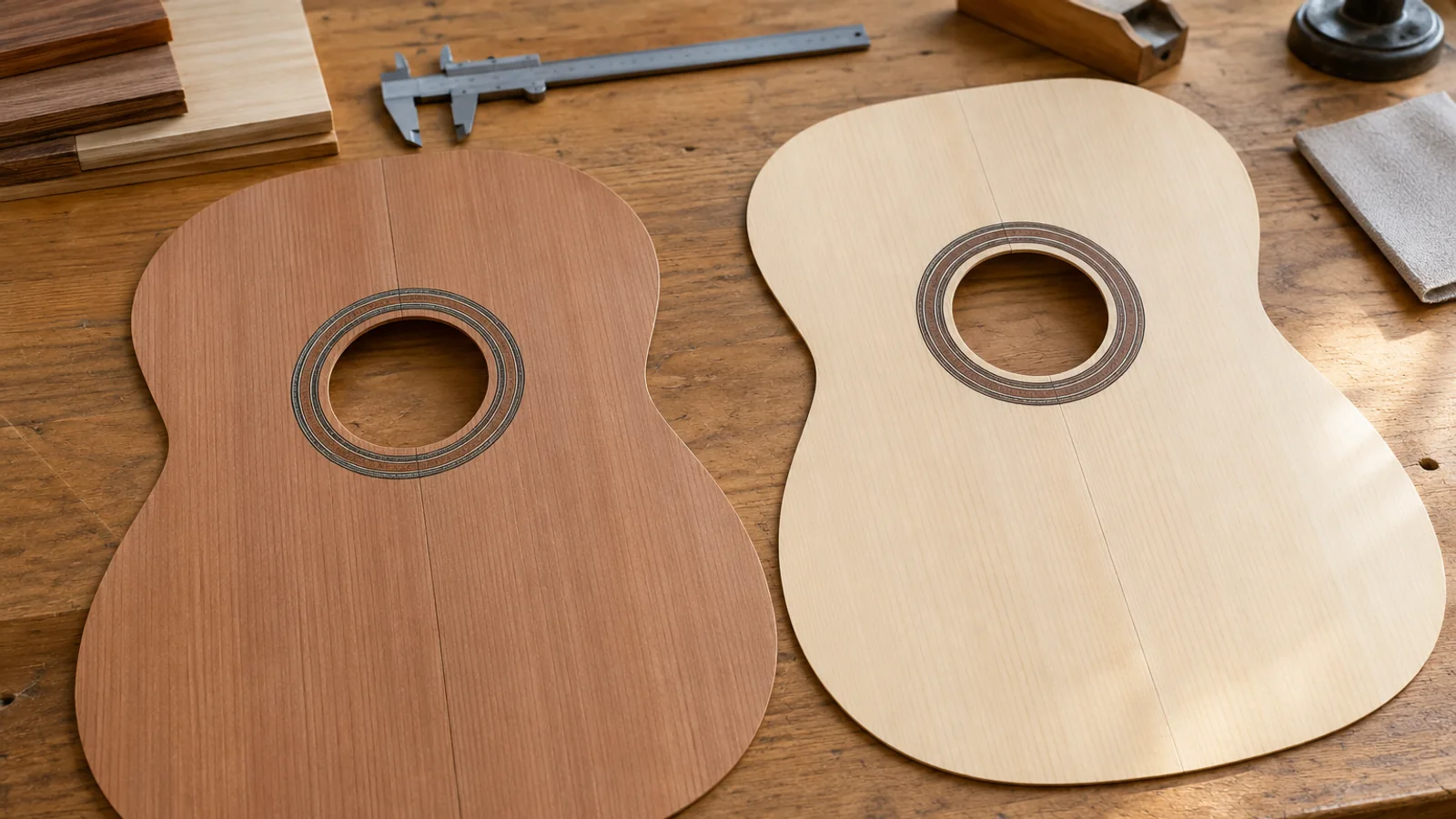
For spruce, buyers may look at colour, grain spacing, grain direction, visible runout, mineral marks and the way the two halves match. For cedar, colour range, grain pattern, contrast and visible natural marks may draw more attention. The exact commercial standard depends on the model, but the buyer and supplier should agree what matters before production.
Do not rely on terms such as A grade, AA grade or master grade unless both sides have defined what the term means for this project. Grade names are not automatically comparable between suppliers. A short visual reference set is more useful: several accepted examples, several rejected examples and notes explaining why.
Lighting matters. Photograph approved samples under neutral, repeatable conditions, with one full front view and closer detail images. Avoid strong colour filters, heavy reflections or dramatic shadows. The record should help a production inspector make a decision, not make the sample look more expensive.
The natural wood variation guide explains how to create an acceptable range without demanding impossible visual uniformity.
Treat finish as a separate approval
The same top can look very different under gloss, satin or open-pore finishes. Tint, sealer and coating thickness can also change colour and contrast.
Specify the finish system and visual target separately from the wood species. If the buyer wants a pale spruce appearance or a particular cedar colour direction, use a controlled physical sample or agreed colour reference. Do not assume that a species name also defines the final shade.
Check the finish around the bridge, rosette, binding and body edge. These areas often reveal colour mismatch, glue residue, uneven coating or polishing issues more clearly than the centre of the top. Review the guitar under diffuse light and again at an angle that shows surface consistency.
Natural darkening or variation should be discussed as part of the material range. Product photographs used online should represent normal production, not only the lightest or most figured piece available.
Compare samples with a controlled method
A useful sample comparison separates measurable facts from playing impressions.
First confirm the build record. Check model code, construction, top species, back and sides, neck, fingerboard, bridge, scale, nut width, strings and finish. Then measure setup points using the same method for both guitars. If action, relief or strings differ, correct or record the difference before comparing feel and response.
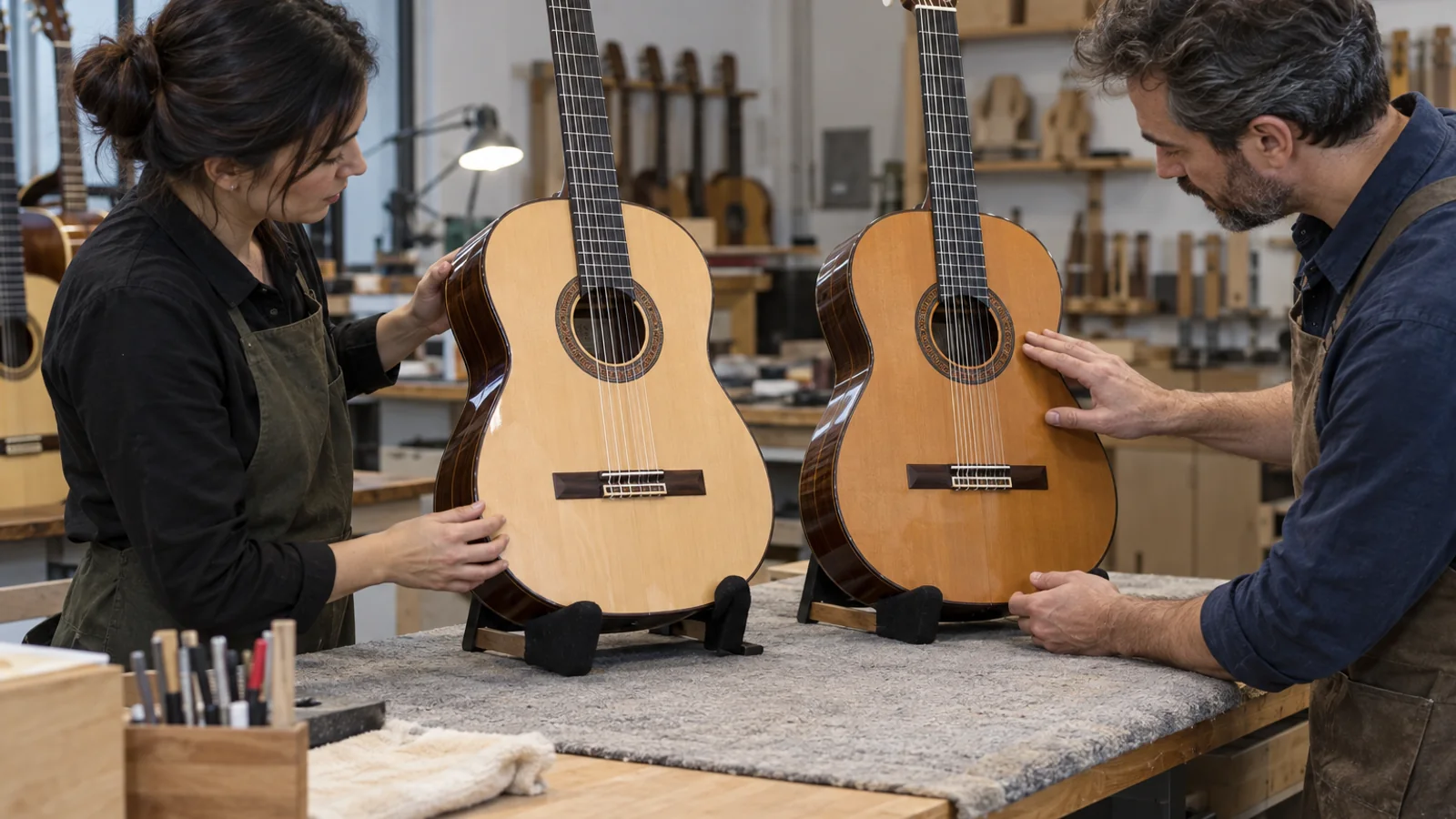
Next, use the same player, room and short set of playing patterns. Include open-position chords, single-note lines, notes across the fingerboard and the dynamic range relevant to the target customer. The goal is not to declare a universal winner. It is to decide whether each sample performs the role assigned to it.
Record comments in concrete language. “Model A responds more quickly under a light touch in this test” is more useful than “cedar is always warmer.” Note any uneven notes, buzzing, setup limits or structural concerns separately from preference.
Repeat the review after the strings and instrument have settled. If the buyer is making a major range decision, compare more than one representative sample rather than allowing one exceptional piece of wood to define the entire order.
Make the specification traceable from material to carton
The approved wood decision needs to appear in every relevant document.
Use one current model name and revision number across the quotation, specification sheet, sample label, bill of materials, inspection checklist, packaging artwork and carton mark. If cedar and spruce versions share the same body, give them distinct suffixes or codes that cannot be confused in production or the warehouse.
The specification sheet should include:
- top construction and species;
- approved visible appearance range;
- back and side construction and species;
- finish type and colour reference;
- rosette, binding and bridge details;
- scale, neck and setup requirements;
- strings used for sample approval;
- logo, label and model identification;
- packaging and carton marks;
- dated sample revision and open issues.
The OEM guitar specification-sheet guide can be used as the base record. Keep unanswered points visible instead of allowing them to become factory assumptions.
Planning a cedar or spruce classical-guitar program? Send your requirements with the target customer, construction, wood direction, finish, neck, branding, packaging and estimated quantity. Vinesmusical can review whether the brief is ready for quotation and sampling.
Ask how incoming material is identified
A buyer does not need to control the supplier’s entire material system, but should understand how the approved project is kept separate and traceable.
Ask how incoming top material is identified, how construction and species are recorded and how material is protected before use. If the supplier proposes a substitution, require written approval before the change enters a sample or production batch.
Moisture and storage conditions matter to manufacturing, but buyers should not invent a universal numerical limit without understanding the material, season and factory process. Ask the supplier to explain its documented method and how unusual readings or visible defects are handled.
For a mixed cedar-and-spruce order, model identification should continue through body preparation, finishing, assembly and packing. The similar outline of the two versions makes a clear traveller, label or batch record especially important.
The incoming guitar material inspection guide gives buyers a practical way to ask for evidence without turning the purchase specification into a vague audit slogan.
Inspect production without expecting identical grain
Pre-shipment inspection should confirm the approved range, not demand that every top copy the sample’s grain.
Select instruments across cartons or production lots according to the agreed inspection plan. Confirm the model code and top description first. Then review construction records, visible wood range, finish, rosette, bridge area, binding, dimensions, setup, fretwork, tuner operation, labels and packing.
Compare unusual pieces with the accepted and rejected visual references. If a mark is outside the approved range, record its location and frequency. Do not reject normal variation merely because it differs from the hero photograph, and do not accept repeated defects merely because the material is natural.
Playability inspection should use the same method for both wood versions. Check relief, action, fret condition, buzz, tuning operation and the intended string set. Wood choice does not remove the need for normal finished-instrument QC.
The pre-shipment guitar inspection guide can be adapted by adding the approved top-material and appearance criteria.
Compare quotations by scope, not by wood name
Two quotations that both say “solid cedar top classical guitar” may not describe the same instrument.
Compare the complete scope: body platform, back and sides, neck, fingerboard, bridge, rosette, binding, tuner level, strings, finish, logo method, packaging, inspection and sample revision. Ask each supplier to mark assumptions and exclusions.
Do not assume a price difference is caused only by cedar versus spruce. Construction, grade, component choices, yield, finish and order composition may all change the quotation. If the buyer needs a true comparison, issue one controlled specification and request deviations in writing.
When a lower quotation uses a different construction or visual grade, treat it as an alternative proposal rather than the same model. That distinction helps purchasing teams avoid choosing on price and discovering the scope difference after sampling.
Common mistakes in cedar and spruce projects
Approving a species but not the construction
Always state solid or laminated. The species name alone is not enough.
Publishing broad tone claims from one sample
Use the sample to evaluate the finished design. Avoid turning one playing impression into a promise for every guitar.
Using one perfect top as the production standard
Approve a representative range with accepted and rejected examples.
Changing strings during the comparison
String type and condition affect setup and response. Keep them controlled or record the difference.
Letting model codes drift
Cedar and spruce versions need clear identification from quotation through carton marking.
Frequently asked questions
Is cedar always better for beginners?
No. Beginner suitability depends on the full instrument, including size, neck, setup, strings, durability, price position and support needs. Evaluate the finished sample for the intended player.
Is spruce always brighter than cedar?
That description is too broad for a purchase specification. Species can influence a design, but construction, bracing, thickness, finish, strings and normal variation also matter. Compare controlled finished samples.
Should cedar and spruce versions use the same specification?
They can share many fields, but each version needs its own material, appearance and model-identification record. If construction changes, document that too.
How many appearance references should a buyer approve?
Use enough photographs or samples to show a normal accepted range and clear rejection examples. One hero sample is rarely sufficient for natural wood.
Can a quotation use only the term “cedar top”?
It can appear as a short label, but the controlled specification should also state construction, visible grade or range, finish and any allowed substitution.
Conclusion
Cedar versus spruce is useful only when the buyer connects the choice to a real assortment role and a controlled construction.
Define solid or laminated construction first. Approve an appearance range, keep finish separate, compare complete samples under the same conditions and make the final decision traceable through production and inspection. That process gives the factory a clear reference and gives the buyer product copy that can be supported.
Vinesmusical was established in 2014 and manufactures classical, acoustic and electric guitars plus electric basses for B2B OEM/ODM projects. The company has about 80 employees, approximately 7,000-guitar monthly capacity, 13 years of OEM/ODM experience, a company-owned 10,000-square-metre five-floor factory, third-party BSCI certification and a third-party factory-audit report available for buyer review.
Contact Vinesmusical with your intended construction, top-material direction, target customer, finish, branding, packaging and estimated quantity. Open specifications can be identified before quotation rather than guessed during sampling.