 EN
EN
A production order is not ready to ship simply because the guitars are assembled and packed. For an OEM buyer, the final question is more practical: does the shipment still match the approved sample, specification sheet and packaging agreement?
A clear pre-shipment release check helps both sides answer that question with evidence. It also gives the buyer time to resolve small issues before cartons leave the factory, when corrections are still manageable.
Start with the approved reference
The inspection should begin with the documents that defined the order. Depending on the project, that normally includes the approved sample, specification sheet, colour reference, logo artwork, packaging layout and any written change approvals. The inspector should not rely on memory or compare the batch with a different model.
If a specification changed after sample approval, the latest signed or confirmed version should be available at the inspection point. This simple document-control step prevents an old drawing or packaging file from becoming the release standard.
For classical guitar orders, keep the classical guitar OEM sample approval checklist with the inspection file so dimensions, setup, materials, finish and packaging are compared against the same production reference.
1. Confirm model identity and quantity
Before checking fine details, confirm that the shipment is the correct shipment. Review model numbers, finishes, left- or right-handed versions, carton marks and quantities against the purchase order and packing list.
- Confirm the quantity for each model, colour and configuration.
- Check that carton labels and product labels use the agreed model names.
- Separate samples, spare parts and replacement units from normal saleable stock.
- Record any mixed-carton arrangement so the buyer’s warehouse can receive it correctly.
2. Use a defined sampling plan
A useful inspection record states how many guitars were checked and how the units were selected. Samples should come from different cartons or rack positions, rather than only from products prepared in advance for inspection.
The buyer and factory should also agree which defects are critical, major or minor. A cosmetic mark and a wiring failure do not carry the same commercial risk. Defect definitions make the final decision more consistent and reduce arguments based on personal judgement.
For a broader view of how inspection results should be compared across production, see our guitar manufacturing batch consistency guide.
3. Check workmanship and finish under consistent light
Finish inspection is easier when the lighting and viewing distance are consistent. Check colour, gloss or matt level, sanding marks, dust inclusions, edge coverage and visible repairs against the approved standard. On natural or transparent finishes, allow for normal wood-grain variation while still checking that the overall appearance suits the approved range.
Also inspect binding joints, neck pockets, hardware installation and areas that can be missed during a quick front-view check. Photographs should show both the complete instrument and close-ups of any defect.
4. Inspect the neck, fretwork and setup
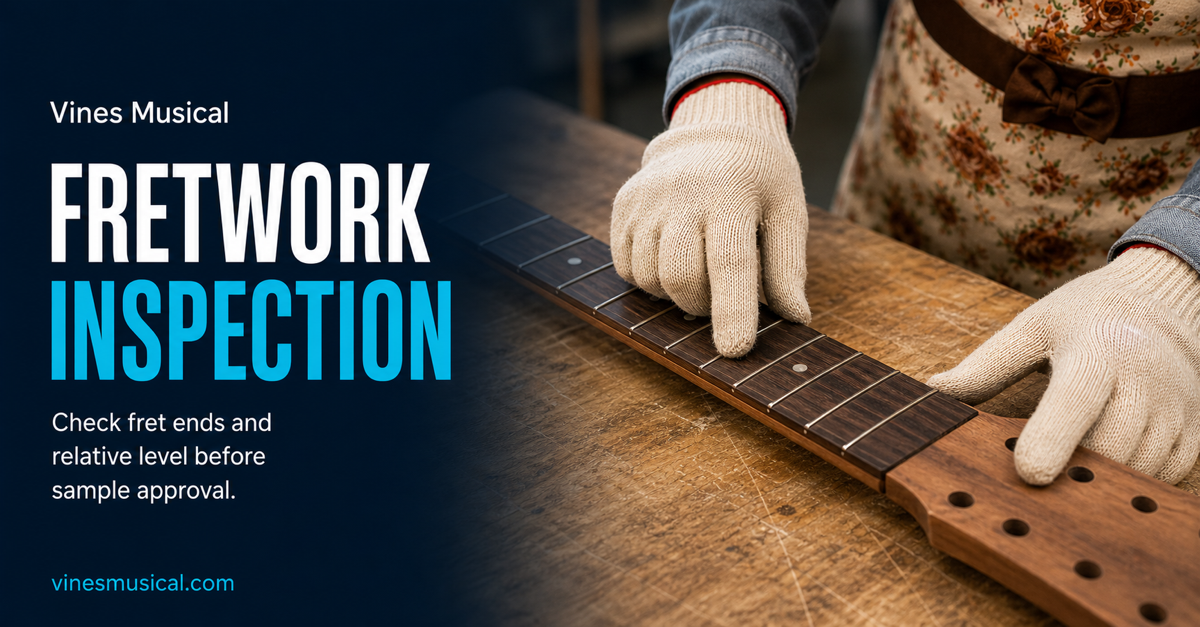
A guitar can look good and still create returns if the setup is unstable. The pre-shipment check should cover neck relief, action, nut and saddle condition, fret ends, fret level, tuning stability and basic playability. Measurements should follow the approved specification or the buyer’s tolerance, not a generic number applied to every model.
For projects with multiple scale lengths, string gauges or bridge types, record the setup standard by model. This is especially important when one shipment contains several configurations.
5. Test hardware and electronics
For electric guitars and electro-acoustic models, test the complete signal path. Check pickup selection, volume and tone controls, output jack stability, switches, active electronics and battery compartments where applicable. Hardware should be secure, correctly oriented and free from damage caused during assembly.
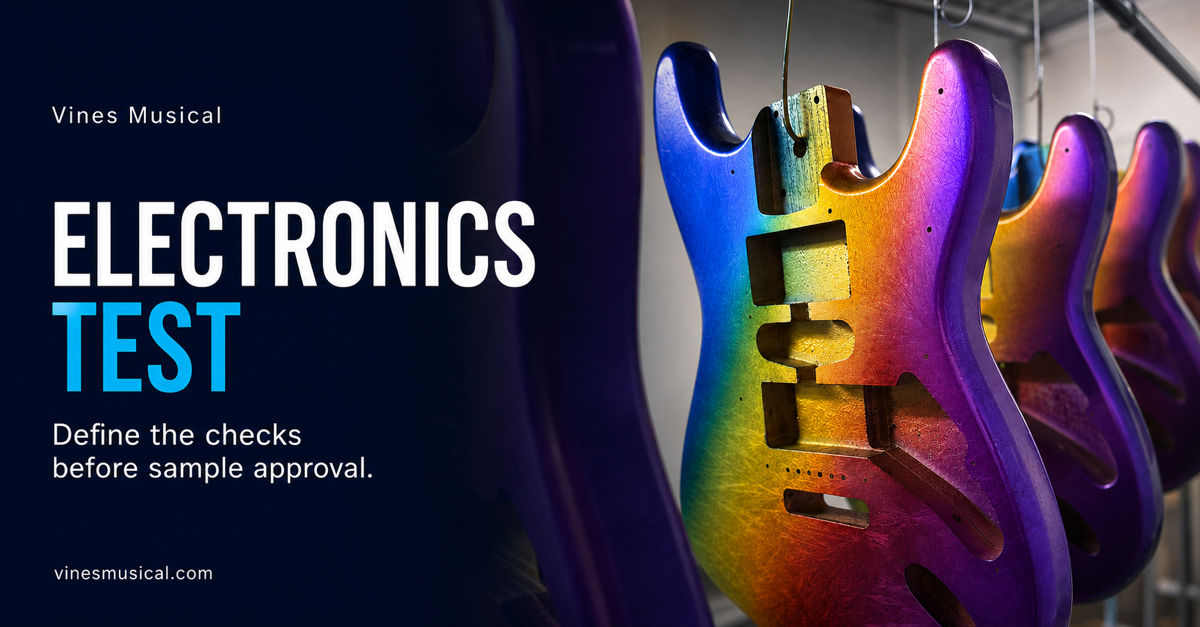
A functional check should be recorded as a real test, not simply marked “OK” without identifying what was tested. If the buyer requires a specific amplifier, cable or test method, agree on it before production. Our electric guitar and bass electronics QC guide gives buyers a more detailed fitted-system checklist.
6. Review packaging as part of the product
Packaging problems often appear only after the guitar has passed its instrument inspection. Check protective sleeves, neck and headstock support, accessory placement, moisture protection if specified, inner-box fit, master-carton marks and barcode readability.
Performing a packing check on fully packed cartons can reveal movement, pressure points or missing accessories that are not visible when inspecting an unpacked guitar.
7. Build a release file the buyer can review
A concise release file is more useful than a folder of unlabelled photos. It should identify the purchase order, models, production quantity, inspected quantity, inspection date, findings, corrective actions and final disposition. Photos should be linked to the relevant model or checkpoint.
When an issue is found, record what was corrected and how the corrected units were rechecked. The purpose is not to make the report look perfect; it is to show a controlled decision trail.
Questions buyers should settle before inspection day
- Which approved sample and specification revision will be used?
- How will units be selected for inspection?
- What defect classifications and acceptance limits apply?
- Which measurements and functional tests are mandatory?
- What packaging evidence is required?
- Who has authority to release, hold or rework the shipment?
How Vinesmusical supports shipment review
Vinesmusical is a B2B OEM/ODM guitar manufacturer founded in 2014. Our 80-person team produces classical, acoustic and electric guitars, with monthly capacity of 7,000 units. Projects are handled in our company-owned 10,000 m² five-floor factory.
For each OEM/ODM program, the pre-shipment review can be aligned with the approved specification, sample and packaging requirements. Buyers can also review our third-party BSCI certification and third-party in-depth factory audit report during supplier qualification. Review our Factory & Buyer Verification page, learn more about Vinesmusical’s factory profile, and use our remote factory audit checklist.
Explore our OEM/ODM categories for classical guitars, acoustic guitars, electric guitars and electric basses. To discuss a new project or an upcoming shipment, contact Vinesmusical or email info@vinesmusic.com.