 EN
EN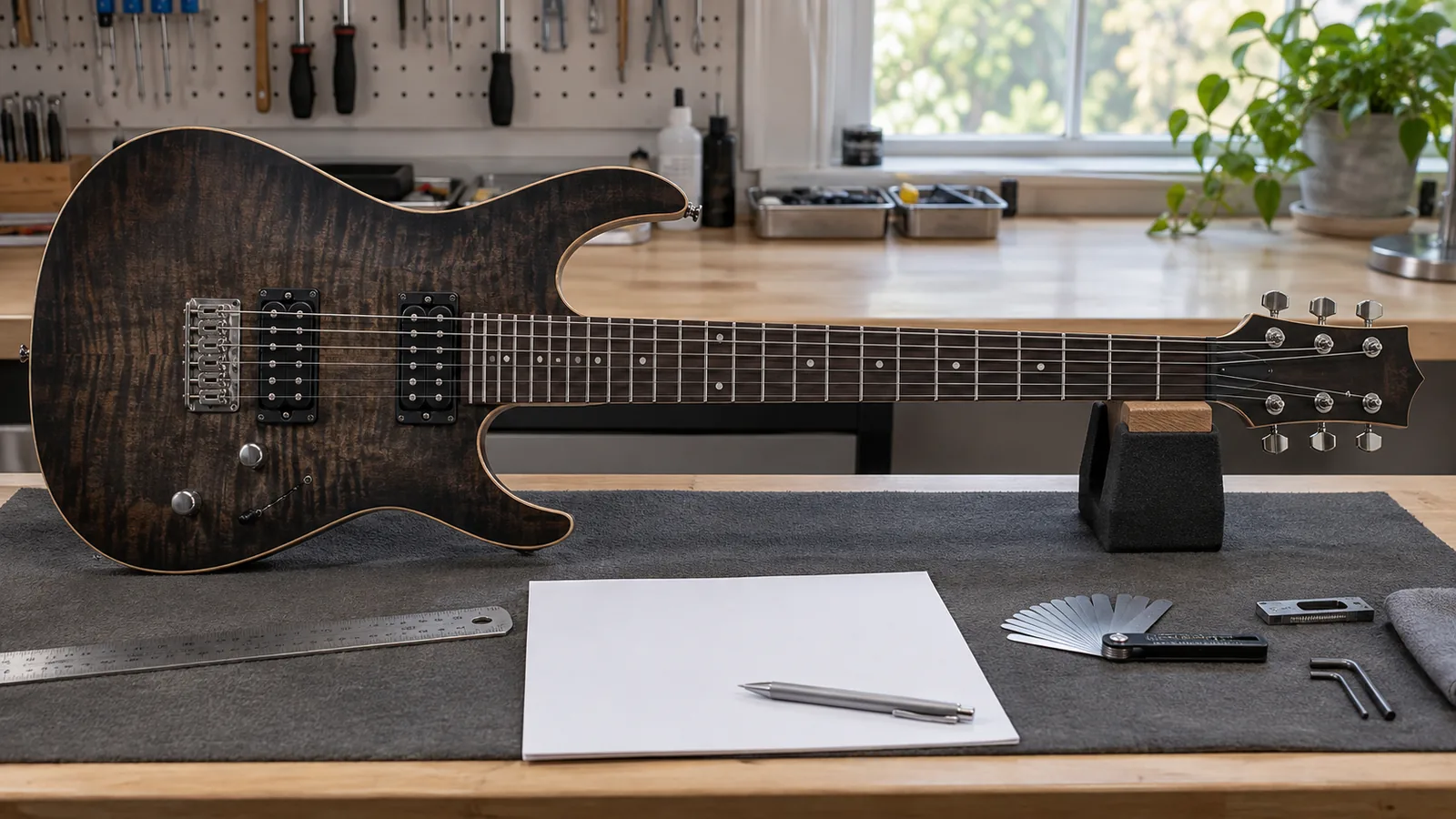
Adding two frets to a familiar electric-guitar outline changes more than the number on a specification sheet.
The neck length, joint position, pickup location, cutaway access, bridge relationship and visual balance may all move. If those decisions are made separately, the sample can have 24 frets but still feel awkward above the 20th fret, place the neck pickup in an unintended position or create a body route that is difficult to repeat.
The short answer: wholesale buyers should approve the 24-fret model as one connected geometry. Define the scale, fretboard extension, neck joint, bridge position, pickup layout, body access, neck profile, hardware, electronics and setup before approving appearance. The sample must then be played and measured across all 24 frets, not inspected like a 22-fret model with a longer fingerboard.
This article is for brands, distributors and private-label buyers developing a finished instrument. It does not assume that one 24-fret design suits every player or price position.
Define why the range needs 24 frets
Start with the customer and assortment role.
A 24-fret guitar may serve modern rock and metal players, musicians who use higher-register lead parts, or retailers building a specification-led electric range. It may also be included because competing products list 24 frets. Those are different reasons, and they lead to different priorities.
If upper-register access is central to the product, body contour, heel shape and fretwork deserve more attention than decorative changes. If the model is mainly an assortment step-up, the buyer must decide which features genuinely separate it from an existing 22-fret guitar.
Write the intended player, tuning range, playing style and retail position into the brief. Avoid using “modern” as the complete direction. Modern can refer to neck feel, electronics, hardware, finish or appearance. The factory needs specific requirements.
Check whether 24 frets belong on one model or across an entire family. A focused launch is easier to inspect and explain than several body shapes that share only the fret count.
Fix the scale and fretboard plan first
Fret count and scale length are separate decisions.
A 24-fret fingerboard can be designed around different scale lengths, but the scale must be confirmed before neck, bridge and pickup relationships are finalized. State the measurement convention and the intended bridge system. Do not rely on a catalogue label alone.
Ask for a controlled drawing that shows the nut, fret positions, end of fingerboard, neck joint, bridge reference and pickup centers. The buyer does not need to run the factory's engineering process, but the approved sample must connect to one current drawing.
Review the fretboard extension beyond the neck support. A long unsupported extension may affect access to the neck pickup route and the way the last frets are installed or serviced. The solution depends on construction, so evaluate the factory's proposed method rather than prescribing a generic rule.
Confirm the number of frets on the actual sample. This sounds obvious, but product listings, drawings and physical instruments can drift when similar 22- and 24-fret platforms are developed together. Use distinct model and revision codes.
Review the neck joint and body access together
The last frets have little commercial value if the player cannot reach them comfortably.
Inspect the cutaway depth, horn shape, neck joint position and heel transition as one system. A front photograph may make the access look generous while the rear heel remains bulky. Ask for front, rear and side views before the sample is shipped.
Then play the sample while seated and standing. Reach the 22nd, 23rd and 24th frets on all strings. Check whether the wrist position, thumb clearance and body edge feel appropriate for the target player.
Do not confuse a thin heel with a strong design. The joint still needs a repeatable construction and enough material for the chosen neck method. The factory should explain how it controls neck alignment and joint fit during assembly.
If the project uses a bolt-on construction, specify fastener pattern, access and any plate or ferrule arrangement. If it uses another joint, record that method and the approved transition. Do not leave the joint as an assumed feature of the body silhouette.
The electric-guitar OEM options guide can help organize these construction decisions before styling is finalized.
Check pickup position before approving the body route
On many 24-fret designs, the end of the fingerboard and neck pickup compete for space.
The pickup may move toward the bridge, use a different format or sit under part of the fingerboard extension. Each choice affects routing, appearance, wiring access and the acoustic location at which the pickup senses the strings.
Approve pickup centers on the controlled drawing. Do not specify only “HH” or “HSS.” Those abbreviations describe a layout family, not exact position, route size, mounting method or switching.
Record whether the pickups mount directly to the body, into rings or through a pickguard. Confirm the route, screw clearance and adjustment range. If the buyer supplies pickups, provide current mechanical information rather than assuming every unit in the named format shares the same dimensions.
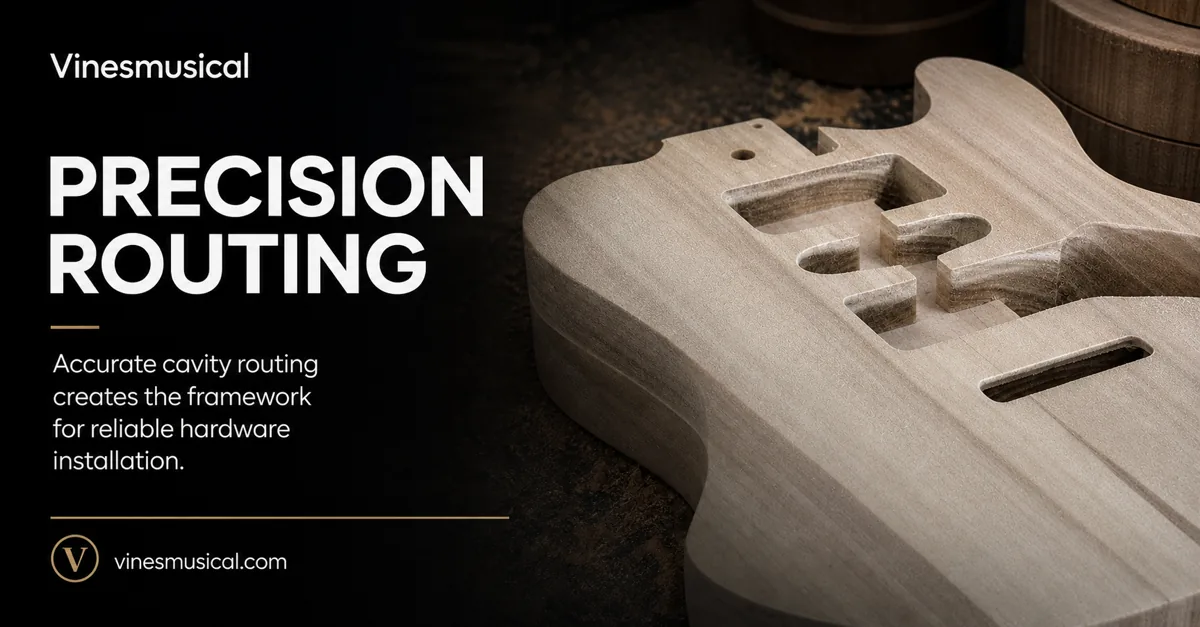
The buyer should also decide whether the 24-fret model uses the same electronics as a 22-fret sibling. Reusing parts can simplify purchasing and service, but only if the new geometry and desired result support it.
Specify the neck for the intended player
Fret count does not define neck feel.
Document the nut width, neck profile, key thickness checkpoints, fingerboard radius, fret size, edge treatment and finish. These fields should use the factory's agreed measurement method and sample references.
Consider the complete playing environment. A flatter radius and larger fret may fit one modern product direction, but the buyer should not adopt those features only because they often appear on 24-fret guitars. The assortment may require a different balance.
Review the transition from the neck shaft to the headstock and heel. Check comfort, finish coverage and the absence of sharp or inconsistent edges. Confirm truss-rod access and the adjustment tool supplied or recommended for service.
Natural wood variation and finishing should be approved separately from geometry. A visually attractive neck does not compensate for inconsistent dimensions, and an exact-looking sample does not prove bulk repeatability without controlled references.
Inspect upper-fret access as a player would use it
Inspection must include the final frets.
Check fret seating, end treatment, relative level and surface condition from the first fret through the 24th. Play each string in the upper register with normal and expressive pressure. Listen for choking, buzzing and uneven sustain.
Record relief, action and pickup height using agreed measurement points and conditions. Then confirm that the last frets remain usable under that setup. A guitar can pass an action measurement near the middle of the neck while still having a local upper-fret problem.
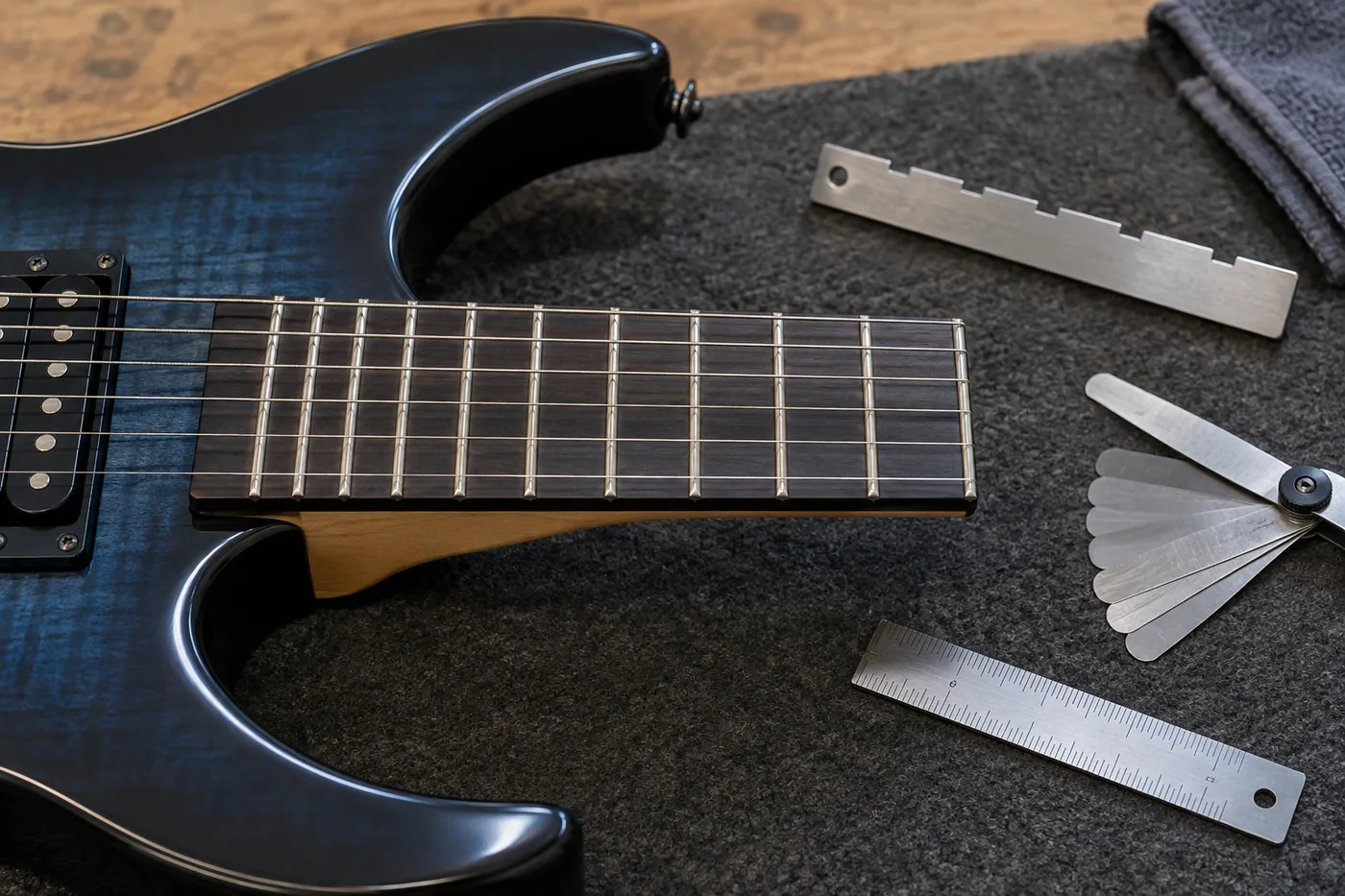
Check string bending near the body end of the fingerboard if that is relevant to the target player. The purpose is not to promise one universal playing style. It is to make the inspection match the product's intended use.
The fretboard and neck finishing guide gives a broader framework for buyer checks. Add a clear requirement to include frets 20 through 24 in the sample and shipment inspection.
Select hardware as part of the geometry
Bridge choice influences the body route, neck angle or pocket plan, scale reference, string height range and service needs.
Define the bridge type, mounting pattern, string path and approved hardware finish. Confirm that the adjustment range supports the intended tuning and string set. If a tremolo is used, document the cavity, spring arrangement, back cover and setup condition.
Tuners, nut and string retainers should be reviewed as one path from bridge to tuning post. Confirm break angles and access without making unsupported claims about tone or tuning stability. The finished sample should demonstrate the actual system.
Hardware color needs a physical or supplier reference. Names such as black, chrome or gold can hide visible differences between components. Approve the assembled appearance under consistent lighting, and record accepted variation when different suppliers are involved.
Do not substitute hardware in the sample without writing down the change. A temporary bridge or tuner can alter setup and force a second round of work when the bulk component arrives.
Plan electronics and controls for inspection
The electronics specification should list pickups, controls, switch functions, output connection, cavity shielding or grounding method where applicable, and any active-system power access.
Create a simple switching table. For each selector position, state which pickup or coil function should be active. This is clearer for factory testing and dealer service than a marketing phrase such as “versatile tones.”
Check knob and switch placement while playing. A control layout copied from another body may feel crowded after the bridge, pickup or cutaway geometry moves. Confirm that wiring routes and cavities leave enough room for assembly and repair.
Sample testing should cover output, switching, potentiometer movement, unwanted noise, jack retention and any active circuit. Record the test method actually used. Do not publish unverified electrical or acoustic performance figures.
The electric-guitar and bass electronics QC guide explains how to convert a wiring specification into repeatable production checks.
Developing a 24-fret model? Send your requirements with the scale, body reference, neck construction, pickup layout, bridge, electronics, finish, branding and estimated quantity. Vinesmusical can review whether the brief is ready for quotation or needs a controlled sample stage first.
Compare wholesale quotations line by line
A quotation for a “24-fret electric guitar” is not comparable until the scope is visible.
Ask suppliers to identify body and neck construction, scale, fingerboard, fret size, bridge, tuners, pickups, controls, switching, finish, branding, accessories and packing. Separate development charges or buyer-supplied parts from the instrument scope.
Confirm whether the quoted platform already exists or requires new drawings, tooling, fixtures or programs. An existing body outline may still need a different neck pocket, pickup route and bridge relationship for the 24-fret version.
List every open option. If one supplier assumes a fixed bridge and another assumes a tremolo, the prices do not describe the same product. The OEM guitar specification-sheet guide provides a practical format for closing those gaps.
Vinesmusical does not state a universal MOQ, price or lead time in this guide. Commercial terms should follow the confirmed specification, customization, estimated quantity and packaging request.
Approve the sample in a controlled sequence
Begin with identity: model code, revision, scale, fret count, construction and finish. Then verify dimensions and hardware. Finish with setup, playability and electronics.
Check neck alignment from nut to bridge. Confirm that strings sit appropriately across the fingerboard and pickup pole or sensing area. Review pickup and bridge routes for clean edges and correct location. Look for unintended gaps around covers, rings or the neck joint.
Play every fret on every string, with special attention to the upper register. Operate every control and inspect access to adjustments and batteries where fitted. Restring or perform a realistic service check if dealers will be expected to support the instrument.
Record corrections by revision. Photographs help, but measurements, drawings and written acceptance are needed when a visual change affects fit or function. Close every temporary sample substitution before the bulk specification is released.
Prepare shipment inspection and packing
The shipment inspection should confirm the 24-fret model rather than rely on a generic electric-guitar checklist.
Include model and revision, fret count, scale reference, neck alignment, joint appearance, bridge and pickup positions, hardware, switching, output, relief, action, pickup height, fret playability and finish. Add an upper-fret playing check so the last four frets are not treated as decorative.
Packing should protect the headstock, controls, bridge and finish without placing pressure on protruding hardware. Verify the approved bag, carton or case with the actual guitar. If the body horns or overall length differ from another model, do not assume the existing insert fits.
Check labels, accessories and included tools against the model record. A 22-fret and 24-fret version can look similar in a closed carton, so model identification must remain clear through warehouse handling.
24-fret electric guitar buyer checlist
Before approving the sample, confirm:
- The target player and retail role are written into the brief.
- Scale length and all 24 fret positions are controlled on the current drawing.
- Neck joint, heel and cutaways provide usable upper-fret access.
- Bridge, neck and pickup centers share one approved geometry.
- Pickup routes and mounting method match the actual components.
- Nut width, neck profile, radius, fret size and edge treatment are defined.
- Bridge, tuners, nut and string set support the intended setup.
- Switching and control functions are documented and testable.
- Frets 20 through 24 are included in setup and playability checks.
- Finish, branding, accessories, labels and packing are approved.
- The sample record and proposed bulk specification match.
If those fields are scattered across messages, consolidate them before release.
Frequently asked questions
Does a 24-fret guitar require a longer scale?
Not automatically. Fret count and scale length are separate. The project drawing should show how the 24th fret, neck joint, bridge and pickup positions work together for the chosen scale.
Why can the neck pickup move on a 24-fret design?
The longer fretboard and its support can occupy space used by the neck pickup on another model. The pickup may move toward the bridge or use a different mounting arrangement. Approve its exact center and route, not just the pickup configuration name.
Is a deep cutaway enough to guarantee upper-fret access?
No. Rear heel shape, joint position, body thickness and playing posture also matter. Inspect front, rear and side views, then play the final frets on the sample.
What should be measured during sample setup?
Use the agreed string set and tuning, then record relief, action at specified locations, pickup height and any bridge-specific setup fields. Confirm fret playability across the full neck, especially frets 20 through 24.
Can a 22-fret and 24-fret model share the same body?
They may share an outline, but the neck joint, pocket, pickup route, bridge relationship and access still require review. Treat each as a controlled model revision or separate model, not an automatic copy.
What should wholesale buyers request in a quotation?
Request the complete construction, scale, neck, fingerboard, frets, bridge, tuners, pickups, controls, finish, branding, accessories, packing and development scope. Mark open options and substitutions.
Does Vinesmusical publish a fixed MOQ or delivery promise for this product?
No fixed MOQ or delivery promise is made here. Vinesmusical reviews the confirmed specification, customization, quantity estimate and packaging requirements before preparing commercial terms.
Conclusion
A 24-fret electric guitar succeeds when the last frets, neck joint, pickup layout, bridge and setup work as one design.
Wholesale buyers should control those relationships before spending time on cosmetic variants. A connected specification makes the sample easier to evaluate, the quotation easier to compare and the bulk instrument easier to inspect and service.
To review a private-label 24-fret electric-guitar project, contact Vinesmusical with your scale, body reference, neck construction, pickup and bridge layout, electronics, finish, branding, quantity estimate and packaging requirements. The team can identify the remaining decisions before quotation or sample development.