 EN
EN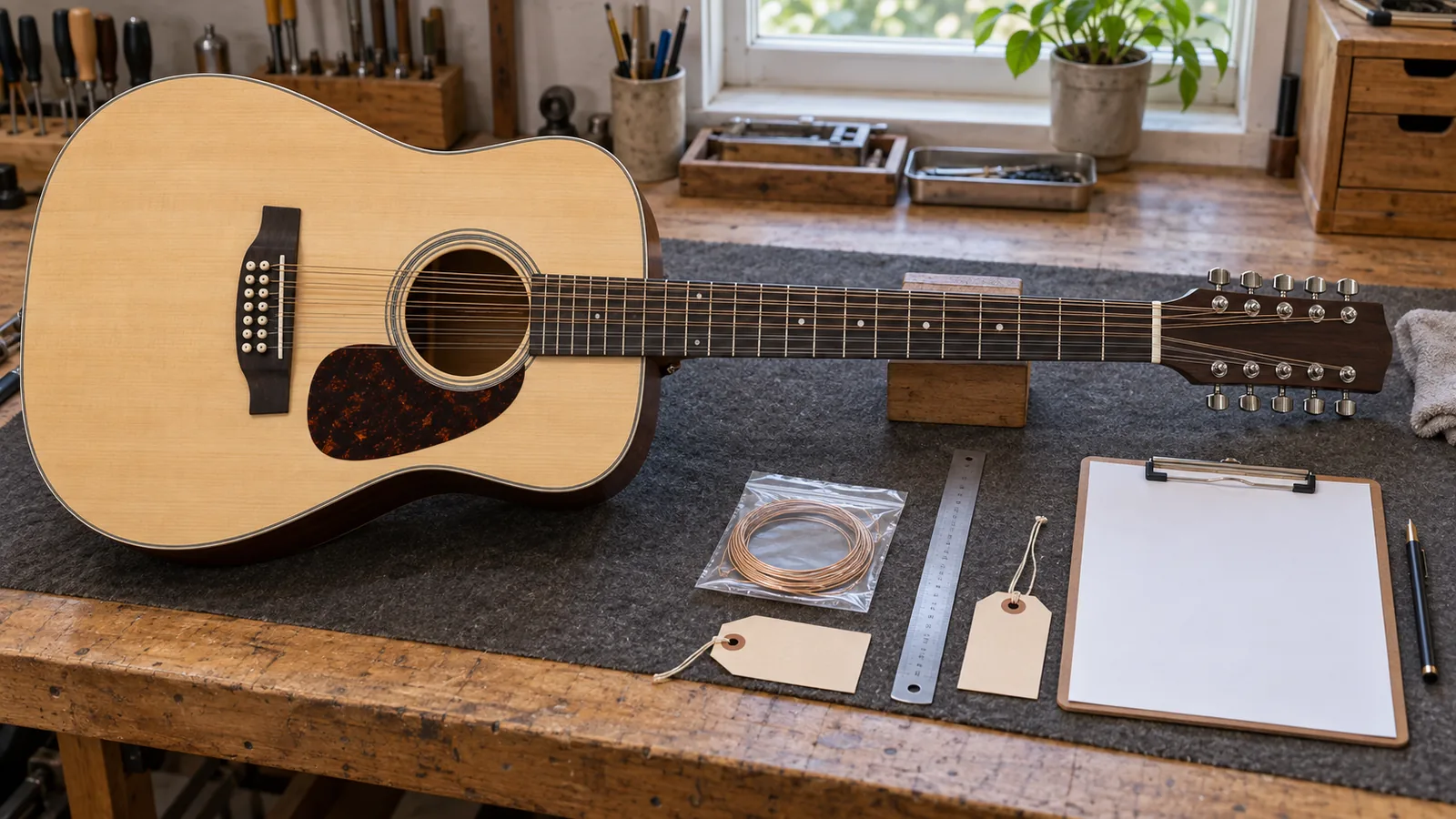
A 12-string acoustic guitar should not be purchased as a six-string model with six more tuners added to the headstock.
The paired courses change the load on the neck and top, the way the nut and saddle are prepared, the hardware layout, the setup procedure and the way a finished instrument is inspected. A quotation can look complete while leaving those decisions unstated. The missing details usually appear later as sample revisions, inconsistent setup or a retail product that is harder to explain and service.
The short answer: wholesale buyers should define the intended player, body platform, twelve-string course layout, tuning, string set, neck and headstock construction, top and bracing approach, hardware, setup targets, electronics, finish, branding and packing before a sample is approved. The factory should then record those decisions in one model-specific specification and inspection plan.
This guide does not prescribe one universal 12-string design. It shows the questions that keep a private-label or wholesale project commercially clear.
Start with the retail job the guitar must perform
The first decision is not the body color. It is the job the instrument will have in the buyer's range.
A store may need an accessible 12-string for players buying their first doubled-course instrument. Another buyer may want a stage-ready acoustic-electric model. A distributor may need a more traditional natural-finish line that sits above an entry acoustic range. A rental or education customer may care more about reliable setup and serviceability than decorative appointments.
Write that role in one sentence. For example: “A comfortable, full-size acoustic-electric 12-string for retail customers who already play six-string acoustic guitar.” That sentence does not replace a specification, but it gives the factory a filter for later choices.
Also identify the sales channel and target climate. These details affect packaging, handling expectations and the amount of explanation the dealer will need. Avoid describing the project only as “good quality” or “professional.” Those phrases do not tell engineering, production or inspection what to do.
If the buyer is still deciding between body formats, review the acoustic guitar body-shape guide before requesting a sample.
Define the string courses before discussing appearance
A 12-string acoustic normally uses six paired courses, but the buyer still needs to approve how each course is arranged.
Document the intended tuning and the order of the principal and octave or unison strings. The specification should show the string sequence from the player's perspective, not just list twelve gauges. This reduces confusion when the nut, bridge, tuner layout and final stringing instruction are prepared by different teams.
Confirm the actual string set planned for the sample. A generic phrase such as “standard 12-string set” is not enough for a controlled project. The factory does not need to promise a permanent brand of string at the first discussion, but the sample record should state the set used for setup and approval.
Check whether the replacement set is realistic for the buyer's market. If a proprietary or uncommon combination is used, dealers may have difficulty servicing the instrument. A common, clearly documented arrangement is usually easier for a wholesale range.
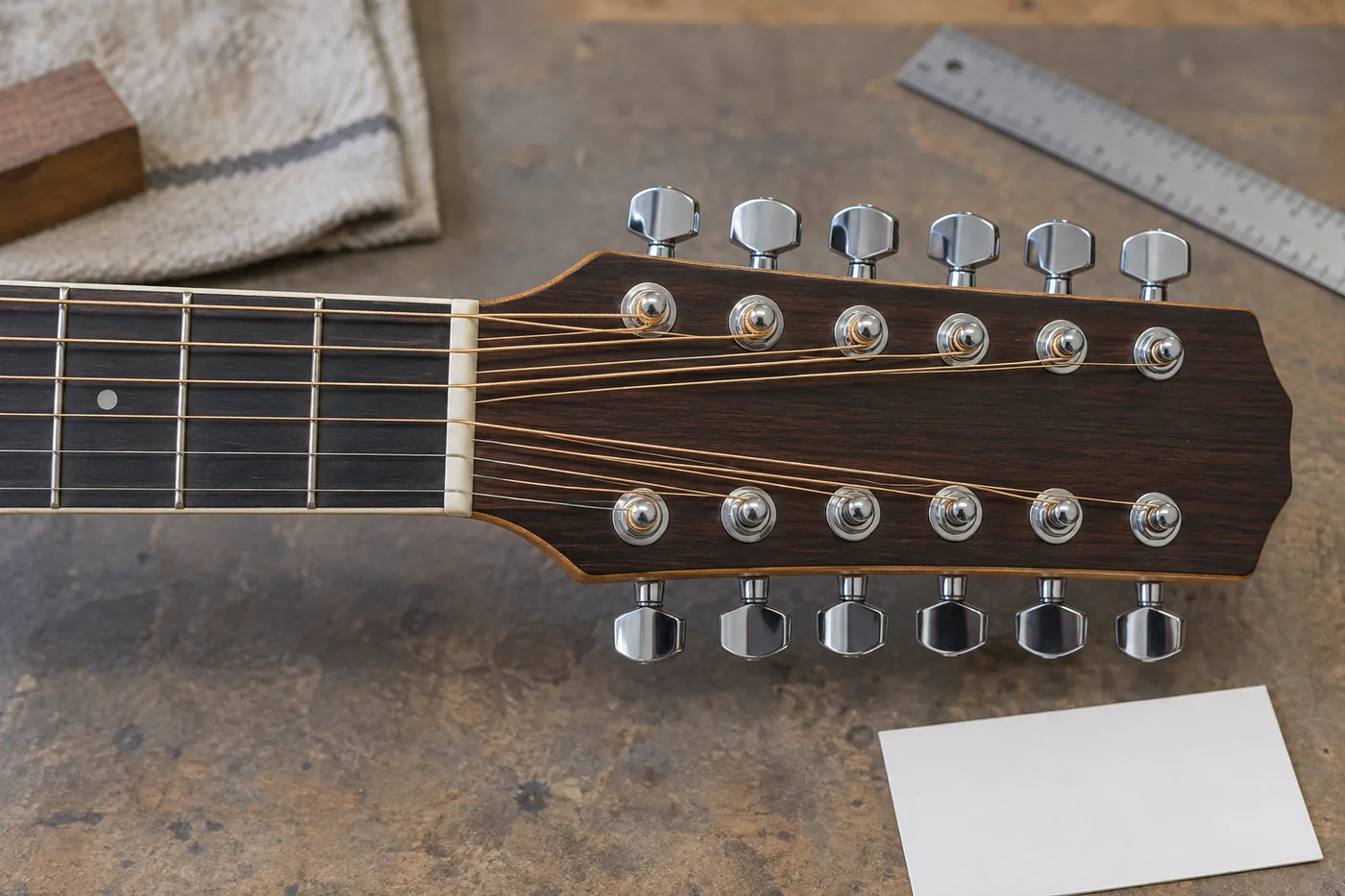
The headstock review should happen at the same time. Approve the tuner count, orientation, post spacing, button clearance and string path. Twelve tuners create more opportunities for interference and awkward access than six. A photograph from the front is not enough. Ask for front, rear and angled views, then check that the instrument can be tuned without one button blocking another.
Treat the neck and headstock as a system
The neck must manage string load while remaining comfortable and serviceable.
Define the scale length, nut width, neck profile and fingerboard dimensions in the same model file. Do not assume a six-string neck profile will feel appropriate after the nut and course spacing are changed. The player needs usable separation within each pair and between adjacent courses.
Ask how the neck reinforcement is designed and how relief will be adjusted. The useful question is not whether the guitar “has a truss rod.” It is whether the adjustment method, access and working range suit the approved construction and string set. The factory should be able to explain how it checks relief during sample setup and final inspection.
The headstock angle, scarf or one-piece construction, tuner holes and transition into the neck should be reviewed for both strength and manufacturability. Decorative shape is part of brand identity, but it cannot compromise tuner access or create an unnecessarily fragile shipping point.
For the sample, ask for a measurement sheet that records the approved nut width, course spacing, neck dimensions and setup condition. Buyers do not need to dictate the factory's internal method, but they do need an agreed result and a repeatable way to check it.
Match the body, top and bracing to the project
More strings do not automatically require the largest body in the catalogue. Body choice should follow the product role, playing comfort and desired acoustic response.
Use an existing acoustic platform only after reviewing the changes needed for the 12-string load and hardware. The top, bridge area, bracing and neck joint work together. Changing only one part can move stress elsewhere or change the response in an unintended way.
Ask the factory to identify which elements are proven on an existing platform and which are being developed for the project. This distinction matters. A current 12-string platform may need a finish and branding update. A six-string body converted into a 12-string requires a more deliberate sample program.
The buyer should approve material descriptions without turning them into unsupported tone promises. State whether the top is laminated, solid, or part of an all-solid construction. Record the back and side construction separately. If natural wood appearance matters, define an acceptable variation range rather than approving one attractive photograph as the standard for every unit.
Bracing can be discussed in terms of construction, repeatability and inspection. Ask how the factory confirms brace location, fit and adhesive cleanup. Avoid copying a competitor's marketing language or claiming that one pattern guarantees a particular sound. The sample should be evaluated as a complete instrument.
Specify bridge, nut and saddle details
The bridge, nut and saddle translate the paired-course plan into the finished guitar.
Approve the bridge layout and the way the twelve strings are anchored. Confirm that the spacing follows the course drawing and that service access is practical. A visually crowded bridge may be difficult to string or inspect even when the dimensions look acceptable on paper.
Nut slots should guide each string cleanle without forcing the pair together or creating an uneven path to the tuners. Review the spacing at the nut and at the bridge. The two measurements affect how the courses feel across the fingerboard.
The saddle needs a project-specific review as well. Intonation on a 12-string is not judged by treating every string as if it were part of a six-string set. Ask the factory to record the sample's string set, tuning and setup condition when evaluating compensation.
These parts should appear in the sample checklist. A buyer who approves only body shape, finish and logo leaves the most important playing interfaces undefined.
Set playability targets for a twelve-string instrument
“Low action” is not an inspection standard.
The buyer and factory should agree on the measurement points, instrument condition and tolerance used for setup. Record the string set, tuning, relief, action measurement locations and any other project-specific fields. The target should balance playability, stability and the intended customer.
Check every course for clean open notes and comfortable fretting. Listen for buzzing, choking, sitar-like noise or a string that does not sit correctly in its slot. Then play across the neck rather than testing only a few open chords.
Paired strings should feel intentional. The course should not spread unpredictably under the finger, and one string should not dominate because of a poor slot or inconsistent height. Ask the factory to inspect string seating at the nut, saddle and bridge before making larger adjustments.
Allow the sample to settle under the approved tuning before recording the final setup. The buyer should know when measurements were taken and whether the instrument was checked again after a reasonable stabilization period. Avoid inventing a universal number of hours; the project record should state the method actually used.
Planning a 12-string line? Send your requirements with the target player, reference model, body preference, tuning, string set, electronics, finish, branding and packaging needs. A clear brief lets the factory identify which decisions are ready for quotation and which require sample development.
Decide whether electronics belong in the base model
An acoustic-electric version can broaden the retail use case, but it also creates more specification and inspection work.
Define whether electronics are standard, optional or reserved for a separate model code. Record the pickup or transducer type, control layout, battery access, output position and any visible routing. Confirm how the system affects the endpin or strap-button arrangement.
The sample inspection should include output, control operation, noise, cable retention and access for service. Do not claim a frequency response or stage result without an agreed test. A simple functional test is still useful when it is recorded consistently.
Keep the acoustic and acoustic-electric bill of materials separate when parts, routing, labels or packing differ. A shared marketing name does not justify a shared production record if the physical product is different.
The existing Acoustic Guitar OEM Checklist can help organize the broader brief before electronics and other options are added.
Compare quotations by scope, not only by unit price
Two quotations can use the same product name while covering different work.
Ask each supplier to identify the body platform, top and back/side construction, neck and reinforcement, fingerboard, bridge system, tuners, string set, finish, electronics, branding, accessories and packing included in the quotation. Mark buyer-supplied items and development work separately.
Check whether the quoted sample represents the same specification as the proposed bulk product. If the sample uses substitute hardware or a different string set, record that substitution and the plan for final approval.
Do not ask the factory to guess a price around an incomplete brief. Use the OEM guitar specification-sheet guide to prepare a comparable request. When a requirement is undecided, label it as an open decision rather than allowing each supplier to make a different assumption.
Vinesmusical does not publish an automatic MOQ, price or delivery promise in this guide. Those commercial terms depend on the confirmed project scope and should be stated in the actual quotation.
Build sample approval around use, measurement and service
A buyer should evaluate the sample in the same context in which it will be sold.
Begin with identity: model code, revision, string set, tuning, finish and electronics. Then review construction and appearance. After that, inspect setup, playability, acoustic response and electronic function where fitted.
Use more than one playing pattern. Check open chords, fretted chords, single notes, capo use if relevant and changes in tuning stability during normal handling. The purpose is not to create a dramatic product review. It is to identify whether the approved specification produces a consistent, serviceable instrument for the intended buyer.
Ask a retail or technical team member to restring the sample. This practical check often reveals tuner access, bridge handling and string-path issues that are easy to miss in a factory photograph.
Record every accepted deviation. A verbal “okay” can turn a temporary sample workaround into an accidental bulk standard. The sample-development guide explains how to keep revisions controlled before bulk production.
Plan inspection and packing as part of the product
The final inspection plan should confirm product identity, appearance, dimensions, setup, function, accessories, labels and packing.
For a 12-string model, include course order, complete string count, tuner count and operation, nut and saddle condition, bridge area, neck relief, agreed action points, fret playability, tuning stability and electronics where applicable. The inspector should know which string set and tuning condition apply.
Packing deserves a model-specific check because the longer headstock and extra hardware can change clearance inside a bag, carton or case. Confirm support points, accessory placement and protection around the headstock and tuners. Conduct the agreed packing review with the actual model, not a six-string substitute.
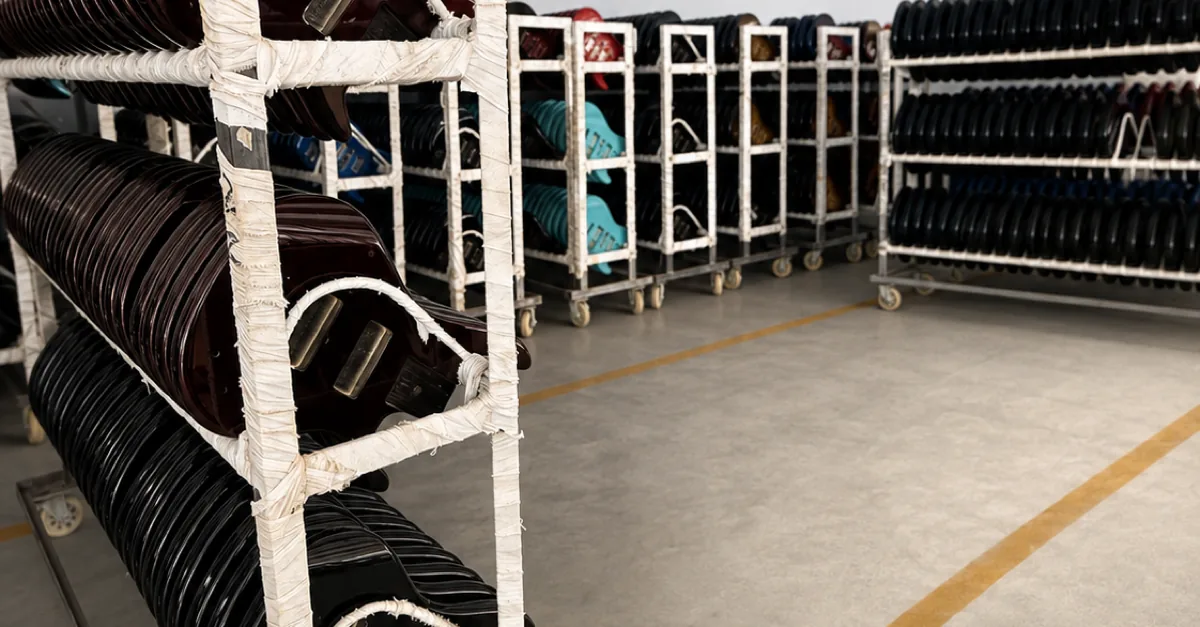
Use the general pre-shipment guitar inspection guide as a base, then add the twelve-string fields required by the approved model.
12-string acoustic buyer checklist
Before approving the sample, confirm that the project file answers these questions:
- Who is the intended player and what role does the model have in the range?
- Which body platform and construction are approved?
- What are the twelve-string tuning, course order and string set?
- Are nut, bridge, saddle and tuner layouts documented?
- Are scale, nut width, neck profile and reinforcement defined?
- Are top, back, sides and bracing described without unsupported claims?
- Are setup measurement points, condition and tolerances recorded?
- Are electronics a separate model or an approved option?
- Are finish, logo, label, accessories and packaging approved?
- Does the final inspection form include twelve-string-specific checks?
- Are sample deviations closed or carried into the bulk specification by approval?
If several answers remain open, the project is not ready for a like-for-like supplier comparison.
Frequently asked questions
Is a 12-string acoustic guitar just a six-string guitar with doubled strings?
No. The doubled courses affect string load, neck and headstock design, hardware layout, bridge and nut preparation, setup, inspection and packing. A proven six-string platform may provide a starting point, but the 12-string version needs its own controlled specification and sample approval.
Should wholesale buyers choose a dreadnought body for every 12-string project?
No. Dreadnought is one possible format. The appropriate body depends on the intended player, comfort, product positioning and the factory's validated construction. Compare complete samples rather than assuming body size alone determines the result.
What information should a 12-string quotation include?
It should identify the construction, materials, neck and reinforcement, fingerboard, bridge system, tuners, string set, finish, electronics, branding, accessories, packing and any development work. Open decisions and substitutions should be visible.
How should a buyer check 12-string playability?
Use the approved string set and tuning, record relief and action at agreed points, check every course at open and fretted positions, listen for unwanted noise, and evaluate course spacing, tuning access and restringing. The sample should be allowed to settle under the project's normal setup method before final measurements are recorded.
Can the acoustic and acoustic-electric versions share one model code?
Only if the buyer's system can still control every physical difference. Separate model codes are usually clearer when electronics, routing, labels, accessories or packing differ.
What should be checked before shipment?
Confirm the model and revision, twelve strings and six paired courses, tuning-machine operation, setup, fret playability, bridge and neck condition, finish, electronics, accessories, labels and model-specific packing. The inspection record should state the string set and tuning condition.
Does Vinesmusical publish a standard MOQ or lead time for 12-string guitars?
No universal MOQ or lead time is stated here. Vinesmusical reviews the confirmed specification, customization, estimated quantity and packaging requirements before commercial terms are prepared.
Conclusion
A strong 12-string acoustic project begins with course layout, structure and setup, not with a catalogue photograph.
When the buyer defines the product role, string system, neck and headstock, body construction, hardware, playability, electronics and packing in one controlled file, supplier quotations become easier to compare and sample feedback becomes easier to close. The same information later supports inspection, dealer training and after-sales service.
To discuss a private-label or wholesale 12-string acoustic project, contact Vinesmusical with your target market, reference, preferred body, tuning, string set, finish, branding, estimated quantity and packaging requirements. The team can review the brief before quotation or sample development.