Address
D308, Mingzhu Business Park, Baiyun District, Guangzhou, China
Work Hours
Monday to Friday: 7AM - 7PM
Weekend: 10AM - 5PM
Address
D308, Mingzhu Business Park, Baiyun District, Guangzhou, China
Work Hours
Monday to Friday: 7AM - 7PM
Weekend: 10AM - 5PM

Learn what makes a reliable custom guitar manufacturer for global brands, distributors, and importers, including production capability, customization, QC, communication, packaging, and long-term support.
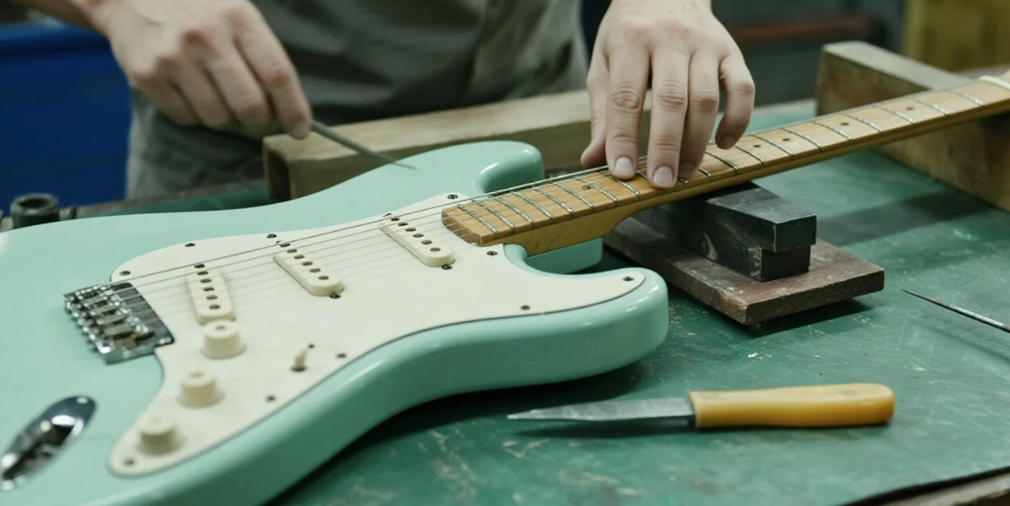
Finding a reliable custom guitar manufacturer is one of the most important decisions for any guitar brand, distributor, importer, or music product company. A manufacturer does more than produce instruments. It helps turn a product idea into something that can be sold, shipped, repeated, and trusted by customers.
For global buyers, reliability means much more than a good sample photo or a low quotation. A reliable manufacturer must understand product specifications, manage materials and components, control production quality, communicate clearly, protect brand details, and support repeat orders over time.
This article explains what buyers should look for when evaluating a custom guitar manufacturing partner.
The first sign of a reliable manufacturer is relevant production experience. Guitar manufacturing is not the same for every product type. Electric guitars, electric basses, acoustic guitars, classical guitars, and ukuleles each require different processes and quality checks.
Electric guitar manufacturing may involve solid-body shaping, routing, pickup installation, wiring, hardware setup, finish, neck fitting, and playability adjustment. Electric bass manufacturing has different scale length, neck tension, balance, hardware, and electronics considerations. Acoustic guitar manufacturing depends heavily on body structure, soundboard quality, bracing, neck angle, wood stability, and resonance.
A reliable custom guitar manufacturer should understand these differences. Buyers should ask whether the factory regularly produces the specific type of instrument they need. Production photos, sample references, and technical discussion can help confirm this.
If a supplier claims to make everything but cannot explain category-specific requirements, buyers should be careful.
Global brands often need OEM and ODM support. This may include private label branding, custom models, finish options, hardware changes, logo placement, packaging, and product line development.
Reliable manufacturers do not simply say “yes” to every request. They help buyers understand what is practical, what affects cost, what may require sample testing, and what may create production risk.
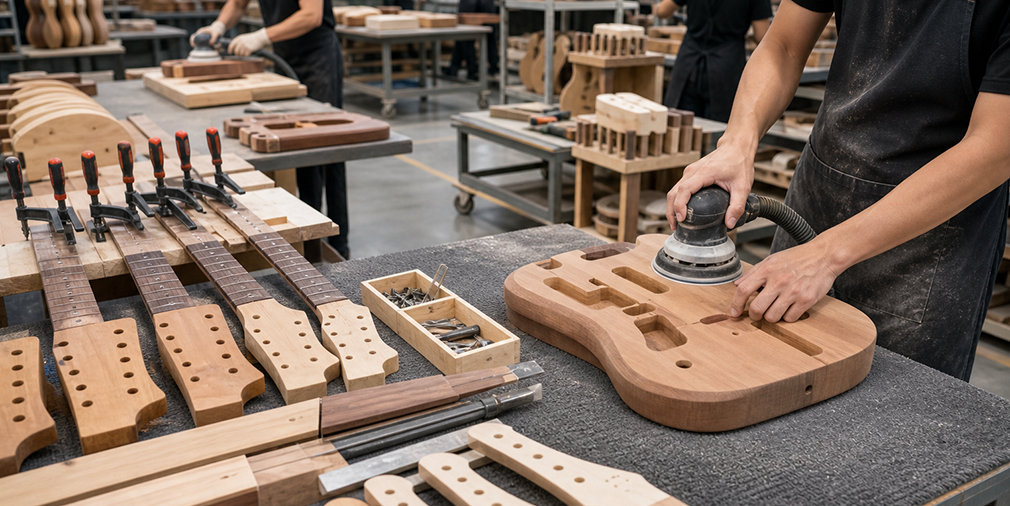
Useful OEM/ODM support includes:
– Reviewing product references
– Confirming specification details
– Suggesting suitable materials and components
– Explaining cost differences
– Developing samples
– Supporting logo and packaging customization
– Preparing for bulk production
This kind of support helps buyers make better decisions before money and time are committed.
Many production problems begin with unclear specifications. A guitar has many details: body shape, wood, neck profile, fingerboard, frets, pickups, electronics, hardware, finish, logo, strings, setup, packaging, and accessories.
A reliable manufacturer will not rely only on general descriptions. It should confirm details in writing before production. For custom orders, a specification sheet is very useful. It helps both buyer and factory use the same reference.
A good specification sheet may include:
– Product type
– Model name or reference
– Body material and shape
– Neck material and profile
– Fingerboard material
– Scale length
– Pickup configuration
– Hardware color and type
– Finish and color
– Logo placement
– Packaging requirements
– Target price or market level
Clear specifications reduce misunderstandings and make quotations more accurate.
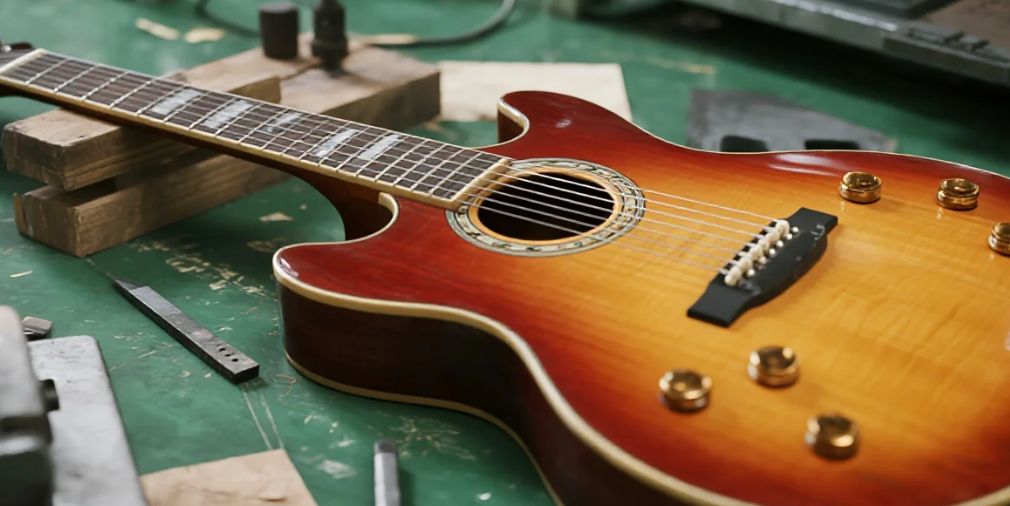
Sample development is where ideas become physical products. It is also where many risks are discovered. A reliable custom guitar manufacturer should have a clear sample process.
The factory should explain:
– What information is needed before sampling
– Sample cost
– Sample lead time
– Which details can be revised
– How sample approval is recorded
– How the approved sample guides bulk production
Buyers should review samples carefully. Check appearance, finish, logo, hardware, electronics, playability, packaging, and whether the sample matches the agreed specification. For electric guitars and basses, electronics testing is important. For acoustic guitars, structure and setup deserve careful attention.
Bulk production should begin only after important sample details are confirmed.
Quality control is one of the strongest signs of reliability. A manufacturer may produce a good sample, but global buyers need consistency across bulk orders and repeat orders.
A reliable custom guitar manufacturer should check guitars before shipment. The QC process should match the product type.
For electric guitars and basses, inspection may include:
– Body and neck appearance
– Finish consistency
– Fretwork
– Neck alignment
– Pickup and electronics testing
– Bridge and tuner installation
– String action and intonation
– Playability
– Packaging
For acoustic guitars, inspection may include:
– Body structure
– Neck angle
– Finish and surface
– Fingerboard and frets
– Bridge and saddle
– Playability
– Packaging protection
Buyers should ask what the factory checks and whether inspection happens before packing.
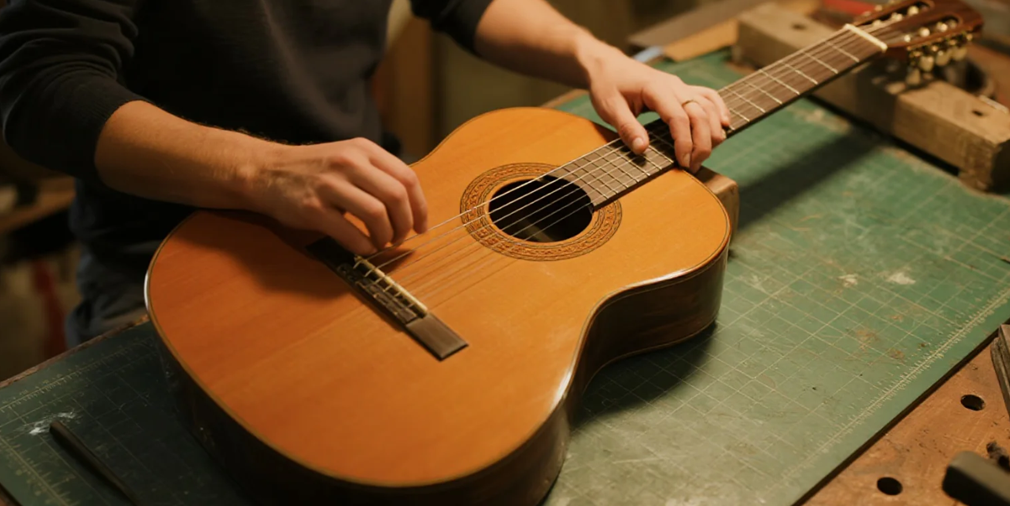
Communication is not a small detail. In OEM/ODM manufacturing, communication affects every stage: quotation, sample, production, inspection, packaging, and delivery.
A reliable manufacturer communicates clearly and honestly. It should ask questions when details are unclear and explain limitations when a request is difficult. Good communication helps avoid surprises.
Warning signs include:
– Vague answers
– No confirmation of specifications
– Very fast promises without detail
– Unclear quotation items
– Slow response during important stages
– No explanation of production issues
Good communication gives buyers confidence that the factory understands the project.
Guitars can be damaged during shipment if packaging is weak. A reliable manufacturer understands that product quality does not end at the factory door. The instrument must reach the buyer safely.
Packaging should be discussed before bulk production. Depending on the product and buyer requirements, packaging may include protective bags, foam, inner cartons, outer cartons, cases, gig bags, labels, and private label packaging.
For international orders, carton strength and internal protection matter. Buyers should also confirm carton marks, packaging dimensions, and whether the factory can work with the buyer’s freight forwarder.
A truly reliable manufacturer can support repeat orders. For brands and distributors, repeat consistency is essential. Customers expect the same model to have the same look, feel, and quality over time.
Repeat order consistency depends on:
– Recorded specifications
– Stable material sourcing
– Component control
– Production process management
– QC standards
– Communication history
If a factory treats every order as a new project, consistency becomes harder. A good long-term manufacturing partner keeps records and understands the buyer’s brand requirements.
Many buyers start with one model, then expand into a product line. A reliable custom guitar manufacturer can support this growth. For example, a brand may begin with electric guitars, then add bass guitars, acoustic guitars, or different price levels.
Manufacturing support may include:
– New model suggestions
– Specification planning
– Cost control
– Sample development
– Packaging updates
– Market feedback improvements
– Repeat order planning
This support is valuable for buyers who want more than a one-time transaction.
A manufacturer serving global brands should understand B2B requirements. The buyer may need quotations, lead times, production updates, QC information, packaging details, and shipment coordination. The factory should be comfortable working with professional purchasing processes.
A B2B manufacturing mindset means:
– Clear project confirmation
– Practical quotation support
– Respect for brand requirements
– Stable production communication
– Attention to packaging and shipment
– Long-term cooperation focus
This is different from selling finished guitars to individual players. OEM/ODM buyers need manufacturing reliability.
Vines Musical supports custom guitar manufacturing for brands, distributors, wholesalers, and professional buyers. We provide OEM and ODM support for electric guitars, electric basses, acoustic guitars, classical guitars, ukuleles, and related instruments.
Our team can help review product requirements, discuss customization options, prepare samples, support bulk production, inspect quality, and arrange export packaging. We focus on practical manufacturing communication and long-term cooperation.
For buyers building private label guitar products or expanding an existing product line, Vines Musical can review your project details and provide quotation support.
What is the most important factor when choosing a custom guitar manufacturer?
Relevant production experience, quality control, and clear communication are all important. Buyers should not choose based only on the lowest price.
Why is sample development important?
Sample development confirms design, materials, finish, logo, playability, and packaging before bulk production. It helps reduce risk.
Can a manufacturer support both OEM and ODM projects?
Yes. A capable factory can manufacture buyer-defined OEM products and also help buyers develop products through ODM support.
Why does packaging matter for guitar orders?
Guitars can be damaged during international shipment. Good export packaging protects the product and reduces after-sales problems.
