Address
304 North Cardinal
St. Dorchester Center, MA 02124
Work Hours
Monday to Friday: 7AM - 7PM
Weekend: 10AM - 5PM
Address
304 North Cardinal
St. Dorchester Center, MA 02124
Work Hours
Monday to Friday: 7AM - 7PM
Weekend: 10AM - 5PM

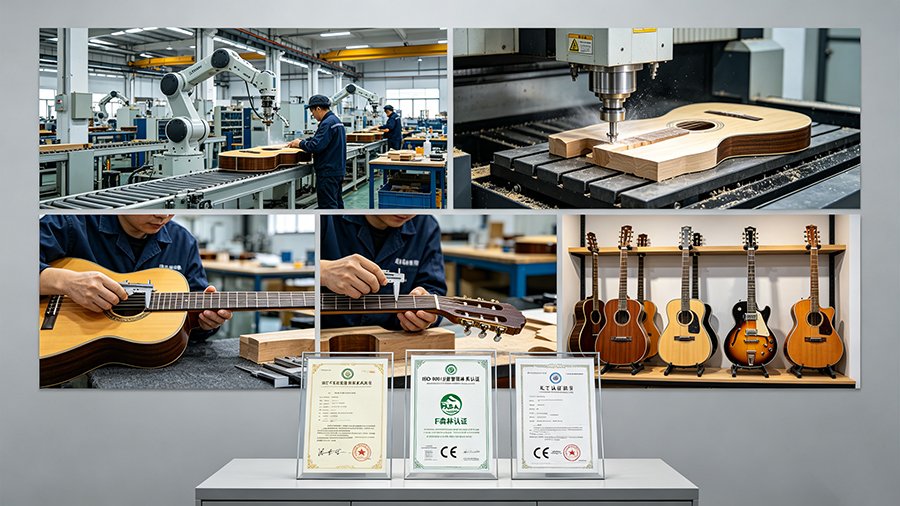
Why Choosing a Professional Guitar OEM Factory Is Critical for Your Brand
If you run a guitar brand—whether a physical instrument retailer, independent musician brand, or cross-border e-commerce store—one of the most impactful decisions you will make is selecting your manufacturing partner.
This decision goes far beyond just production costs. A subpar guitar factory can lead to 30%+ higher return rates, 2x longer delivery delays, and inconsistent tone/playability that destroys your brand reputation. Conversely, a reliable OEM partner will help you scale efficiently, maintain consistent quality, and bring your custom designs to life.
This comprehensive guide is designed for guitar brands, importers, and cross-border sellers. Based on 18 years of industry experience at VINESMUSIC (located in Huizhou, China—the world’s largest guitar manufacturing hub), we break down 7 core dimensions to evaluate a guitar OEM factory’s true capabilities, plus a printable factory inspection checklist, step-by-step onboarding guides, and answers to the most common industry questions.
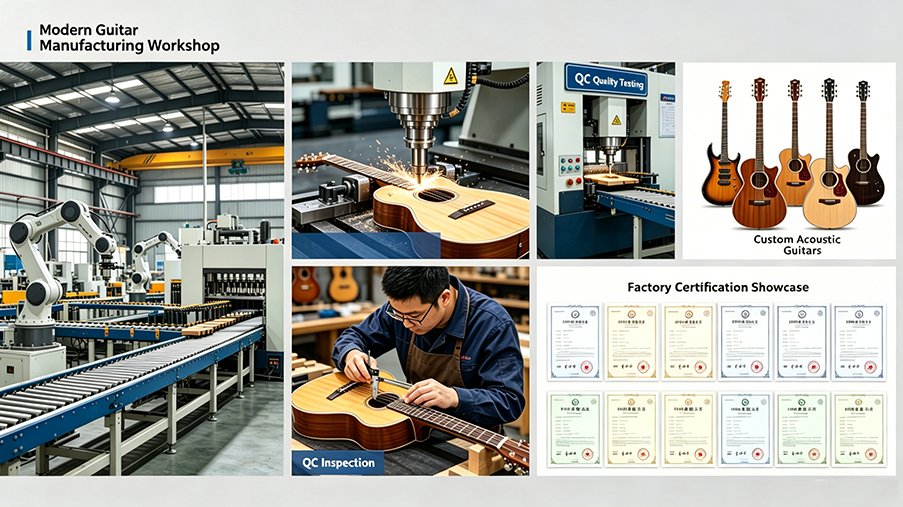
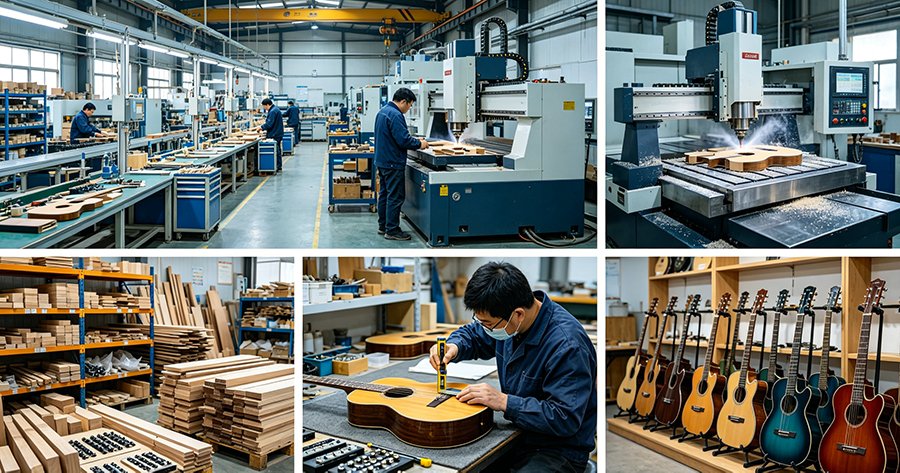
Capacity data is the first threshold, but numbers alone are meaningless without matching equipment and infrastructure.
Before contacting any factory, define your expected order volume. A professional custom guitar factory should clearly disclose:
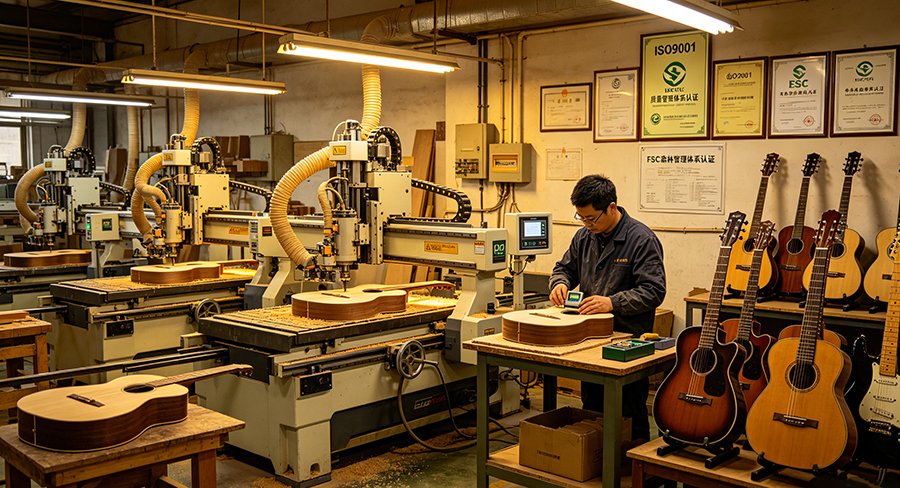
The quality of your guitars is directly limited by the factory’s equipment. A professional facility should have:
| Equipment Type | Industry Standard | VINESMUSIC Standard | Primary Use |
|---|---|---|---|
| 5-Axis CNC Machining Centers | ±0.05mm tolerance | ±0.03mm tolerance | Precision cutting of necks, bodies, and headstocks |
| Vacuum Press Machines | ≥100 tons pressure | 150 tons pressure | Laminated soundboard and body pressing |
| Automated Spray Lines | ±5μm paint thickness | ±3μm paint thickness | Uniform primer and finish coating |
| Laser Fret Leveling Systems | ±0.01mm accuracy | ±0.005mm accuracy | Fret installation and leveling |
| Digital Tuning Stations | ±1 cent accuracy | ±0.5 cent accuracy | Final intonation calibration |
Red Flag: A factory claiming 2,000+ units monthly capacity but only operating 2 outdated CNC machines is almost certainly exaggerating their capabilities.
Download our free Guitar Factory Equipment Verification Checklist (PDF) → Contact us now
For brands targeting North America, Europe, or Japan, certifications are not “nice-to-haves”—they are mandatory entry requirements. 2026 Update: The EU has added 10 new substances to the REACH SVHC list, and California has tightened CARB Phase 2 formaldehyde limits.
| Market | Required Certifications | Key Requirements |
|---|---|---|
| European Union | CE, RoHS 3.0, REACH SVHC 251 | Electromagnetic compatibility (EMC), restricted substances, chemical safety |
| United States | FCC Part 15, CARB Phase 2, CPSIA | Electronic radiation limits, formaldehyde emissions, lead content |
| Global Retail | ISO 9001, BSCI, NAMM Member | Quality management system, ethical labor practices, industry recognition |
Many factories display expired or purchased certificates. Follow these steps to confirm validity:
As a BSCI, ISO 9001 certified factory and official NAMM member, VINESMUSIC provides full compliance documentation for all global markets, including pre-approved test reports for common guitar models.
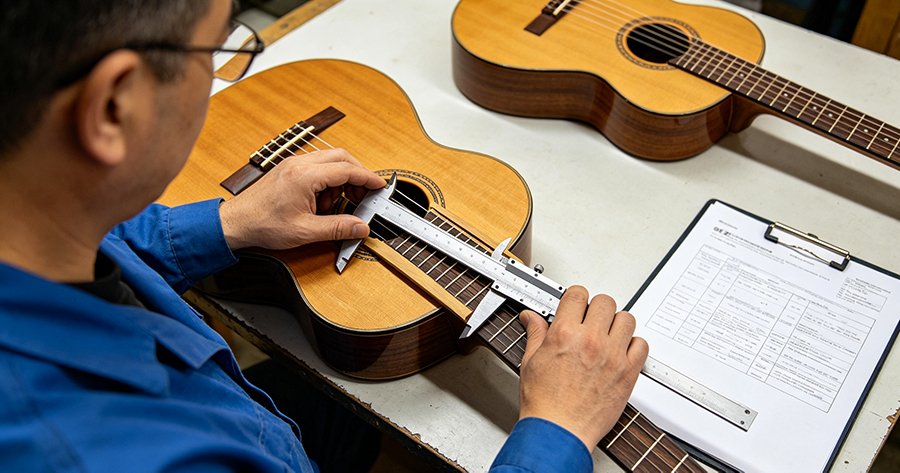
A robust QC system is the single most important factor in ensuring consistent product quality. A reliable guitar OEM manufacturer will have a 3-stage inspection system with documented records for every batch.
All raw materials are inspected before entering production:
Critical checkpoints are built into every production stage to catch defects early:
Every guitar undergoes 100% inspection before shipping:
2026 Industry Benchmark: According to VINESMUSIC’s annual global guitar manufacturing survey, the average post-delivery warranty rate for the industry is 3.2%. Factories with proper QC systems have rates below 1%. Unregulated workshops often have rates exceeding 10%.
Request our sample QC Inspection Report Template (Excel)
Environmental regulations are becoming increasingly strict worldwide. Non-compliant products can be seized at customs, resulting in lost sales and fines.
Guitar finishes are the primary source of volatile organic compounds (VOCs) and heavy metals:
For guitars using rosewood, mahogany, or other regulated species:
VINESMUSIC exclusively uses FSC-certified tonewood and water-based paints, ensuring full compliance with all global environmental regulations.
A true OEM partner is more than just a production line—they should be your technical collaborator.
A factory that says “yes” to every custom request without asking technical questions or suggesting improvements likely lacks the engineering expertise to deliver consistent results.
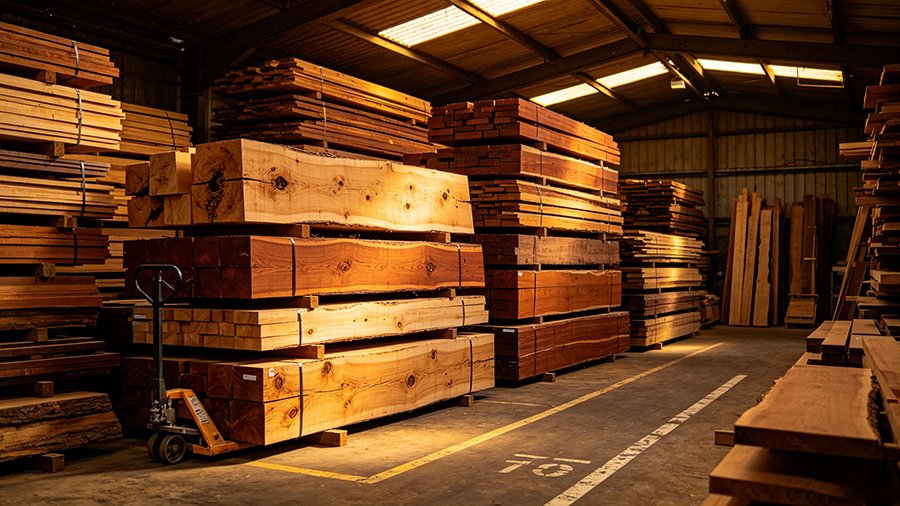
Even the highest quality guitars are worthless if they arrive after your sales window.
VINESMUSIC maintains 3 months of safety stock for core materials and offers guaranteed lead times for contracted partners, with expedited production available for urgent orders.
The lowest quote is almost never the best value in guitar manufacturing.
A transparent quote will break down costs into:
Red Flag: Any factory requiring 100% upfront payment before production is a significant risk.
If you’re launching your first guitar brand, follow this step-by-step process:
VINESMUSIC offers a dedicated startup support program with flexible MOQs as low as 50 units and free DFM consultation.
For established brands looking to scale or switch suppliers, focus on these additional factors:
Problem: Many small factories accept orders they cannot fulfill in-house and subcontract to unregulated workshops, resulting in inconsistent quality.
Solution: Include a “no subcontracting” clause in your contract, and conduct unannounced factory visits during production.
Problem: Factories often use premium materials for samples but downgrade to cheaper materials for bulk production.
Solution: Lock in a production standard sample and require the factory to provide a material certificate for each batch.
Problem: Factories may quote a low initial price but then increase prices for subsequent orders, citing “material cost increases.”
Solution: Negotiate a fixed price for 6-12 months in your contract, with clear terms for price adjustments based on market fluctuations.
Schema Markup Note: Add HowTo Schema markup to this section for Google step-by-step featured snippets
Use this checklist to score potential suppliers on a 1-5 scale (1=poor, 5=excellent):
| Evaluation Dimension | Weight | Assessment Questions | Your Score |
|---|---|---|---|
| Production Capacity & Equipment | 20% | Can they meet your volume requirements? Do they have modern, well-maintained equipment? | |
| Certification & Compliance | 15% | Do they hold all required certifications for your target market? Can they provide valid test reports? | |
| Quality Control System | 20% | Do they have a documented 3-stage QC process? What AQL standard do they follow? | |
| Environmental Standards | 10% | Do they use compliant paints and sustainably sourced wood? Can they provide CITES/FSC documentation? | |
| R&D Technical Capability | 15% | Can they provide DFM feedback and custom design support? Do they have dedicated engineering staff? | |
| Delivery Reliability | 10% | What are their standard and peak season lead times? Do they offer guaranteed delivery? | |
| Pricing Transparency | 10% | Is their quote detailed and all-inclusive? Are their payment terms industry standard? |
Total Score: /100 | Recommendation: Score ≥80 = Excellent Partner; 60-79 = Proceed with Caution; <60 = Avoid
A: OEM (Original Equipment Manufacturing) means you provide the complete design and specifications, and the factory produces to your requirements. ODM (Original Design Manufacturing) means the factory provides pre-designed models that you can brand with your logo and minor customizations.
A: Standard MOQ for low MOQ guitar OEM is 120 units per model. Many factories accept small trial orders of 50-100 units at a slightly higher unit cost. VINESMUSIC offers flexible MOQs for startup brands.
A: Electric guitar samples typically take 4-6 weeks. Acoustic guitar samples take 6-8 weeks due to longer wood stabilization and finishing times. Sample fees are usually 3-5x the unit cost and are often credited against your first bulk order.
A: Consistent tone requires: 1) Strict raw material specifications (moisture content, density, origin); 2) Standardized CNC machining programs; 3) Fixed finishing parameters; 4) 100% audio testing before shipping. Always lock in a production standard sample before mass production.
A: Yes. VINESMUSIC provides comprehensive NDAs to protect your intellectual property, including exclusive manufacturing rights for your custom designs.
A: Yes. We offer direct drop shipping to your customers worldwide, with custom packaging and branding options available.
Choosing the right guitar OEM factory is the foundation of a successful instrument brand. By evaluating suppliers on these 7 core dimensions and following our specialized guides, you can avoid costly mistakes and build a long-term partnership that grows with your business.
Real Client Case Studies:
VINESMUSIC has been a trusted guitar OEM/ODM partner for 300+ global brands for 18 years. Located in Zhaoqing—our BSCI-certified facility, 98.5% first-pass quality rate, and dedicated R&D team deliver consistent, high-quality guitars on time, every time.
Ready to Get Started?
Try our free interactive Guitar OEM Cost Calculator to estimate your production costs instantly
Copyright © 2026 VINESMUSIC. All rights reserved. Reproduction must indicate the source | Official Website: www.vinesmusic.com
