 EN
EN
A guitar factory workflow is not a straight line from wood to carton. Information, materials and approvals move through the project together. If the specification changes after components are prepared, or the approved color never reaches the finishing team, a busy production floor will not protect the buyer from mistakes.
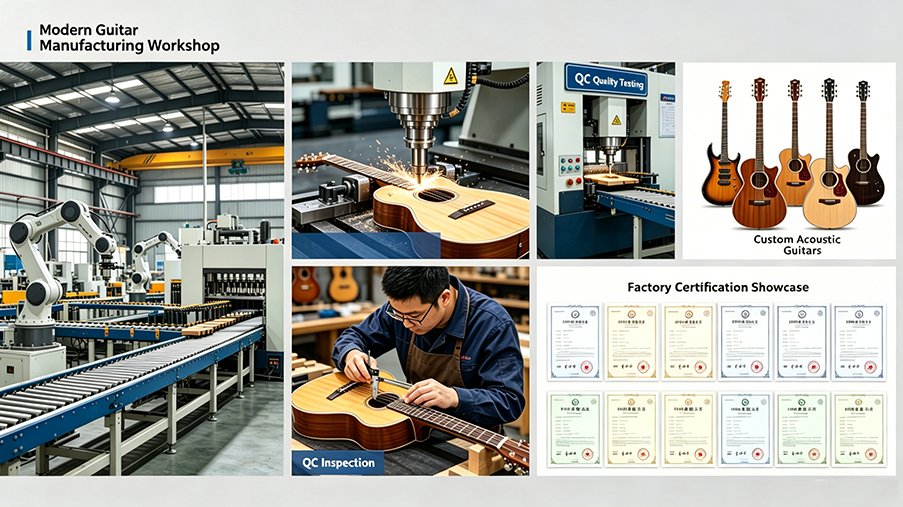
This article shows how an OEM or ODM guitar order can move from an approved specification to final packing. Vinesmusical operates a company-owned factory of approximately 10,000 square metres across five floors. The useful question for a buyer is how that space, its people and its controls support a real production order.
1. Product definition comes before production
The first production document should describe the guitar the buyer intends to receive. Depending on the project, it may include drawings, an approved sample, a bill of materials, color and artwork references, packaging files and a written specification.
Before release, both teams should confirm:
- Model name and revision.
- Classical, acoustic or electric construction.
- Body and neck details.
- Scale length and model-critical dimensions.
- Materials and visible grade requirements.
- Hardware and electronics.
- Finish, color and acceptable natural variation.
- Logo, labels, serial numbering and artwork.
- Accessories and packaging.
- Quantity by model and finish.
Our OEM guitar specification-sheet guide explains what buyers should prepare. When an item remains undecided, mark it as open. Filling a gap with an assumption can create a false approval.
2. Technical review checks whether the parts work together
A specification can look complete and still contain conflicts. A selected bridge may not match the body drilling. A pickup may require a different route. A neck profile, nut width and string spacing may not align with an existing platform. A custom carton may not fit the accessories.
Technical review is the point where the factory checks feasibility before bulk materials and production work are committed. Questions should be recorded and closed one by one.
For a new design, the team may review drawings, component samples, tooling, fixtures and production sequence. For an ODM model with minor changes, the review may be shorter. The effort should match the risk rather than using the same checklist for every project.
3. Sample development creates the physical standard
The sample is where written requirements become a guitar. Buyers should review construction, playability, finish, components, branding and packing—not appearance alone.
Sample feedback is easier to use when each comment has a number, photo or measurement and a clear status. Separate required corrections from optional preferences. After changes are agreed, update the specification and issue one current revision.
A physical sample can show neck feel and color better than a spreadsheet, while the document preserves details hidden inside the finished instrument. The production standard is strongest when both agree. See our custom guitar sample-development guide for a practical review method.
4. Production release locks the approved version
Before the order enters bulk manufacturing, the buyer and factory should confirm the release set. It normally contains the purchase order, specification, bill of materials, drawings, approved sample, artwork and packaging files.
The release should also identify any differences between the sample and production. For example, the sample may use a temporary logo while the bulk order uses approved printed artwork. That exception needs to be visible to production and inspection.
Late changes are sometimes unavoidable. They should be evaluated for price, materials, tooling, completed work and delivery impact. A casual message should not overwrite an approved file. Our production change-control checklist shows how to manage revisions.
5. Incoming materials are checked against the order
Incoming inspection does not mean every item receives the same test. The factory should focus on the materials and components that influence the model’s construction, function, appearance or commercial identity.
Relevant checks may cover:
- Wood or laminated components for agreed construction, dimensions and visible condition.
- Neck, fingerboard, bridge and body blanks or prepared parts.
- Tuners, bridges, truss rods and model-specific hardware.
- Pickups, preamps, switches, controls, jacks and wiring parts.
- Binding, inlay and decorative materials.
- Logo decals, labels, manuals, barcodes and cartons.
Received materials should be identified so the team can connect them to the order. If a substitute is proposed, it needs buyer approval when the specification names an exact component or commercially important feature.
6. Component preparation follows controlled references
Body and neck components are prepared according to the product type. The exact sequence differs for a classical guitar, a steel-string acoustic and a solid-body electric.
Useful controls include model identification, current drawings, fixtures or templates, and checks at points where an error would be difficult to correct later. A buyer does not need to count every machine movement. The useful question is whether the factory can repeat the approved geometry.
For electric guitars, this may involve body outline, neck pocket, pickup and control routing, bridge location and drilling. For acoustic and classical guitars, the focus may include body molds, rim preparation, top and back construction, bracing and bridge position. Neck work includes scale reference, truss-rod arrangement, fingerboard and headstock details.
7. Body construction should be reviewed before hidden work is closed
Some of the most important checks happen before the instrument looks like a finished guitar. Acoustic and classical bodies contain joints and braces that become difficult to inspect after closing. Electric-guitar routes and inserts may later be covered by hardware.
For a new model, the factory may record selected work-in-progress photos or first-piece checks. Buyers should ask for evidence connected to their product, not a gallery assembled from unrelated orders.
The acoustic guitar factory evaluation guide explains body, bracing and neck topics in more detail.
8. Neck, fingerboard and fretwork prepare the instrument for setup
Neck geometry connects construction with playability. The factory needs to control centerline, neck fit, fingerboard plane, fret installation and the relationship to the bridge.
After fretting, the work may include fret leveling, crowning, edge treatment and polishing according to the production standard. Nut preparation, truss-rod function and neck relief are also reviewed during setup.
A buyer should define the neck and setup requirements with enough range for the chosen strings, product type and market. One extremely low action target is not appropriate for every guitar or player.
9. Finishing turns the approved color into a repeatable range
Finish work begins with surface preparation and continues through the coating route, drying or curing, polishing or final surface treatment. The exact method depends on the product and approved finish.
Transparent finishes reveal natural wood variation. A buyer should approve a realistic visual range rather than expect every piece to match one unusually figured sample. For solid colors and bursts, a physical panel or approved guitar is more reliable than a phone image.
During production, the team checks color, surface condition, masking, binding lines, logo position and handling damage. Sensitive details should have an approved reference available to the finishing and inspection teams.
10. Assembly brings together hardware, electronics and branding
After the body and neck are ready, the factory installs the components defined in the production file. The work differs by model:
- Tuners, bridge parts, nut and saddle.
- Pickups, preamps, switches, pots, jacks and wiring.
- Strap buttons and other hardware.
- Labels, logos, pickguards and decorative parts.
- Model-specific accessories.
Correct parts are only one part of assembly. Location, fit, operation and visible condition also matter. For electronics, the test should reflect the actual circuit rather than merely showing that the guitar produces sound.
11. Setup makes the guitar ready for evaluation
Final setup may include truss-rod adjustment, neck relief, nut and saddle work, string action, pickup height, intonation for applicable models, tuning and playability review.
The values should be compared with the approved product standard under defined conditions. A guitar may change during transport or climate exposure, so buyer and factory should discuss realistic setup ranges and destination expectations.
Operators also check for localized fret buzz, uncomfortable fret edges, unstable hardware, control problems and other issues that affect the player’s first experience.
12. Final inspection compares the order with the approved standard
Final inspection should answer whether the correct model and revision were produced, whether the guitar meets the agreed construction and appearance, and whether the packaging is ready for the intended shipment.
Inspection may cover:
- Model, finish and quantity.
- Dimensions and product-specific requirements.
- Neck, fretwork, setup and playability.
- Hardware and electronics.
- Cosmetic condition and color range.
- Logo, labels, serial numbers and accessories.
- Inner protection, carton, barcode and shipping marks.
When a defect is corrected, the instrument should be checked again. A useful record shows the model, date, result and action, rather than a generic statement that quality is guaranteed.
Buyers can use our quality-evidence guide to decide what photographs and records to request.
13. Packing is part of product quality
A guitar can leave final setup in good condition and still be damaged by unsuitable packaging. The packing method should be approved with the product, accessories and shipping route in mind.
The factory verifies the correct instrument, labels, accessories, protective materials and carton. For a new packaging design, a buyer may review one fully packed unit before the full order is closed.
Different routes create different handling risks. Courier shipment, palletized freight and mixed-container loading may not need the same solution. Packaging decisions should be made before the end of production.
14. Shipment release closes the production order
After final inspection and packing, commercial documents, carton information and shipment arrangements need to match the order. If the buyer appoints a third-party inspection, allow time to respond to findings before the booked loading date.
The factory and buyer should also retain the current specification and production reference for repeat orders. Before the next order, confirm whether materials, artwork, hardware or packaging have changed.
What buyers should look for during a factory walkthrough
A walkthrough is more valuable when it follows one real product instead of moving quickly from room to room. Ask the team to show:
- The approved specification and current revision.
- How work in progress is identified.
- A relevant body or neck operation.
- A checkpoint before hidden construction is closed.
- Finish references at the workstation.
- Setup and functional testing.
- A completed inspection record.
- The approved packing method.
Listen to whether sales, production and quality teams describe the same model and version. Consistent answers are evidence that information moves through the factory with the product.
About Vinesmusical
Vinesmusical was established in 2014. We operate a company-owned factory of approximately 10,000 square metres across five floors. We have an 80-person team, monthly capacity of approximately 7,000 guitars and 13 years of OEM/ODM experience. Vinesmusical holds third-party BSCI certification, and an independent company has completed an in-depth factory audit report. Our main products are classical, acoustic and electric guitars for brands, distributors, retailers and importers.
To discuss a guitar manufacturing project, send your product brief to info@vinesmusic.com or use our contact page. Include the model, quantity, specification, finish, branding, packaging and target timing.