 EN
EN Español
 Português do Brasil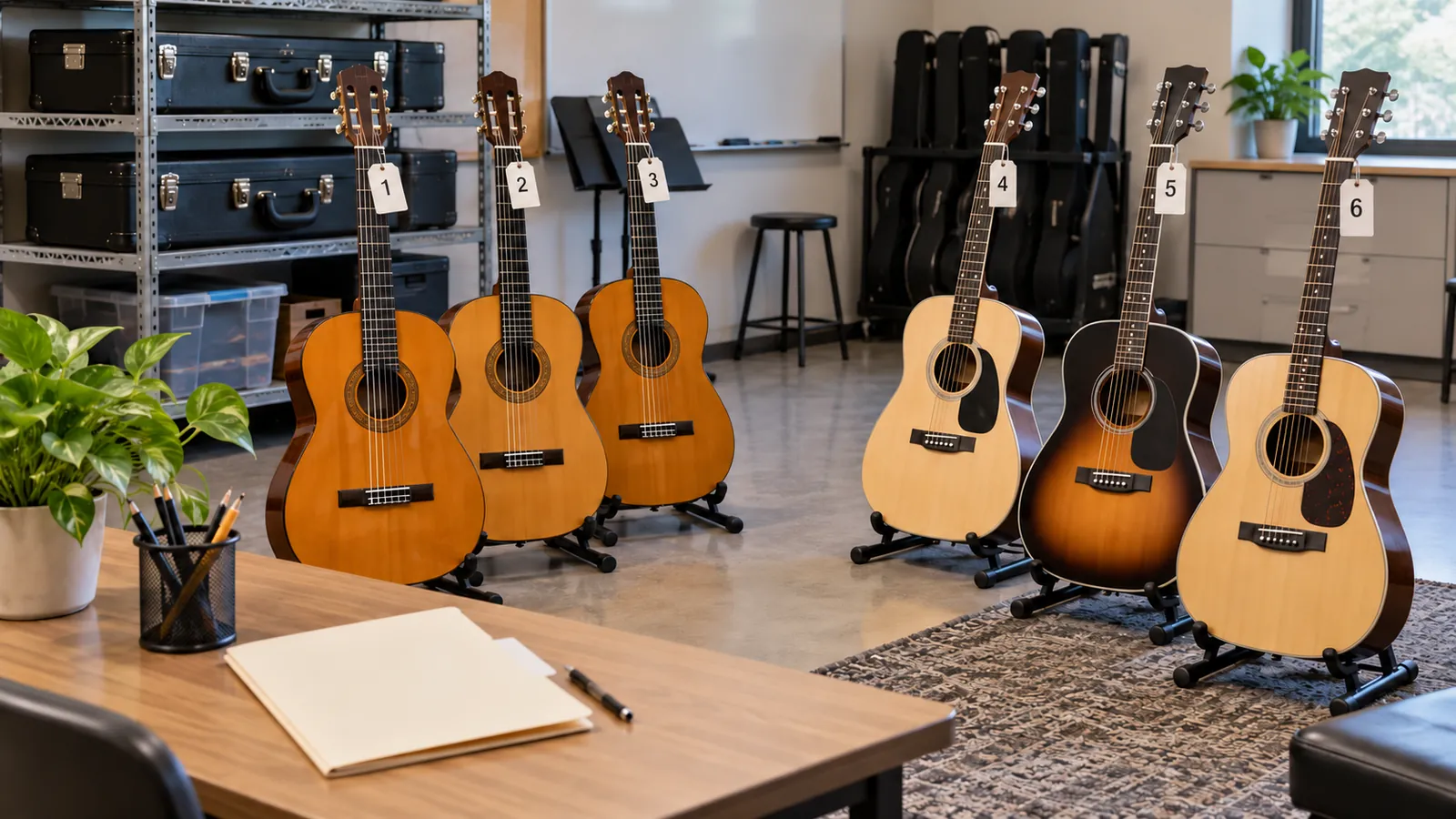
Buying guitars for a school or rental program is not the same as selecting a few instruments for a retail wall. The buyer is planning a fleet: multiple users, repeated handling, storage, check-out and return, setup work, identification, replacement and budget control.
A practical supplier brief should begin with the program, not with a catalog model. Define who will use the instruments, how they will be stored and issued, which sizes and product families are needed, who will maintain them, how condition will be recorded and what evidence is required before the shipment is accepted.
This guide helps music schools, academies, distributors and instrument-rental operators structure that brief without relying on unsupported promises about durability, price, MOQ or service life.
Images in this guide are AI-generated illustrations. They do not document factory tests or real customer projects.
Describe the program before choosing models
Start with facts the supplier cannot see from a product photo:
- learner age range and experience level;
- number of sites or classrooms;
- individual assignment, shared-class use or short-term rental;
- typical storage and transport conditions;
- whether instruments move between locations;
- who performs setup and routine maintenance;
- expected replacement and replenishment process;
- need for classical, acoustic, electric guitar or electric bass;
- included case, bag, accessory or identification requirements.
This context does not automatically dictate a product. It helps the supplier understand which questions must be resolved before quotation.
Separate education use from retail assumptions
A school may value consistent handling and simple identification more than decorative variation. A rental program may need fast condition checks and clear records. A retailer may prioritize display appeal and a broader color range. The instrument can be similar, but the purchasing logic is different.
Write a one-paragraph program statement and attach it to every model discussion. This prevents the project from drifting back to a generic catalog offer.
Build a size and model matrix
Do not ask for “student guitars” as one category. Define the size or model logic used by the program. For classical guitars, that may include multiple body or scale references. For acoustic, electric or bass programs, the matrix may focus on full-size models plus specific ergonomic or setup requirements.
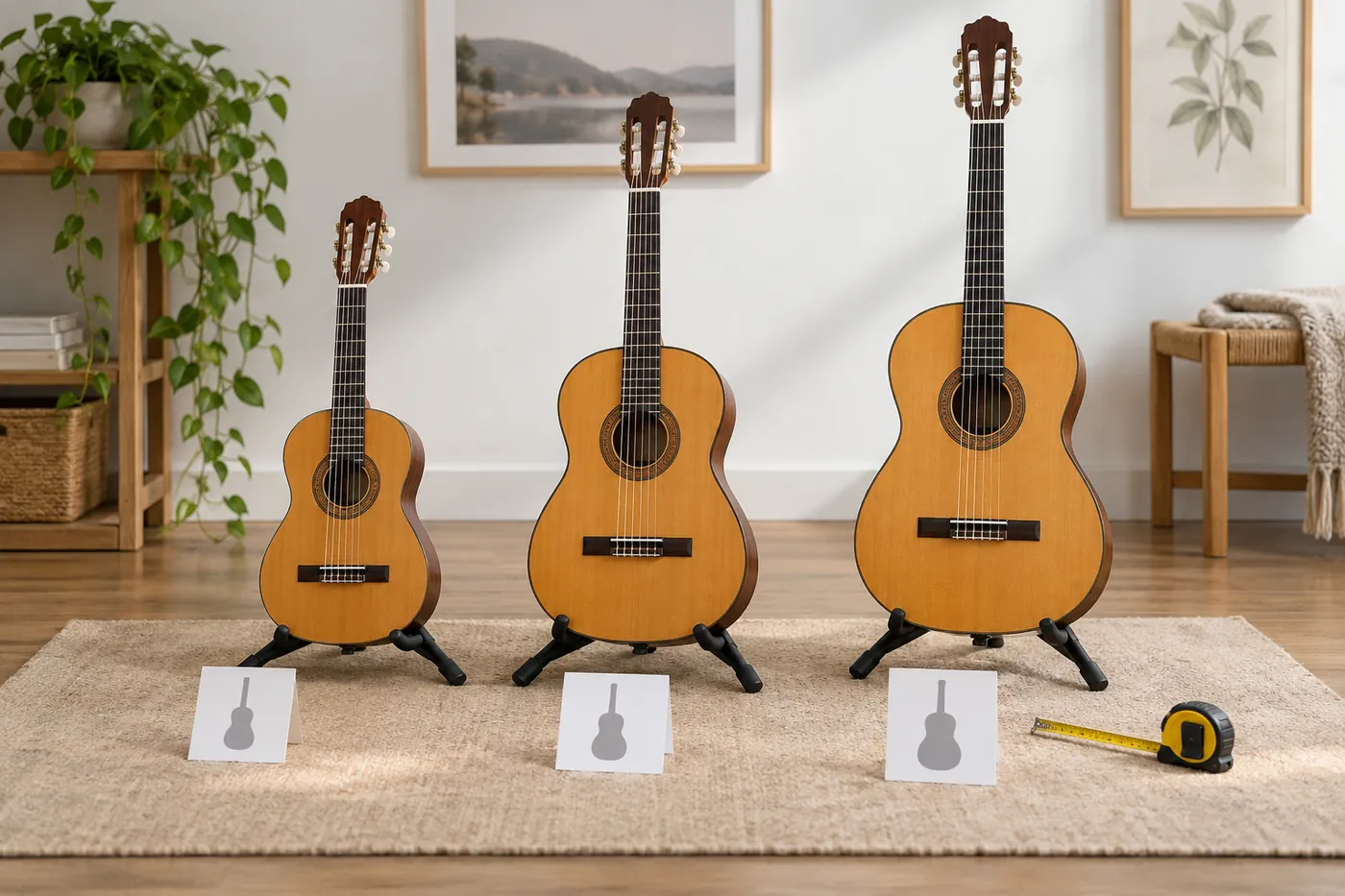
Useful matrix fields include:
- program group or location;
- instrument family;
- size or model reference;
- planned quantity range, marked as estimate until confirmed;
- finish and identification option;
- case or bag requirement;
- accessory scope;
- sample priority;
- setup and inspection reference;
- responsible person for approval.
Avoid assigning a size only from age. Player stature, hand size, teaching method and local instructor preference can matter. The program should define its fitting method or ask qualified instructors to approve the model mix.
The classical guitar size guide explains what buyers should confirm beyond the familiar size labels. Review the Classical Guitar range and Acoustic Guitar range as separate product families rather than substituting one string type for the other.
Write specifications that support maintenance
The specification should describe the approved product, not promise that it cannot be damaged. For a fleet, include the details needed to identify, inspect and service the instrument:
- body and neck construction description;
- scale or size reference;
- string type or approved equivalent;
- neck adjustment system where applicable;
- nut, saddle, bridge and tuner requirements;
- finish and color reference;
- branding and asset-identification locations;
- included accessories;
- packaging configuration;
- revision number and date.
When replacement parts or service procedures matter, discuss them before quotation. Do not assume that a component is standard merely because it looks familiar in a photo.
Ask what can be measured and recorded
Terms such as “school grade,” “rental quality” or “heavy duty” are not specifications. Translate the program's concerns into observable checks: tuner function, neck condition, fretwork, bridge and fastener installation, finish condition, control operation on electric instruments, accessory completeness and case fit.
If the buyer wants a particular impact, climate or transport test, it should provide or approve a method. Do not turn a supplier's general experience into a test claim.
Plan identification and records
A fleet becomes hard to manage when instruments cannot be matched to their records. Decide how the program will identify each unit: serial record, asset tag, barcode, case tag or another system.
The supplier brief should state:
- where the identifier may be placed;
- whether it is permanent or removable;
- required data format;
- relationship between instrument, case and carton identifiers;
- how duplicate or unreadable labels are handled;
- whether a digital list must accompany the shipment;
- who owns and checks the master record.
Do not place labels on sensitive finishes without confirming material compatibility. The approval sample should demonstrate the real placement and application method.
Define setup for the user group
Setup expectations should be tied to the instrument and program. A fleet may be maintained centrally, by each site or by an external technician. That decision affects what must be documented at shipment and what the program will adjust after arrival.
Create a method for reviewing neck condition, action and relief, fretwork, tuning stability, nut and saddle workmanship and electronics where applicable. Record tuning, string condition and measurement locations. Numerical targets should come from the approved project—not a universal online chart.
For shared instruments, also decide how returned units will be screened before reissue. The supplier cannot design the program's maintenance process, but it can respond better when the expected inspection points are clear.
Choose finishes and colors with operations in mind
Color can support identification by class, site or size, but too many variants can complicate replacement and records. Ask whether color coding genuinely helps the program or merely expands the SKU count.
Approve finish by a dated reference, sample or panel. Natural wood variation should be explained separately from defects. If stickers, labels or cleaning products will be used, test compatibility on the approved finish rather than assuming it.
Keep public claims modest. A finish that looks robust in a sample photo has not automatically passed the program's cleaning or wear conditions.
Specify bags, cases and accessories
For school and rental programs, accessories should be treated as controlled items. List exactly what is included and how it is packed.
Possible items include a bag or case, strap, cable for electric instruments, basic tool, spare item, printed guide or program-specific tag. This is not a default bundle; the buyer chooses the scope.
Review:
- fit and support inside the bag or case;
- handle and closure operation;
- accessory pockets and restraint;
- identifier position;
- materials that contact the instrument;
- carton pack-out with the approved accessory set.
The quotation should separate optional items rather than hiding them in a general “package” description.
Approve packaging for program handling
Packaging must support the actual route from factory to program location. A distributor receiving pallets has a different unpacking process from a school receiving mixed cartons at several sites.
Define carton markings, model and size identification, barcode placement, accessory location, surface protection and case inclusion. If mixed models share similar cartons, make the size and model visible without opening every box.
Do not promise a transport outcome without a defined test. If the program requires a specific packaging evaluation, agree on the method and evidence before production.
Use a sample as a working program prototype
The sample review should involve the people who will manage the instruments, not only purchasing. Depending on the project, this can include an instructor, technician, rental manager, warehouse representative or product manager.
Ask each reviewer to comment within a defined role:
- Instructor: fit with teaching method and student use.
- Technician: setup, adjustment and service access.
- Rental or fleet manager: identification, condition checks and turnaround.
- Warehouse team: carton identification and pack-out.
- Purchasing: specification, documentation and commercial scope.
A short controlled pilot may reveal issues that a desk review misses, but it should not be described as statistically proving long-term performance. Record the conditions, users, duration and observations honestly.
For classical models, the OEM sample-approval checklist can help organize the review. Keep program observations in a separate field so a preference expressed by one instructor does not silently change the production specification.
Building a school or rental guitar program? Send the program profile, proposed model matrix and maintenance approach through Contact Us. Vinesmusical can review the open specification and sample questions before quotation.
Create intake and return inspection records
The buyer should define how instruments will be checked at arrival and, for rental fleets, at return.
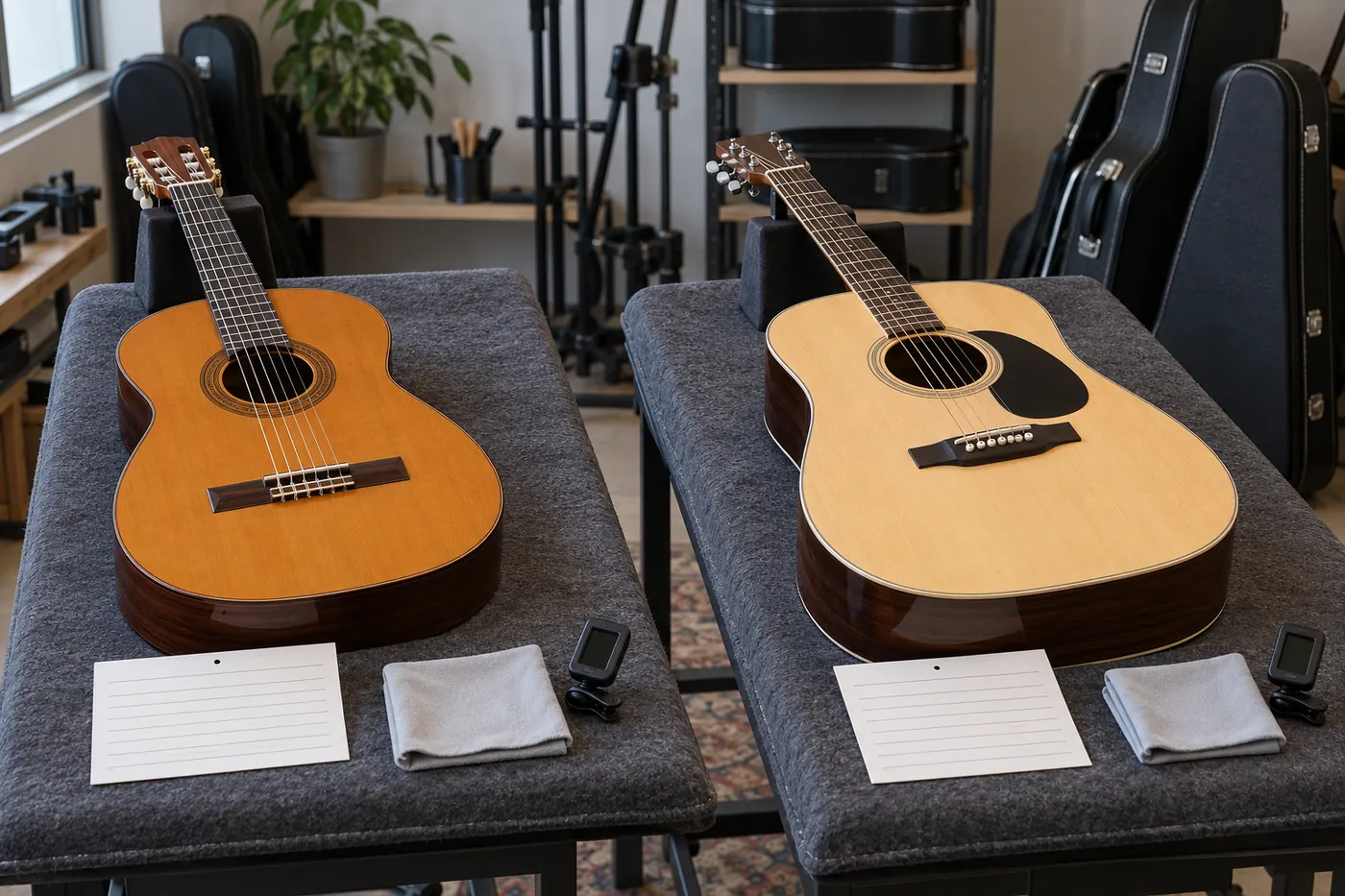
An intake form may cover:
- model, identifier and carton match;
- visible transport damage;
- neck and fret condition;
- tuner and hardware operation;
- bridge, nut and saddle condition;
- basic playability review by the agreed method;
- electronics function when applicable;
- finish condition;
- case, bag and accessory completeness;
- photos and disposition for exceptions.
A return form may use similar fields but should distinguish normal wear, required maintenance and damage according to the program's own policy. The supplier should not invent that policy.
Structure the quotation for the program
Ask for a quotation that identifies:
- specification revision and model list;
- included branding or identification work;
- bags, cases and accessory scope;
- packaging and label scope;
- sample scope;
- documents and inspection evidence included;
- one-time items where applicable and confirmed;
- assumptions about model mix or order structure;
- exclusions and unresolved questions.
Do not treat an unverified quantity estimate as a firm order. It is better to state the planning range and request the supplier's project-specific commercial conditions than to publish generic MOQ or lead-time claims.
Assign ownership inside the buyer's organization
Program failures are not always product failures. Decide who owns size allocation, asset data, technical acceptance, carton receiving, maintenance and reorder approval. If every site uses a different spreadsheet or naming convention, even a consistent shipment can become difficult to manage.
Give the supplier one controlled source for product and artwork decisions. Internal debate can continue, but the factory should receive only the authorized revision. This is especially important when schools, distributors and service partners are all involved in the same program.
At handover, provide each site with the model list, identifier rules, inspection form and escalation contact. That keeps local staff from improvising a new acceptance standard after the instruments arrive.
If cartons will be split between sites, tell the supplier how the allocation will be checked. Match each destination list to model, size and asset identifier before dispatch. This helps receiving staff recognize an allocation error without confusing it with a product defect.
Evaluate the supplier's control system
The supplier's answers should connect to evidence. Ask how specifications and artwork are revised, how samples are identified, how changes are approved, how final inspections refer to the approved model and how packaging labels are controlled.
For company verification, request current documents relevant to the purchase. Vinesmusical can provide its third-party BSCI certification and a third-party in-depth factory audit report for buyer review. Buyers should verify scope, validity and relevance rather than treating the name of a document as automatic proof of every project claim.
Plan replenishment and replacements
Fleet programs need continuity, but exact components and commercial conditions can change. Keep the approved specification, sample record, artwork, identification rules and inspection form for each model.
Before a reorder, compare the current requirements with the last approved revision. Ask the supplier to disclose proposed changes. Decide whether document review, component evidence or a new sample is needed.
Replacement planning should also state whether the program needs the same appearance, functional compatibility or only the same general category. Those are different requirements and may lead to different sourcing decisions.
Supplier-brief checklist for schools and rental programs
Before quotation, confirm that you have:
- a written program description;
- user groups and fitting method;
- a size and model matrix;
- revision-controlled model specifications;
- setup and functional review methods;
- identification and record rules;
- finish and color references;
- bag, case and accessory scope;
- packaging and carton-label requirements;
- sample reviewers and approval responsibilities;
- intake and return inspection fields;
- quotation assumptions and exclusions;
- change-control and reorder rules.
FAQ
What is the best guitar for a music school?
There is no universal best model. The choice depends on learner profile, teaching method, fitting process, maintenance capability, storage and budget. Define those conditions before selecting the size and specification.
Should a school buy one guitar size for every student?
Not automatically. Programs should use an instructor-approved fitting method and consider player stature and teaching needs. A size mix may be appropriate, but the program should decide it deliberately.
What makes a guitar suitable for a rental program?
Suitability comes from the complete program: approved specification, setup, identification, maintenance, condition records, packaging and replacement planning. Avoid relying on vague “rental grade” claims.
Can the supplier provide the maintenance standard?
The supplier can provide product information and respond to defined requirements. The fleet owner should set the maintenance and return policy based on its users, technicians and operating conditions.
What should be checked when instruments arrive?
Match model and identifier, inspect visible condition, review neck, frets, hardware, playability and electronics where applicable, and confirm case, bag, accessories and packaging against the approved documents.
How should replacement instruments be controlled?
Use the same model revision or document the approved alternative. Retain specifications, identifiers and inspection criteria, and review proposed changes before ordering replacements.
Conclusion
A school or rental purchase is a small operating system, not just a list of guitars. The supplier brief should connect product choice with fitting, setup, identification, packaging, inspection, maintenance and replenishment.
Vinesmusical manufactures finished classical, acoustic and electric guitars and electric basses for B2B OEM/ODM projects. The company was founded in 2014, has about 80 employees, reports monthly capacity of about 7,000 guitars and operates from an owned 10,000-square-meter, five-floor facility. It has third-party BSCI certification and a third-party in-depth factory audit report available for verification. Project-specific claims still require project-specific evidence.
Ask for a project review: send the user profile, model matrix, setup requirements, identification plan and packaging scope through Contact Us or email info@vinesmusic.com. Request a quotation only after the open requirements are visible.