 EN
EN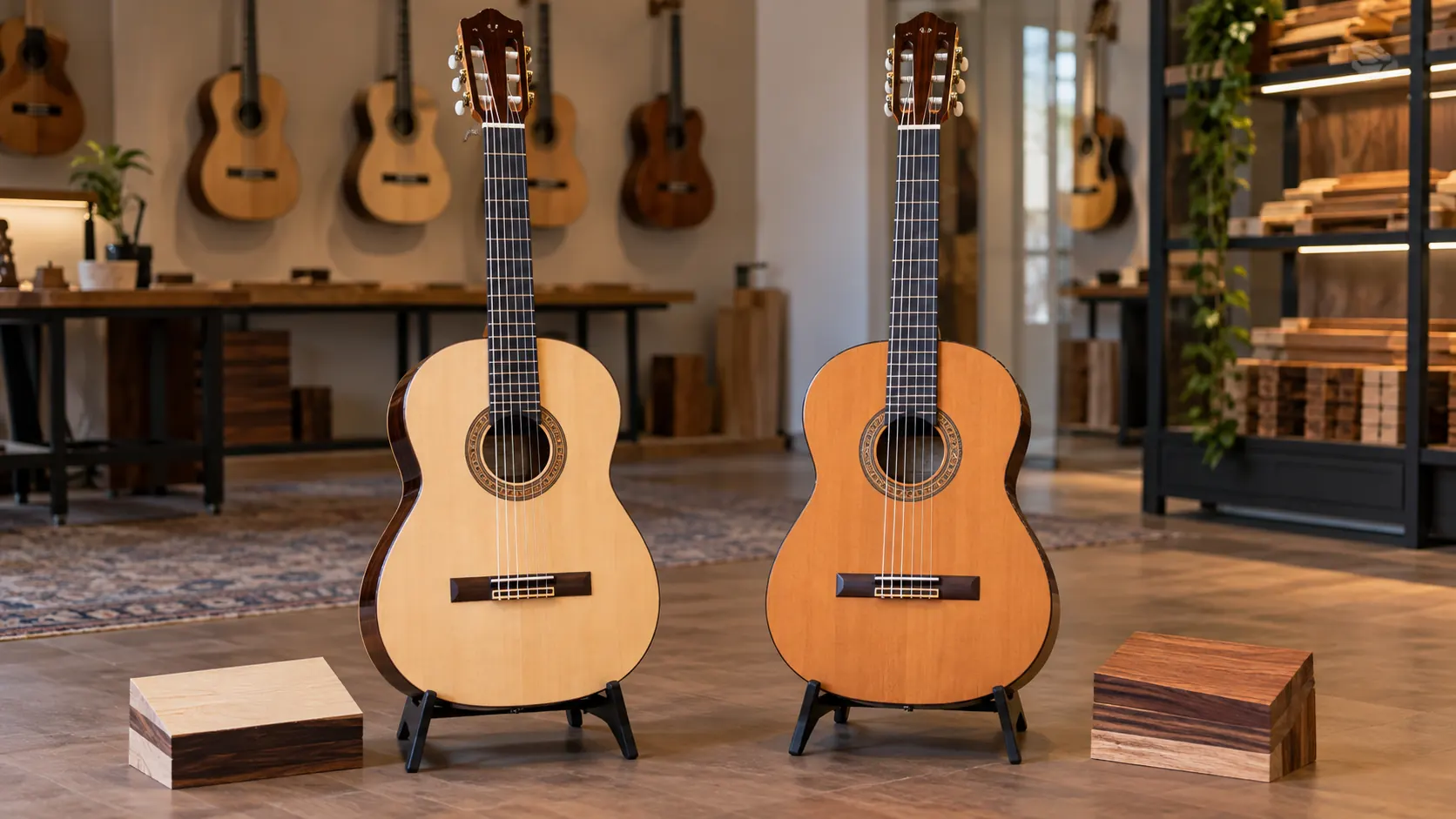
Put two classical guitars on the same table. The label on one says “solid top”; the other says “all solid.” That tells you something about the wood, but surprisingly little about which guitar belongs in your wholesale range.
A solid-top model may have a solid soundboard and laminated back and sides. An all-solid model has solid wood in all three body parts. The difference matters for material control, natural variation, handling and honest product descriptions. It is still possible to approve the wrong guitar if the setup, workmanship or intended customer is ignored.
The short answer: start with the customer and the job each model has in your range. Write down the top, back and side construction separately. Then compare representative samples, the build records and the complete finished instruments—not just the labels on a quotation.
There is no universal winner, and a construction label alone cannot establish a price, minimum order or delivery date.
Start with the range, not the material label
The same construction can play different roles in different markets.
A solid-top classical guitar may be positioned as a step up from a laminated entry model. It can also be the main teaching or retail instrument in a focused range. An all-solid guitar may sit above it, serve more experienced players or support a smaller premium assortment.
The Vinesmusical classical-guitar range is a useful place to see available model directions. Check the construction stated for each individual model; a category page is not a substitute for its specification.
Write the intended customer and channel before choosing species or decorative details. Consider music retailers, online sellers, schools, distributors and specialist classical-guitar dealers separately. Their service expectations, product knowledge and tolerance for natural variation can differ.
Define the price position internally without asking the factory to invent a product around a target price alone. The buyer still needs a construction and performance brief. If the brief is too open, suppliers may quote very different guitars under the same “solid-top” label.
Also decide how many classical sizes belong in the program. A construction decision for a full-size model does not automatically transfer to every smaller size. The classical guitar size guide helps separate customer and scale decisions before the material structure is fixed.
Use construction terms that can be verified
State each part of the body separately.
For a solid-top model, identify the soundboard as solid and describe the back and sides according to their actual construction. Do not let “solid guitar” appear in product files when only the top is solid.
For an all-solid model, confirm that top, back and sides are solid wood. Record any center joints, internal reinforcement and decorative veneers or overlays without allowing them to obscure the structural description.
The specification should include:
- Model code and revision.
- Top construction and approved material description.
- Back construction and approved material description.
- Side construction and approved material description.
- Neck, fingerboard and bridge descriptions.
- Body size, scale and neck-joint method.
- Bracing and other controlled construction references.
- Finish system and approved appearance.
- Label and carton wording.
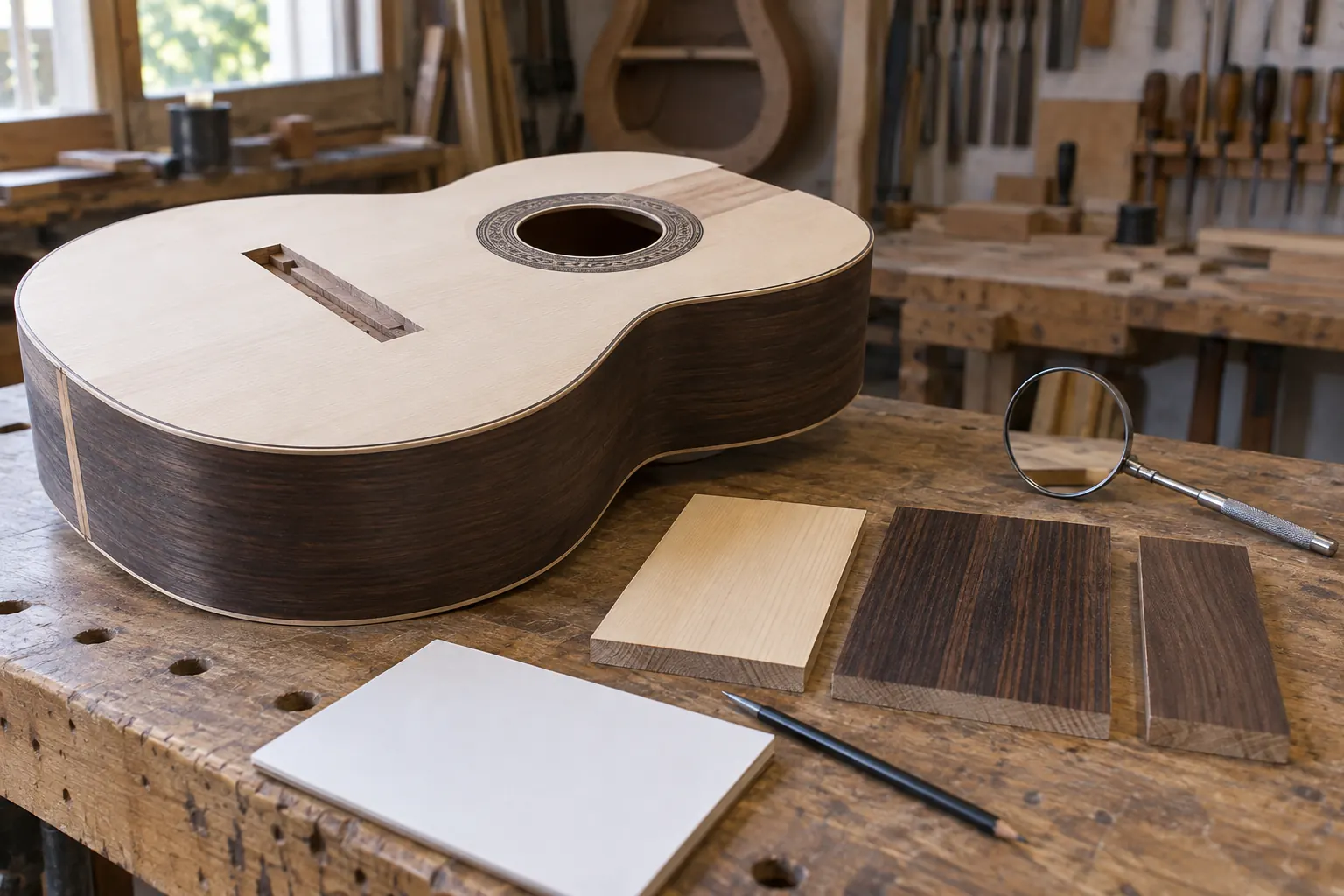
Avoid using edge photographs as the only proof of construction. Finish, binding and lighting can make an image difficult to interpret. Ask for a combination of specification, material record, production explanation and physical sample review.
Avoid unsupported tone claims
Buyers and players often discuss wood in tonal language. That conversation can be useful during product development, but marketing claims need discipline.
The sound of a classical guitar comes from the complete instrument: dimensions, top thickness, bracing, bridge, neck joint, finish, strings, setup and workmanship interact with the selected materials. A label such as “all solid” does not guarantee a specific volume, response or maturity.
Describe verified construction in product copy. If the buyer wants to describe the sample's character, use careful language based on actual evaluation and avoid promising that every unit will sound identical. Natural material and normal production variation need an agreed acceptance process.
Do not copy a competitor's claims about aging, resonance or projection into the specification. Those phrases cannot replace measurable construction and inspection fields.
During sample review, compare the instruments in a consistent room and setup condition. Use the approved string set and tuning. Record who evaluated the sample and what was accepted, but do not turn a subjective impression into an unsupported factory test result.
Compare material control, not only species names
A species name on a quotation is a starting point, not a material-control record. It does not tell you how the wood was selected, stored or matched to the model in front of you.
In a sourcing conversation, ask to see how incoming material is identified and inspected. Useful fields include supplier, receipt date, material description, dimensions, visible condition and the decision to accept or hold it. For your model, the important link is between those records, the bill of materials and the sample you actually approve.
Natural wood appearance varies. Define what matters to the retail program: general color family, contrast, grain range, visible marks and matching expectations. Avoid demanding that bulk units reproduce the exact figure of one sample.
Moisture and storage discussions should focus on the factory's real process. Ask what is monitored, how records are kept and what action is taken when material is outside the controlled range. Do not insert a universal target into the article when the project, species, climate and process have not been reviewed.
The incoming guitar material inspection guide provides a buyer-side framework for reviewing records without treating a warehouse photograph as complete evidence.
Understand the additional controls in an all-solid body
An all-solid classical guitar is not simply a solid-top model with a higher-grade label.
Solid back and side sets bring their own selection, bending, joining, thickness and appearance decisions. The factory needs controlled references for those operations and a way to keep parts linked to the correct model.
Ask how sets are identified through preparation and assembly. Review how center joints, side bending and fit are checked. If decorative back strips or binding are used, confirm whether they are structural, decorative or both in the project's construction record.
The buyer should also consider handling after production. Material movement can continue through finishing, setup, warehouse storage and transport. A clear inspection and packing process matters for every guitar, and the commercial risk may be higher when the material and product position are more demanding.
None of this means all-solid construction is unsuitable for volume business. It means the buyer should confirm that the supplier's process, sample and records match the claim before building a range around it.
Review top and bracing as one system
The soundboard and bracing should be approved together.
Ask the factory to show the controlled bracing reference for the proposed model. Review brace location, fit, adhesive cleanup and the method used to confirm the current pattern. A familiar name for a bracing style does not prove that the sample and bulk instruction match.
Top thickness and flexibility are technical matters for the factory and project team to control. The buyer should request the approved specification and inspection method rather than publish an unverified number. If the supplier proposes different top materials, treat each as a defined option and compare complete samples.
Check the bridge area and neck relationship as part of the same system. A material upgrade does not solve inaccurate geometry, weak fit or inconsistent setup. The instrument still needs stable construction and clean workmanship.
If a solid-top and all-solid model share a body size, do not assume every internal field is identical. Use separate model or revision records where construction, bracing, finish or material handling differs.
Approve a range, not one unusually attractive sample
One beautiful sample can be a poor standard for hundreds of naturally varied instruments. Before a sales team photographs it, ask whether its color and figure are representative of the material range proposed for production. If appearance is central to the retail promise, review several examples rather than treating one back panel as the only acceptable look.
Define unacceptable defects separately from acceptable natural variation. Color change, grain direction and figure are not the same as cracks, open joints, finish contamination or poor matching. Put objective workmanship issues into the inspection checklist and appearance range into approved references.
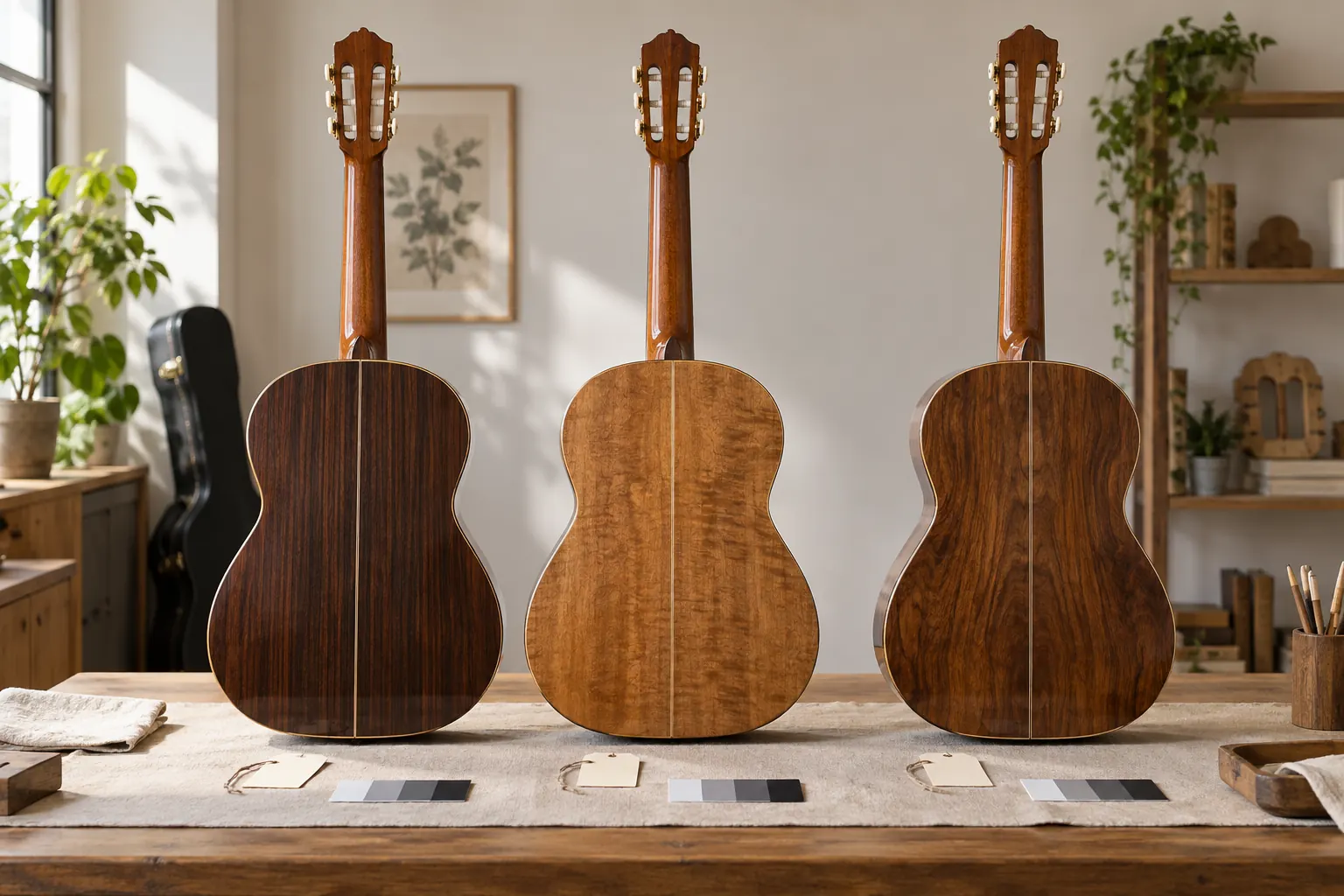
The natural wood variation guide explains how to move from one photograph to a usable acceptance range.
Use controlled lighting and consistent angles for approval images. Keep the original files with the model revision. Social-media images, filtered photographs and compressed chat screenshots are poor bulk standards.
Inspect finish without hiding the construction
Finish affects appearance, feel and production handling on both solid-top and all-solid guitars.
Define finish type and sheen in terms the factory can control. Approve color and transparency on the actual construction. The same finish can appear different over different wood or veneer structures.
Check surface preparation, binding lines, bridge area, neck transition, edges and internal cleanliness. Look for runs, sink, contamination, uneven color and polishing residue. Use objective defect categories rather than asking for a vague “perfect finish.”
If the product is sold on visible natural wood, confirm that the finish does not create a misleading image of the material. Product pages should use verified construction terms and representative photography.
The guitar finish-approval guide offers a structured way to approve color, sheen, texture and acceptable variation before bulk release.
Planning a classical-guitar range? Send your requirements with the target customer, size, top/back/side construction, preferred appearance, finish, branding, quantity estimate and packing needs. Vinesmusical can review whether the solid-top or all-solid brief is ready for quotation and sampling.
Compare quotations on the same construction scope
The phrase “solid classical guitar” should never be the entire material section of a quotation.
Ask each supplier to list the top, back and sides separately. Then compare neck, fingerboard, bridge, body size, scale, bracing reference, finish, hardware, strings, branding, accessories and packing.
Check whether the quotation uses a current platform or new development. Confirm which material appearance range is included and whether the sample uses the same construction proposed for bulk production.
Mark substitutions. If the sample uses one back-and-side construction while the quotation assumes another, the buyer is not approving the quoted product. The supplier should state the reason and the point at which the correct material version will be reviewed.
The better-defined request is usually the easier one to compare. Leave an open field marked as open instead of letting different suppliers silently make different assumptions. Vinesmusical reviews MOQ, price and timing against the confirmed project scope rather than posting a blanket promise for either construction.
Build sample approval around the complete guitar
Begin sample review by verifying model, revision and material construction. Compare the physical instrument with the specification and approved appearance references.
Inspect body shape, joint quality, binding, rosette, bridge, neck alignment, fretwork, finish and internal cleanliness. Use a light and mirror where appropriate without damaging the instrument. Confirm that labels and product descriptions match the actual construction.
Then tune and play the guitar with the approved string set. Check relief, action, nut condition, saddle, fret playability and unwanted noise. Evaluate the complete response, but keep subjective listening notes separate from objective workmanship and setup results.
Review serviceability. Dealers need clear string, setup and care information. If the construction requires particular handling or storage guidance, prepare accurate materials before launch rather than adding vague warnings after complaints.
The classical-guitar sample-approval guide provides a broader checklist for moving from one approved sample to a controlled bulk standard.
Plan shipment inspection and packaging
Pre-shipment inspection should confirm the claimed construction and the finished instrument.
Check the model and revision, top/back/side record, appearance range, joints, finish, bridge, neck alignment, fretwork, setup, strings, labels, accessories and packing. Use sampling and inspection terms agreed for the actual order rather than relying on a generic article.
Packing should protect the headstock, body edges, bridge and finish. Confirm the bag, insert, carton or case with the actual model and approved accessories. Pay attention to pressure points and movement inside the pack.
For an all-solid model, do not replace a controlled shipping process with marketing statements about wood. The same practical checks—correct product, stable assembly, clean finish, appropriate setup and protective packing—still determine whether the shipment is ready.
Solid-top versus all-solid buyer checklist
Before approving the range, confirm:
- The target customer and retail role for each construction are clear.
- Top, back and sides are described separately in the specification.
- Labels, website copy and cartons use the same verified terms.
- Material records connect the approved construction to the model revision.
- Natural appearance variation and objective defects are separated.
- Top and bracing references match the physical sample.
- Joint, binding, bridge and internal workmanship are inspected.
- Finish and transparency are approved on the actual construction.
- Setup, strings and playability are reviewed as part of the complete guitar.
- The sample construction matches the proposed bulk quotation.
- Packing and final inspection use the actual model.
If the team cannot answer those questions, the construction label is not ready for a wholesale product page.
Frequently asked questions
What is a solid-top classical guitar?
It has a solid-wood soundboard. The back and sides may use another construction, commonly laminated. The specification should state all three body components separately.
What is an all-solid classical guitar?
Its top, back and sides are solid wood. That description should be supported by the model specification, material records and approved sample.
Is an all-solid classical guitar always better?
No universal ranking is useful for every buyer. Product role, complete construction, workmanship, setup, service environment and price position all matter. Compare finished samples and verified specifications.
Can a supplier call a solid-top model “solid wood”?
That wording can be ambiguous. Use “solid top” and state the back and side construction. Product labels and marketing should not imply that every body component is solid when it is not.
How should buyers approve natural wood appearance?
Use representative samples and consistent photographs to define an acceptable range. Separate natural grain and color variation from objective defects such as cracks, open joints, contamination or poor finish.
What should a quotation show?
It should list top, back, sides, neck, fingerboard, bridge, body size, scale, bracing reference, finish, hardware, strings, branding, accessories, packing and development scope. Substitutions and open options should be visible.
Does Vinesmusical publish a standard MOQ or lead time for solid-top or all-solid classical guitars?
No universal MOQ or lead time is stated in this guide. Vinesmusical reviews the confirmed construction, customization, estimated quantity and packaging requirements before preparing commercial terms.
Conclusion
Both constructions can earn a place in a wholesale range. The useful question is not “Which label sounds more premium?” but “Which finished guitar can we specify, approve, describe and support honestly for this customer?”
Once the top, back and sides are documented, keep the sample, quotation, product copy, inspection and packing tied to the same model revision. That is what turns a material choice into a dependable product decision.
To discuss a solid-top or all-solid classical-guitar project, contact Vinesmusical with your target market, size, material construction, finish, branding, quantity estimate and packaging requirements. The team can review the brief before quotation or sample development.