 EN
EN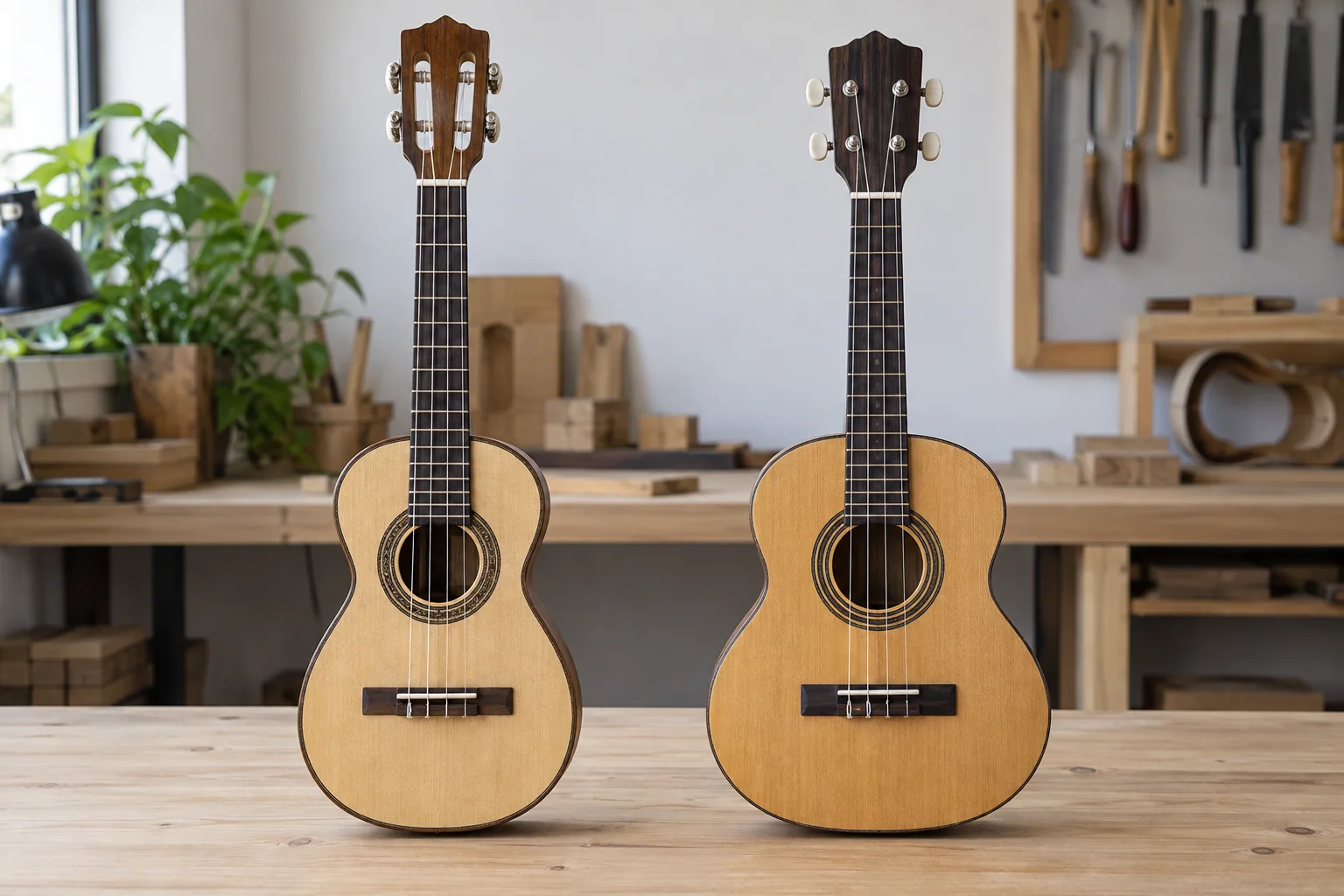
“Brazilian cavaquinho” and “Portuguese cavaquinho” are useful market descriptions, but neither is a complete factory specification. Each name points toward a playing tradition and a group of familiar instruments. It does not automatically settle the scale, body outline, neck dimensions, tuning, construction, setup or electronics that a particular buyer expects.
That distinction is important for importers and retailers. A sample can be a well-made four-string instrument and still be wrong for the intended customer. The neck may feel unfamiliar, the tuning reference may not match the market, or the product page may promise a national style that the specification never defined.
For an OEM or private-label project, the safer approach is to use Brazilian or Portuguese as the beginning of the brief. Then translate the market expectation into measurable product decisions and a clear sample-approval plan.
The short answer: first define the player, repertoire, destination market and tuning. Then record the body platform, scale, neck, string spacing, bridge, tuners, construction, setup and packaging. If the buyer wants two traditions in one assortment, treat them as separate models with separate specifications rather than changing only the product name.
Why the country label is not enough
The cavaquinho belongs to a broad family of small four-string instruments with several regional forms. Within Portugal, instruments and practices can vary by region. In Brazil, retailers may serve samba and choro players, beginners, stage performers and general music customers with different expectations. Contemporary products also introduce pickups, cutaways, modern finishes and other features that do not fit neatly into a simple historical label.
This means a comparison should not start with a claim that one national version always has one exact dimension or tuning. It should start with the buyer's evidence:
- Which local products do players recognise?
- Which tuning will the retailer publish and support?
- What neck feel and scale are familiar in that market?
- Is the model intended for traditional acoustic use, amplified performance or broad entry-level retail?
- Which visible features are essential, and which are simply preferences?
When these questions are answered, the factory can review a real product brief. Without them, “make a Portuguese model” may produce a sample that follows a different regional reference from the one the buyer had in mind.
Define the player before comparing specifications
A retail buyer should describe the intended customer in practical terms. “Professional” and “beginner” can be useful, but they need context.
For example, a specialist shop may expect customers to compare fret access, neck feel, acoustic response and traditional details. A general music retailer may place more weight on stable setup, accessible pricing, simple packaging and clear instructions. An online seller needs accurate product-page information and packaging that protects the instrument through individual delivery.
Include:
- Destination country and sales channel.
- Intended player level.
- Main musical setting or repertoire.
- Whether the buyer is serving an established local tradition or introducing the instrument to new customers.
- Acoustic, electro-acoustic or mixed assortment.
- Reference instruments available for review.
- Expected retail position within the range.
This information helps the supplier understand why a detail matters. A buyer may require a particular neck width because local players use a familiar technique, not because a wider or narrower neck is universally better.
Confirm tuning and strings as part of the product
A four-string instrument can support different tuning practices. The specification should name the intended tuning or identify the buyer-approved reference. Do not assume the country label will communicate it to every person involved in sampling, setup, packaging and product-page preparation.
Tuning affects the selected string set, nut slots, bridge compensation, perceived tension and setup. It also affects customer-facing information. If the carton insert, online listing and factory setup use different tuning references, the retailer will receive avoidable questions and returns.
Record:
- Intended tuning for the delivered model.
- String material and gauge direction, or the exact set when required.
- Whether an alternative string set is acceptable.
- Setup reference used during sample approval.
- Tuning information required on the product page, label or instruction sheet.
The website sells finished instruments, not replacement strings, but the installed string set is still a functional component of the finished product. It should be specified because it influences how the sample plays and how the buyer describes it.
Compare scale and body using measured references
Product photographs make two instruments look easier to compare than they really are. Perspective changes apparent scale, body depth and neck length. Use measurements, drawings or a physical reference alongside images.
Scale and fret layout
Record the scale length using an agreed measurement method. Confirm the number of frets, the neck-to-body relationship and any access requirement. If the buyer supplies a sample, measure it rather than copying a seller's online specification without checking.
The scale is connected to tuning, string selection and feel. A factory proposal should explain when an existing platform differs from the buyer's reference. The buyer can then decide whether the difference is acceptable before tooling, materials or sample work moves forward.
Body outline and depth
Capture the body with front, side and back views. State overall dimensions and describe the outline in neutral terms. Avoid relying on labels such as traditional, concert or standard unless a drawing or reference establishes what they mean for this project.
Body depth, waist, shoulder shape and soundhole placement can influence appearance, handling, internal construction and packaging. They also help retailers distinguish models in a small-instrument assortment.
Neck and nut
Confirm nut width, string spacing, fingerboard width, neck profile and finish feel. These details are especially important when the buyer is comparing a familiar local instrument with a factory platform developed for another market.
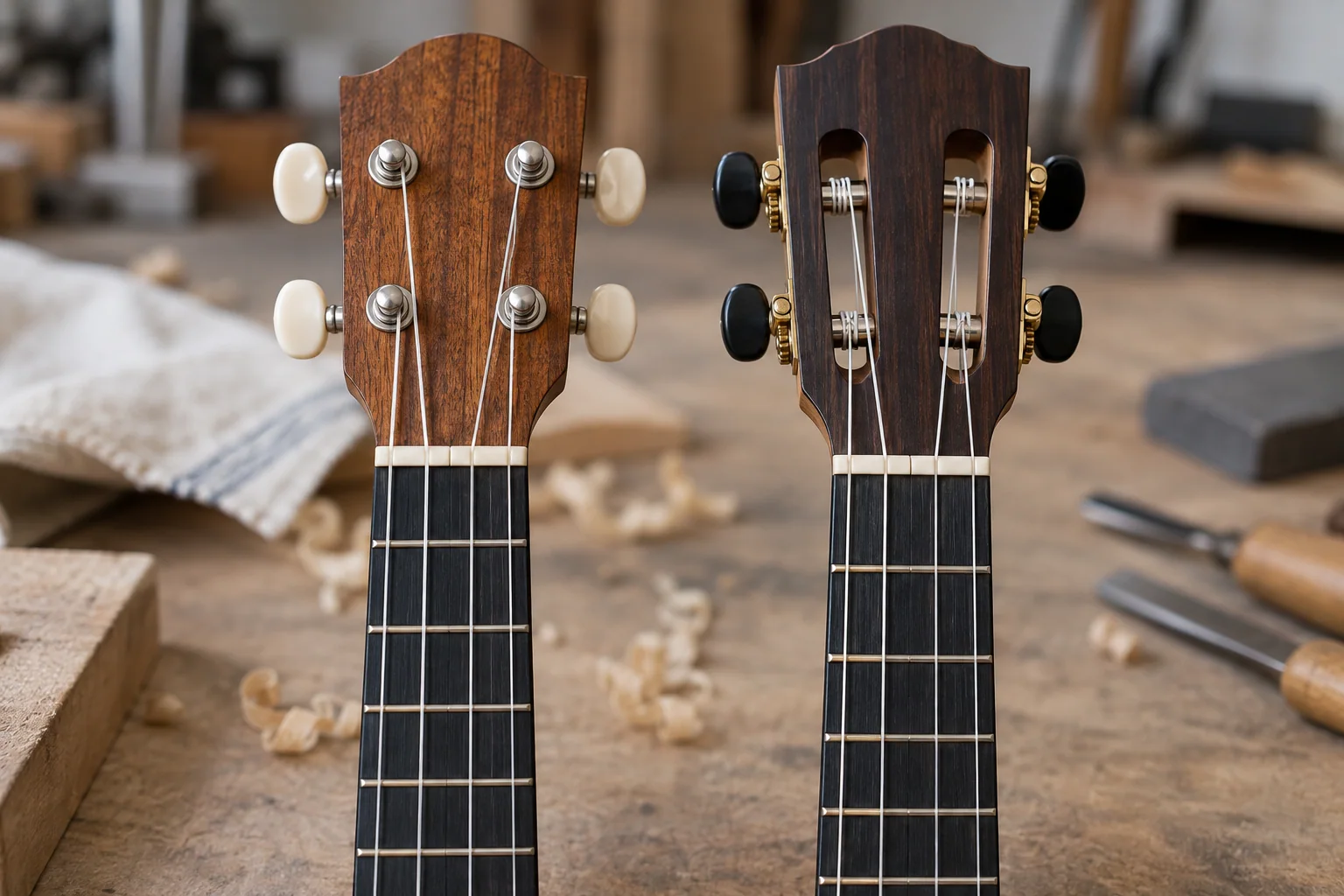
Illustrative visual: neck and headstock details compared before a cavaquinho sample is approved.
Ask for measurements at agreed positions and review the physical sample by playing it. A number can confirm width; it cannot fully describe edge treatment, neck shape or how the finish feels under the hand.
Record construction without turning tradition into a slogan
Buyers often request “traditional wood” or “solid wood” because these phrases seem clear in retail copy. They are not enough for manufacturing.
The specification should describe the actual construction:
- Solid, laminated or other confirmed top construction.
- Back and side construction.
- Neck and fingerboard material direction.
- Internal support or bracing when it is a controlled feature.
- Bridge and saddle materials or performance requirements.
- Binding, rosette and decorative details.
- Finish type, colour and acceptable natural variation.
If a material species is important, confirm availability, documentation needs and the acceptable visual range. Do not claim that one material automatically creates a national identity or a guaranteed sound. The finished instrument is the result of dimensions, construction, setup, components and workmanship together.
For a first sample, it is often useful to separate essential features from proposed ones. A buyer may require a particular scale, neck and outline while allowing the factory to propose a practical laminate or solid-wood direction at the intended product level. The quotation should state which choices are confirmed and which are proposals.
Check bridge, tuners and serviceability
Hardware should suit both the design and the retailer's after-sales reality.
For the bridge, confirm the string anchoring method, saddle or compensation direction, material, finish and replacement considerations. Check that the bridge location and setup allow the sample to intonate acceptably under the approved tuning.
For the tuners, record layout, finish, button style and expected operating feel. Inspect string paths through the nut and around the posts. The four strings should travel cleanly without rubbing against neighbouring hardware or sharp edges.
A visually unusual tuner or bridge may help a product stand out, but the buyer should ask whether replacement parts are available and whether a retail technician can service it. A design that is difficult to restring or adjust can create more customer frustration than the decorative feature is worth.
Decide whether the range needs acoustic and amplified models
An amplified cavaquinho is not simply the acoustic model with a pickup added at the end. The pickup format, controls, output jack and battery access can affect the body, bridge, routing, packaging and inspection plan.
If the assortment includes an electro-acoustic version, specify:
- Passive or active system.
- Pickup type and installation location.
- Control functions and sequence.
- Output-jack position.
- Battery access and expected battery inclusion if active.
- Cable or accessory requirements.
- Functional test and acceptable noise or control behaviour.
The buyer should also decide whether the amplified version keeps the same external appearance as the acoustic model. A visible side preamp may be acceptable for a modern retail range and unwanted for a model positioned around traditional appearance.
Building a cavaquinho assortment? Send the destination market, player profile, tuning reference, sample photographs, estimated quantity, branding and packaging brief through our Contact page. We can separate required details from points that still need a factory proposal.
Keep Brazilian and Portuguese models separate in the assortment plan
If a retailer wants both product directions, create two model codes and two specifications. Shared components can be reviewed later, but the market identity of each model should not depend on an internal note saying “same as the other version except tuning.”
A practical comparison sheet can include:
- Intended market and player.
- Tuning and installed string set.
- Body outline, depth and dimensions.
- Scale, fret count and neck joint position.
- Nut, string spacing and neck profile.
- Top, back, side and neck construction.
- Bridge and tuner system.
- Finish, rosette, binding and colour.
- Electronics if fitted.
- Accessories, labels and packaging.
- Sample revision and approval status.
This makes purchasing, factory production, inspection and product-page writing follow the same product definitions.
The existing Brazilian Cavaquinho sourcing guide covers the general information retailers should prepare before sampling. Use it together with the OEM specification sheet guide when turning a market idea into a controlled model record.
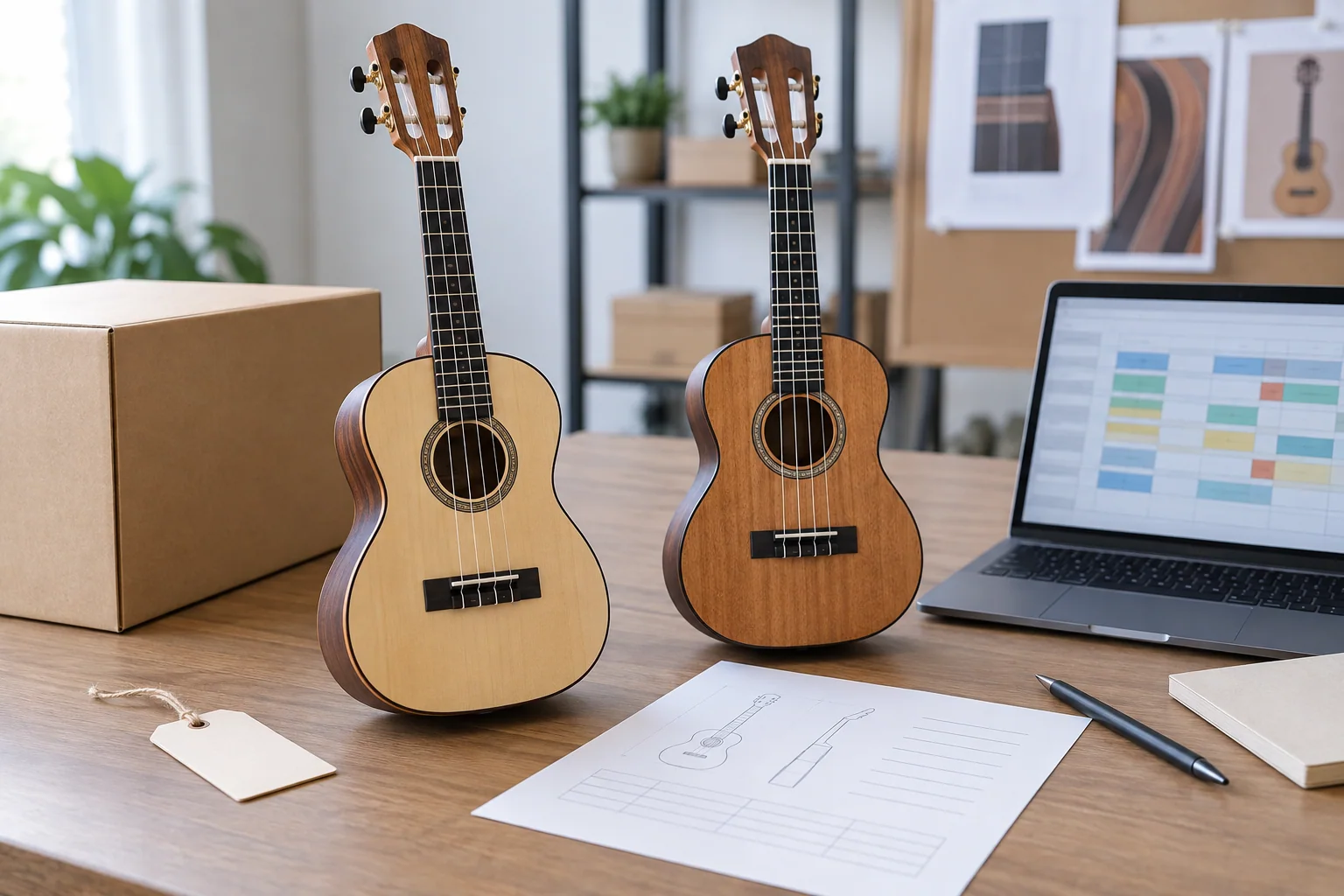
Illustrative visual: cavaquinho samples reviewed as part of a regional retail assortment.
Approve the sample in a consistent order
When both the buyer and factory know how the sample will be reviewed, comments become easier to resolve.
- Confirm the model code and specification revision.
- Measure scale, body, nut and critical spacing.
- Verify tuning, installed strings and product label information.
- Play across the fingerboard and review neck feel, fret ends, action and unwanted noise.
- Check bridge location, intonation direction and tuner operation.
- Inspect construction, finish, rosette, binding and branding.
- Test electronics and controls if fitted.
- Review accessories and the complete retail pack.
- Consolidate changes in one revision with photographs and measurements where useful.
Do not approve the instrument visually and leave setup for a later shipment check. By then the product page, packaging and production process may already be based on an incomplete sample.
Our sample development guide explains how to close changes before bulk production. The same revision discipline applies to smaller regional instruments.
Packaging and product-page accuracy
Small instruments can move inside a carton if the supports are designed for a different body. Check headstock clearance, body support, bridge protection and accessory placement. A cable, tuner or metal tool should not be loose against the finish.
Product-page accuracy is part of the approval. The retailer should receive confirmed information for scale, tuning, construction, electronics and included accessories. If a material or dimension is still open, do not publish it as a final fact.
For a comparison product, avoid sweeping claims such as “authentic Portuguese” or “traditional Brazilian” unless the specification and market review support them. More precise wording—such as the intended tuning, body platform and player group—is both more useful to customers and easier for the supply chain to verify.
Frequently asked questions
What is the main difference between a Brazilian and Portuguese cavaquinho?
There is no single specification that covers every instrument in either tradition. Buyers should compare the intended tuning, scale, body, neck, construction and playing context of the exact models they want to source. The country label provides context; the specification controls the product.
Do both types of cavaquinho have four strings?
Four strings are common across the instrument family, but the buyer should still state the string count, tuning and installed set in the project record. This prevents the setup and customer information from relying on an assumption.
Can one factory platform serve both markets?
Possibly, if the dimensions, construction and components meet both briefs. The buyer should first approve each market version separately. Shared parts should be a documented production decision, not a shortcut that erases important differences.
Which tuning should a wholesale buyer request?
Request the tuning used by the intended players and sales market. Confirm it with a local specialist, reference instrument or buyer-approved source, then record it in the specification, setup instructions and product copy.
What should a buyer send before requesting a cavaquinho sample?
Send the destination market, player and musical use, intended tuning, reference images or instrument, target dimensions, construction direction, acoustic or amplified requirement, branding, packaging and estimated quantity. Mark uncertain items as open for proposal.
A comparison that the factory can actually build
Brazilian versus Portuguese cavaquinho is a useful content question because buyers and players search for the difference. For a factory project, however, the useful outcome is not a list of generalisations. It is two clear product definitions that purchasing, sampling, inspection and retail teams can follow.
Start with the market and tuning. Measure the reference. Document the body, scale, neck, hardware and setup. If electronics or packaging differ, control them in the same record. The result is a sample that can be approved for a specific customer group rather than an instrument that merely carries a national label.
For buyers who need to qualify the supplier as well as the instrument, Vinesmusical was established in 2014 and works from a company-owned factory of approximately 10,000 square metres across five floors. The company has an 80-person team, monthly capacity of approximately 7,000 guitars and 13 years of OEM/ODM experience. Third-party BSCI certification and an independent in-depth factory audit report can support the buyer's supplier review; the product sample and specification still control the individual project.
Review our finished-instrument range and send your requirements to discuss a cavaquinho programme. Include the intended market, player, tuning reference, model direction, estimated quantity, branding and packaging so the first technical review begins with the right questions.