 EN
EN Español
 Português do Brasil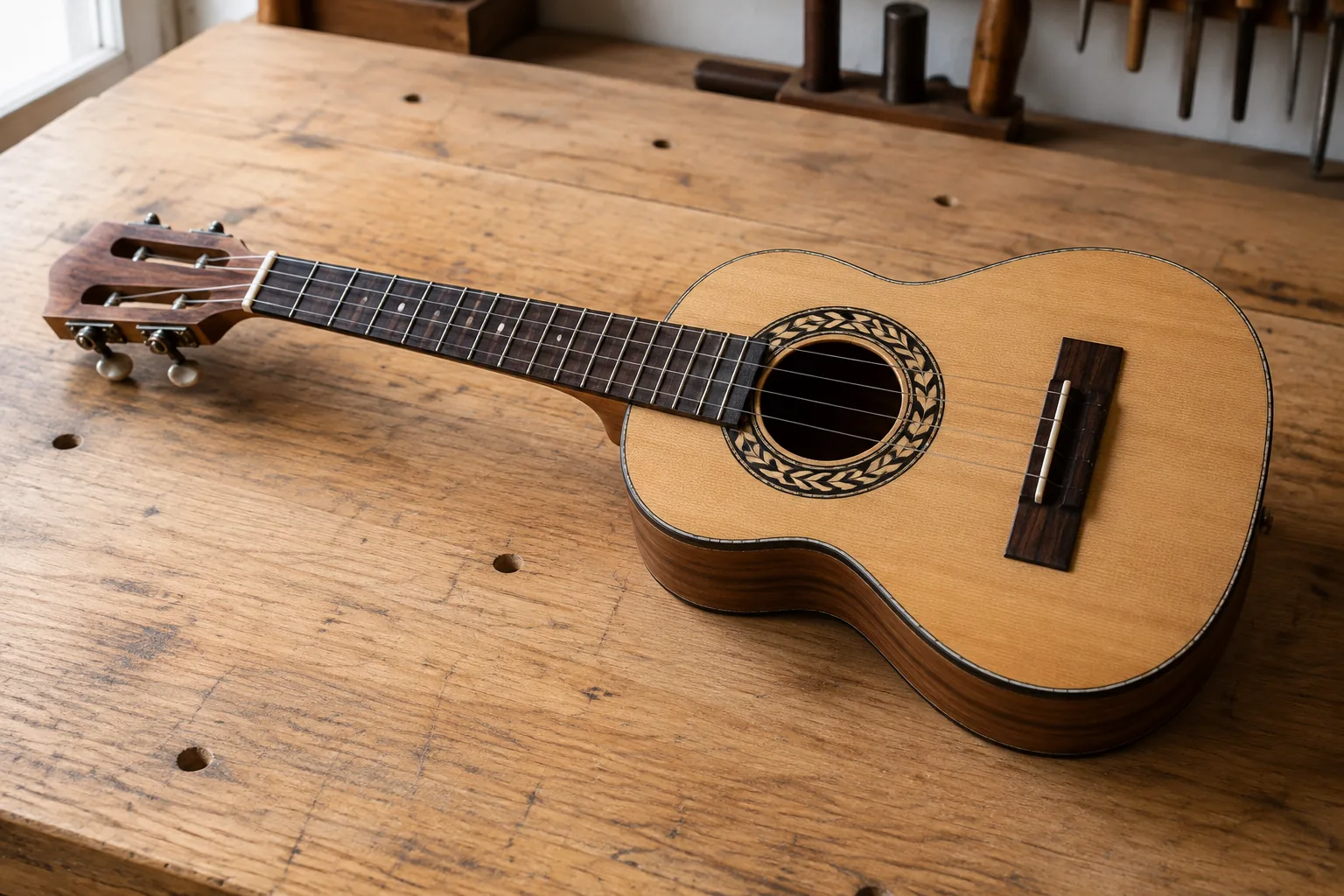
The word “cavaquinho” is not a complete product specification.
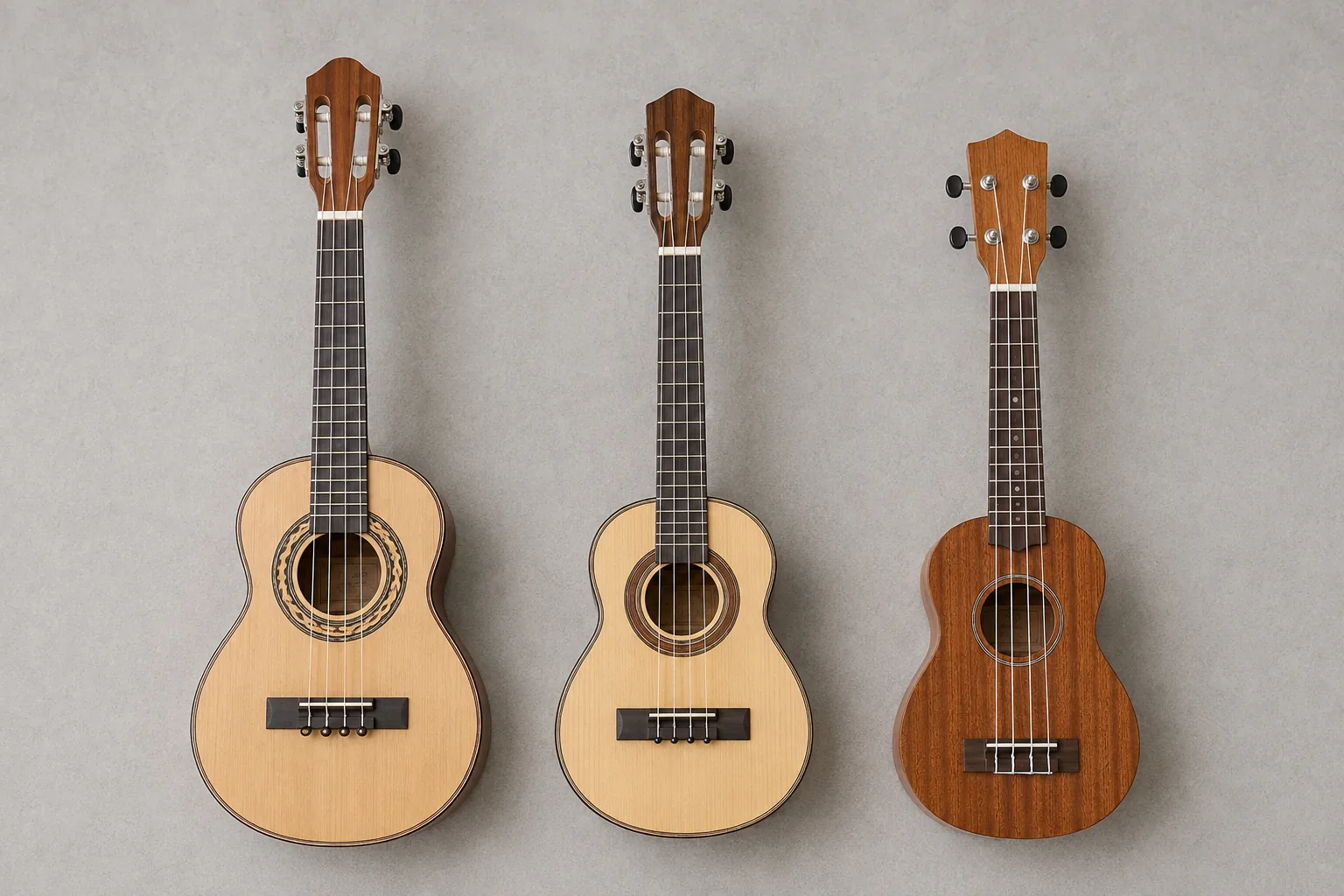
It covers a family of small four-string instruments with different regional histories, playing traditions and construction details. A Brazilian cavaquinho, a Portuguese cavaquinho and a modern ukulele may look related in a small photograph, but a retailer should not treat them as interchangeable products.
That difference becomes important during overseas sourcing. If the buyer sends only a product name and a few reference images, the supplier may prepare the wrong scale, string type, tuning reference, neck layout or retail description. The sample can be neatly made and still be wrong for the market.
The short answer: state the regional type first, then define scale, string material, tuning reference, fret layout, body dimensions, neck, bridge, setup and labeling. Use one physical reference or approved drawing. Do not use a ukulele specification as a substitute.
“Brazilian” describes the model, not the country of origin
This is the first labeling point to settle.
A product can be built to a Brazilian cavaquinho specification outside Brazil. In that case, “Brazilian” describes the type or market tradition. It does not mean the instrument was made in Brazil.
Retail listings, carton marks and labels should make that distinction clear. A Chinese-made product should carry accurate country-of-origin information. The model name can describe it as Brazilian-style or intended for Brazilian cavaquinho use, but the wording must not create a false manufacturing origin.
This is also useful internally. Sales, purchasing and design teams should use the same phrase. If one file says “Brazilian cavaquinho,” another says “Brazilian instrument,” and a third says only “small ukulele,” the project is already open to error.
Put the agreed product name on the drawing, specification sheet, sample label and packaging approval record.
Why Portuguese cavaquinho is not one fixed alternative
Portuguese cavaquinho itself includes regional types. Portugal’s national inventory of intangible cultural heritage distinguishes the minhoto and urban forms on the mainland and the braguinha or machete in Madeira. It also records variation in scale arrangement, fret count, string material and tuning practice.
That is a useful warning for B2B buyers: “Portuguese cavaquinho” may still be too broad for a production order.
The buyer should state which tradition or reference instrument the product follows. A factory should not guess from country names. Two suppliers can both answer “yes, we can make a Portuguese cavaquinho” while interpreting the request differently.
For Brazilian-market sourcing, the risk runs in the other direction. A buyer may request a Brazilian cavaquinho and receive a small four-string instrument based on a Portuguese or ukulele platform. The body may look plausible, but stringing, tuning, scale or neck layout may not match the intended use.
Brazilian cavaquinho and ukulele are separate retail categories
The instruments share part of their history and both commonly use four strings, but that does not make them specification equivalents.
Modern ukuleles are sold in familiar size categories and are normally specified around their own scale, string and tuning conventions. A Brazilian cavaquinho is bought for a different musical context and commonly uses metal strings. Its required setup, nut work, bridge design and playing response must be matched to the approved string and tuning reference.
For a retailer, the distinction affects more than the instrument:
- Product title and category navigation.
- Customer expectations about tuning and repertoire.
- String and accessory compatibility.
- Setup instructions.
- Product photography and scale cues.
- Staff training and after-sales questions.
Do not list a Brazilian cavaquinho inside a ukulele category only because the shop already has a four-string filter. If the website needs cross-navigation, explain the relationship without merging the product identities.
The same rule applies to quotation comparisons. A low quotation based on an available ukulele body is not equivalent to a quotation based on a market-correct cavaquinho brief.
Start the supplier conversation with a reference
The best first message contains more than a keyword. Send one of the following:
- A physical reference instrument that can be measured and documented.
- A complete drawing approved by the buyer.
- A previous sample with a clear list of changes.
- A market reference accompanied by written specifications, without asking the factory to copy protected branding or distinctive design elements.
Then explain where the product will be sold and how the retailer describes it. This helps the supplier understand whether the project is intended for samba and pagode-focused stores, general music retailers, education or another channel.
A reference should clarify the product, not replace the specification sheet. Photographs can hide the scale relationship, body depth, neck angle and string spacing. A supplier may also interpret a photograph through an existing platform that is not the one the buyer intended.
The sample development guide shows how to carry a brief from reference material into a dated approval process.
The specification fields that matter most
The following fields should appear in the buyer’s document before the sample is approved.
| Specification field | What the buyer should provide | Why it matters |
|---|---|---|
| Regional type | Brazilian cavaquinho, with reference | Prevents substitution with Portuguese or ukulele platforms |
| Scale length | Drawing or measured reference | Controls fret position, feel and string response |
| Tuning reference | Named tuning with string order and octave direction | Avoids assumptions when several conventions exist |
| String set | Material, gauge or approved commercial reference | Affects nut, bridge, tension and setup |
| Fret count and neck layout | Drawing and clear body-joint reference | Supports accurate playability and catalogue information |
| Body dimensions | Length, width, depth and outline | Confirms case, carton and visual proportions |
| Top, back and sides | Material and construction | Aligns quotation and sample |
| Neck and fingerboard | Material, profile, nut width and spacing | Controls feel and course alignment |
| Bridge and saddle | Construction and location reference | Affects setup and intonation |
| Finish and decoration | Color, sheen, binding, rosette and logo files | Prevents visual assumptions |
| Electronics | Pickup, controls, jack and test method if required | Separates acoustic and amplified models |
| Packaging | Bag/case, protection points, carton and accessories | Protects the approved product in transit |
Do not fill missing fields with a competitor’s specification unless the buyer has deliberately selected that reference and has checked design rights. Record an open point as open. It is better to delay one decision than to approve the wrong one silently.
The OEM specification sheet guide provides a structure that can be adapted to this product.
State the tuning without assuming everyone reads it the same way
Cavaquinho tunings vary by region and practice. Even when the same four note names appear, writers may list strings from high to low or low to high. Re-entrant relationships can add more confusion.
For an OEM document, note names alone are not enough. Include:
- The order in which strings are listed.
- The intended octave of each string.
- The approved string material and gauge.
- The target pitch reference used during setup.
- Any alternate tuning the retailer plans to recommend.
A simple diagram is useful. Number the strings on the drawing and put the note beside each one. Use the same numbering in nut-spacing, bridge-spacing and replacement-string documents.
Do not publish a retail tuning guide until it has been checked against the approved product and string set. A copied tuning paragraph can create returns even when the instrument itself is correct.
String material changes the setup brief
A four-string layout does not mean one setup fits every string choice.
Metal strings, nylon-family strings and other approved materials behave differently under tension and at the contact points. The nut slots, saddle, bridge design, action and neck relief must match the chosen set. If the sample is evaluated with one set and production ships with another, the approval record is incomplete.
Name the exact sample string set. If the commercial reference may change, also record the material and gauges so the supplier can propose an equivalent for approval. Do not accept “standard cavaquinho strings” as the whole instruction.
Replacement support matters to retailers. The product page should tell staff and customers which string set or specification to use. That information should come from the final approved sample.
Compare acoustic and amplified models as different SKUs
An acoustic-electric cavaquinho is not simply the acoustic model plus a pickup line in the quotation.
The pickup system introduces choices about sensor type, control layout, battery access if applicable, jack position, cable clearance and testing. It can also change the internal work and packaging protection.
If the retailer wants both versions, give each one its own model code. Approve the acoustic setup on both, then add an electronics test for the amplified version:
- Confirm output through the agreed amplifier or interface.
- Operate every control through its full range.
- Listen for intermittent signal, excessive noise and loose connections.
- Check jack fit and cable direction.
- Inspect the internal installation and strain relief where accessible.
- Recheck acoustic buzzes after the hardware is installed.
Do not promise a particular amplified tone from a pickup brand name alone. The installed system and test result matter.
Developing a Brazilian cavaquinho line?
Send Vinesmusical the target market, reference instrument or drawing, tuning and string requirement, acoustic or amplified direction, branding files and packaging needs. We can review the brief before a sample is started. Send your project requirements.
Inspect the sample as a retail product
The buyer should evaluate the sample in the same condition in which a customer will receive it. That means tuned, settled, cleaned, labeled and packed with the approved accessories.
Start by confirming identity. Check the model code and revision. Measure the scale and body. Verify the string set and tuning diagram. Compare the instrument with the approved drawing and reference notes.
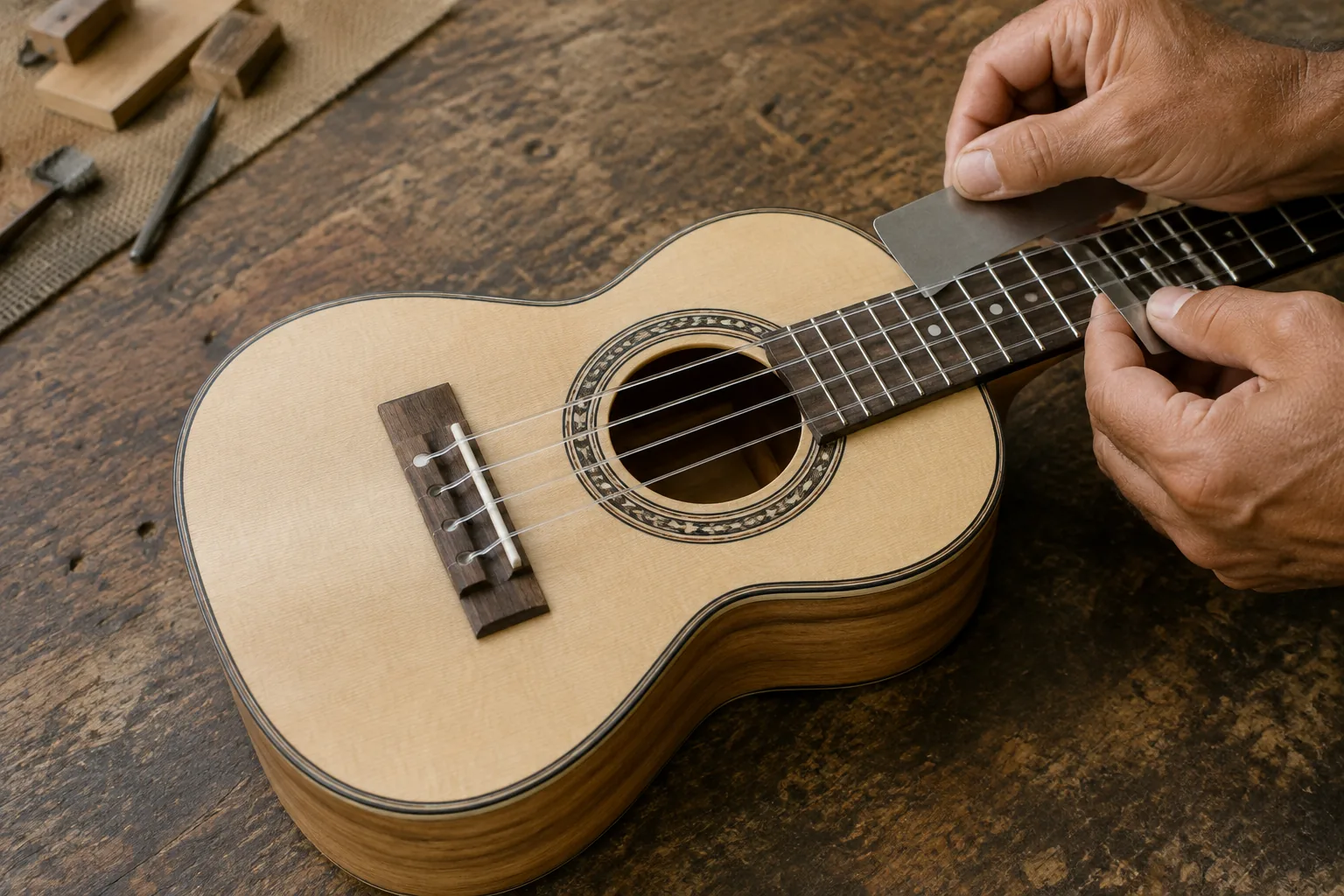
Then play every fret on every string. Listen for buzzes, dead notes and uneven response. Check fret ends by hand. Examine nut slots and string spacing. Test tuning stability after several tuning cycles. Compare action and relief with the agreed measurement method.
The bridge and saddle deserve close attention. Confirm location, contact, height and finish. If the design uses a fixed bridge, inspect the joint and string path. If the approved design uses an adjustable or movable element, record its correct working position.
Finally, review the retail information. Does the label say Brazilian cavaquinho rather than ukulele? Is the country of origin accurate? Are tuning and string notes correct? Does the product photograph match the shipped model?
Cavaquinho sample-inspection checklist
Product identity
- Regional type matches the approved brief.
- Model code and revision match all documents.
- Country-of-origin labeling is accurate.
- Product title does not imply Made in Brazil unless that is true.
Dimensions and construction
- Scale, body length, width and depth match the drawing.
- Fret count and neck-to-body relationship match the sample brief.
- Top, back, sides, neck and fingerboard match the agreed construction.
- Rosette, binding and decorative details match the approval record.
Setup and playability
- Correct string set is installed.
- Tuning reference is written in unambiguous string order.
- Action, relief and nut-slot feel meet the approved targets.
- Every fret plays cleanly under the agreed test.
- String spacing is even and comfortable for the intended player.
- Intonation is checked using the agreed method.
Finish and branding
- Color and sheen match the approved range under consistent lighting.
- Neck, body edges and bridge area are clean.
- Logo and label files are the correct revision.
- No Portuguese or ukulele model wording remains from a reused template.
Electronics, if fitted
- Output and controls pass the agreed test.
- Jack and cable clear the player and packaging.
- Internal parts are secure.
- Acoustic playability remains acceptable after installation.
Packaging
- The actual model fits the approved bag or case.
- Bridge, headstock and tuners have suitable clearance.
- Accessories and tuning information are correct.
- Inner protection does not mark the finish.
- Carton label uses the approved product name and model code.
Use the packaging approval guide to document the packed sample before shipment testing.
What should a wholesale buyer ask a cavaquinho supplier to prove?
Ask for evidence of the proposed instrument, not just a photograph of a small four-string body. A supplier should be able to connect the model identification, construction description, tuning reference and setup requirements to the sample being offered. “Brazilian” identifies the intended instrument tradition here. It does not, by itself, prove Brazilian manufacture or establish a complete specification. Review the distinctions in our Brazilian vs Portuguese cavaquinho guide.
Before discussing an order, clarify whether the supplier manufactures the instrument, sources it from a partner or resells an existing brand. Request photographs and documents for the actual proposed model, and compare the offer with the supplier’s OEM/ODM product scope. If electronics are included, review the acoustic instrument and the fitted system separately. A catalog image should not be treated as proof of pickup performance, packing suitability or repeat-order consistency.
For a new sourcing project, keep manufacturing capability and commercial terms open until the proposed model has been reviewed. Ask which decisions need a physical sample, record them in an approved specification, and confirm how the approved revision will be identified. This gives both sides a clear basis for the discussion without assuming a standard minimum quantity, fixed lead time or one universal cavaquinho setup.
Share the intended instrument tradition, market and model reference so we can discuss whether the proposed project is suitable. Send Your Requirements.
How to compare supplier quotations
Normalize the product before comparing prices. Put each quotation beside the same specification fields and mark any missing answer.
A lower price may reflect a different string set, laminated rather than specified construction, an available ukulele-derived platform, simpler decoration, no pickup test, different packaging or no tooling allowance. None of those differences is automatically wrong. They simply mean the quotations are not yet comparable.
Ask each supplier to identify:
- Which drawing and revision the quotation follows.
- Which material and construction choices are included.
- Whether existing or new tooling is assumed.
- Which sample and branding work is included.
- Which packaging configuration is included.
- Which tests are part of production and final inspection.
- Which points remain open for confirmation.
For a new product category, request MOQ, lead time and pricing against the completed specification rather than relying on generic figures. Commercial terms can change with the design and stage of development, so they belong in the project quotation, not in an assumption carried over from another model.
Supplier capability should also be checked beyond the quotation. A factory audit can show whether documented processes, equipment, material control and inspection records support the proposed work. The factory audit report guide explains how to read that evidence without treating a report as a guarantee of every model.
Prepare the retail listing from the approved sample
Do not write the final product page from the initial keyword plan.
Once the sample is approved, photograph the actual model and record the exact specification. The retail page should answer the questions that store staff will hear:
- Is this a Brazilian cavaquinho or another regional type?
- What tuning and string set does it use?
- Is it acoustic or amplified?
- What are the scale and body dimensions?
- What bag, case or accessories are included?
- Where was it made?
If Portuguese-language copy is used, have a native speaker familiar with the instrument review the terminology. Machine translation can produce a grammatically smooth description that still uses the wrong regional product name.
Keep the listing modest. Avoid broad claims about authentic sound unless the model has been reviewed by someone who understands the intended playing tradition. Specific, correct information builds more trust than a paragraph of adjectives.
Common sourcing mistakes
Calling any small four-string instrument a cavaquinho
Start with the regional type and a physical or dimensioned reference.
Using “Brazilian” as an origin claim
Separate product type from manufacturing country in the model name, label and product page.
Copying a ukulele scale and string specification
Approve the scale, metal or other string set, nut, bridge and tuning for the intended cavaquinho model.
Writing only four tuning notes
Record string order and octave direction so every team reads the tuning the same way.
Approving the sample with substitute strings
The sample string set is part of the setup. A change requires rechecking action, nut fit, tuning stability and intonation.
Reusing Portuguese cavaquinho copy
Portuguese instruments include their own regional variants. Use model-correct terminology and specifications.
Frequently asked questions
Is a Brazilian cavaquinho the same as a ukulele?
No. They are related small four-string instruments, but they belong to different product and playing traditions. A buyer should define the cavaquinho’s scale, metal or other approved strings, tuning, neck, bridge and setup rather than reuse a ukulele specification.
Is every Portuguese cavaquinho the same?
No. Portuguese heritage records distinguish regional forms such as minhoto, urban and Madeiran braguinha or machete, with construction and tuning variation. Name the intended type and provide a reference.
Does “Brazilian cavaquinho” mean it was made in Brazil?
Not necessarily. In a model description, Brazilian can identify the instrument type. The country-of-origin statement must separately and accurately identify where the product was manufactured.
What should a retailer send before requesting a sample?
Send the target market, regional type, reference instrument or drawing, scale, tuning and string set, construction, acoustic or amplified requirement, finish, branding and packaging needs.
Which sample checks matter most?
Confirm product identity and revision first. Then check scale, strings, tuning, fretwork, action, relief, bridge, intonation, finish, labeling and packed fit using one documented method.
Can the same model be offered as acoustic and acoustic-electric?
It can be planned as two related SKUs, but the amplified version needs its own model code, installation details, electronics test and packaging check.
Final takeaway
A Brazilian cavaquinho project succeeds when the regional name is converted into a complete, testable product brief.
Keep Brazilian, Portuguese and ukulele specifications separate. State scale, strings and tuning without ambiguity. Approve the neck, bridge, setup, finish, labeling and packaging on the physical sample. Make the country of origin accurate and prepare the retail page from the product that will actually ship.
If your company is developing a Brazilian cavaquinho range, send Vinesmusical the reference, target market, tuning and string requirements, branding files and packaging plan. Contact us to review the specification before sampling.