 EN
EN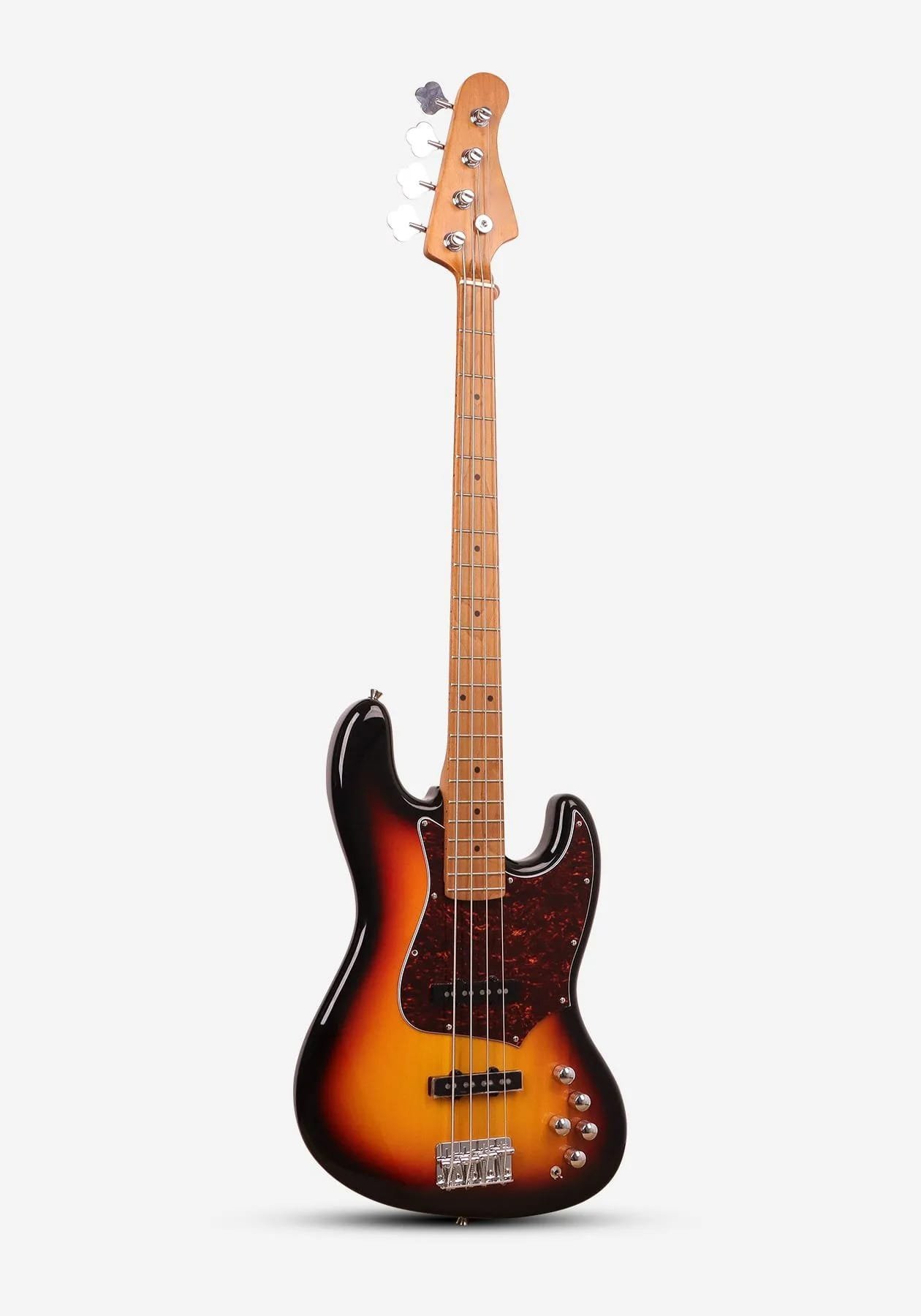
Electric bass OEM specifications often begin with a photograph and a short component list. The photograph shows the general direction, but it does not explain how the instrument should feel on a strap, how much room the player expects between the strings or how the pickups should work with the bridge and control layout.
Those details are connected. Changing a four-string model to five strings affects more than the nut. The neck, fingerboard, bridge, pickups, body routing and overall balance may all need another decision. A useful OEM specification therefore describes the instrument as a system rather than a collection of familiar part names.
The aim is not to make the document unnecessarily technical. It is to remove the choices that would otherwise be made during sampling without the buyer noticing.
Start with the player and the product programme
Before choosing dimensions, explain where the bass will sit in the range. A beginner model, a compact travel instrument and a professional five-string bass do not need the same priorities.
The first project notes should cover:
- target country, sales channel and expected player;
- four- or five-string format;
- full-scale, medium-scale or short-scale direction;
- passive or active electronics;
- preferred playing feel and weight direction;
- reference models and the features that matter in each reference;
- finish, branding and packaging;
- sample quantity and approval responsibilities.
A reference photograph is still useful, but the buyer should mark what it controls. It may be the body outline, colour direction or pickup appearance rather than a complete technical specification.
The electric bass OEM production guide gives a broader view of the sample-to-production process. The points below focus on the decisions that most often change the playing result.
Four strings and five strings are different systems
Adding a low B string changes the load, available fingerboard width and space required at the nut and bridge. It can also change the pickup format, headstock arrangement and the way the instrument balances.
The buyer should not write “same as the four-string version, but five strings” unless the design has already been reviewed that way. Confirm which parts are genuinely shared and which parts need their own drawing or sample.
For a five-string project, pay particular attention to:
- nut width and string centres;
- neck depth and shoulder shape;
- fingerboard width at the last fret;
- bridge spacing and adjustment range;
- pickup pole or blade coverage;
- headstock layout and tuner clearance;
- body balance with the wider neck and additional tuner;
- low-string response after setup.
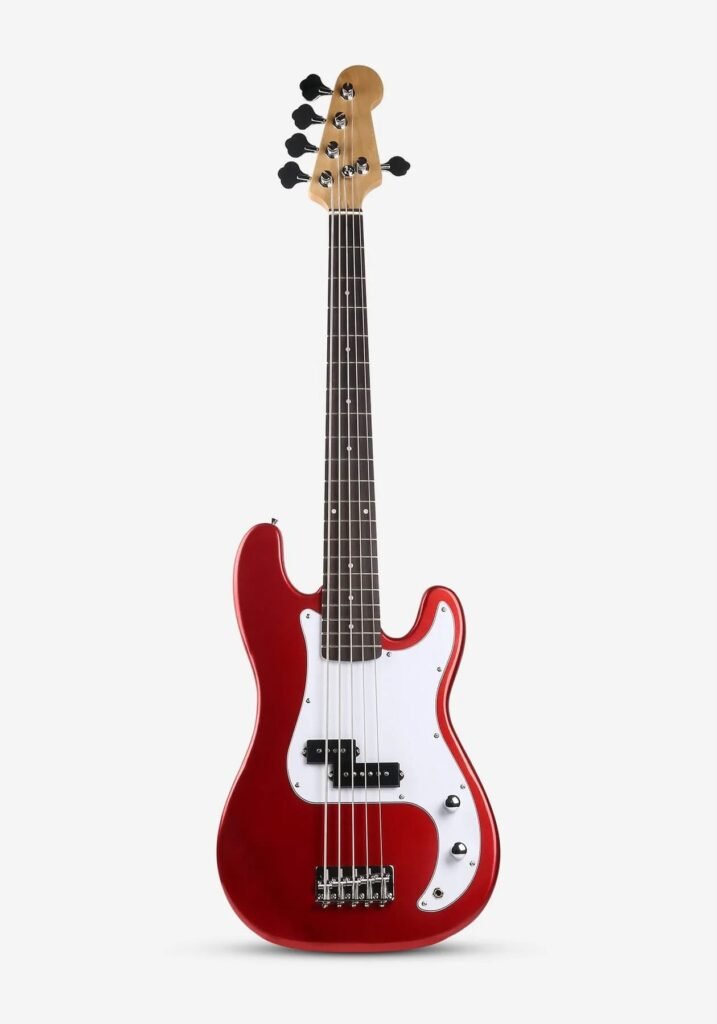
The visible difference is one extra string. The production difference is a group of linked dimensions and components.
Choose scale length with the whole instrument in mind
Scale length affects the distance between the nut and bridge, fret positions, string feel and the available body and bridge location. A 34-inch scale is a familiar starting point for many full-scale basses. A 35-inch scale may be considered for some five-string designs, while short- and medium-scale instruments serve different players and product positions.
There is no single scale length that is best for every project. The buyer should consider the intended strings, tuning, player reach, body shape and desired response together.
Once the scale is approved, record it clearly and check the related drawing. Moving a bridge to match a photograph without respecting the intended scale creates an intonation problem that final setup cannot solve.
During sample review, confirm:
- the stated scale against the actual nut and bridge relationship;
- bridge-saddle adjustment in both directions;
- fret position and nut condition;
- intonation after the chosen strings are installed;
- how the bass feels in the seated and standing positions.
Define neck width and string spacing separately
“Comfortable neck” is too subjective for production, but one width measurement is also not enough. A neck can meet the nut width and still feel different because of its depth, shoulders, taper or fingerboard edge.
Record the points that control both measurement and feel:
- nut width;
- neck width at an agreed fret;
- fingerboard width at the end;
- neck depth at agreed positions;
- profile or approved sample reference;
- fingerboard radius;
- nut string centres;
- bridge string spacing.
Nut spacing and bridge spacing should not be treated as the same number. They describe different parts of the string path. The outside strings also need enough room from the fingerboard edges so normal playing does not pull a string off the fret.
The fretboard and neck finishing checklist explains how edge work, fret ends and the heel transition affect the final feel beyond the drawing.
Check body balance before fixing the outline
A bass may look correct on a stand but feel tiring on a strap. The position of the upper horn, strap buttons, bridge, neck joint and tuners all influence balance. Weight matters, but balance cannot be understood from total weight alone.
During sampling, use the intended strap-button locations and production-level hardware. Check whether the neck falls away when the player releases the fretting hand and whether the body sits at a practical angle.
If a lighter body material or compact outline is requested, review the change together with the neck and tuner choice. Removing body mass without checking the full instrument may move the balance in the wrong direction.
Specify pickup layout by function and position
Names such as “J-style,” “P-style” or “humbucker” describe a direction, not the complete result. The buyer still needs to confirm the pickup model or construction, position, routing and control logic.
Useful specification points include:
- pickup quantity and type;
- neck and bridge pickup positions from an agreed reference point;
- pickup dimensions and routing drawing;
- pole-piece or blade coverage for the selected spacing;
- height-adjustment method and usable range;
- mounting screws, springs or foam;
- control names and rotation direction;
- jack position and access;
- battery location for an active model.
Pickup position should be checked on the approved scale drawing, not copied only from a body photograph. A small visual move can change the routing, pickguard and control-cavity relationship even before sound is considered.
For production checks after assembly, use the electric guitar and bass electronics QC guide. It covers wiring, soldering, control logic, output and amplifier testing.
Keep passive and active versions clearly separated
If one body platform will support passive and active versions, the specification should show what changes. An active version may need a battery compartment, different pots, additional controls or a larger cavity. The rear cover, shielding method and access for service should also be reviewed.
Do not leave control labels until the marketing artwork stage. The sample record should state what every knob and switch does, the centre-detent position where applicable and the expected signal path when the battery is removed or depleted.
When the electronics package is not fixed, ask the quotation to identify the proposed components. The approved sample and bill of materials should then use the same revision.
Match bridge, tuners and strings to the specification
Hardware should fit the intended string count, spacing, headstock and finish direction. Check mounting patterns before the body and neck drawings are released.
The sample should use the intended string type and gauge, or record any temporary substitute. String choice affects setup, nut slots, feel and the way the low string responds. A sample approved with one string set may need another setup review if production uses something different.
For the bridge, confirm spacing, saddle travel, mounting, finish and string-loading method. For tuners, confirm post size, mounting holes, orientation, button clearance and the headstock layout.
Use a short approval table
| Approval point | What to record | What to check on the sample |
|---|---|---|
| Format | Four or five strings; tuning | Correct string path and usable low-string response |
| Scale | Approved scale length | Nut, fret and bridge relationship; intonation range |
| Neck | Width, depth, profile, radius and taper | Measurement plus playing feel |
| Spacing | Nut centres and bridge spacing | Edge clearance and comfortable right-hand access |
| Balance | Body, horn, strap buttons and hardware | Seated and standing position |
| Pickups | Type, position, routing and mounting | Coverage, adjustment and fitted function |
| Controls | Passive/active circuit and control logic | Correct operation through an amplifier |
| Hardware | Bridge, tuners and intended strings | Fit, adjustment range and stable setup |
The OEM specification sheet guide can be used to organise these points with finish, branding and packaging. Keep open items visible instead of allowing them to disappear into message threads.
Questions buyers often ask
Should a five-string bass always use a 35-inch scale?
No. Scale length should be chosen with the strings, tuning, body, player and desired feel. A five-string sample needs to be judged as a complete instrument rather than by one number.
Is nut width enough to control neck feel?
No. Neck depth, shoulders, taper, fingerboard edges, radius and fretwork also affect the feel. Use measurements together with an approved sample.
Can the same pickup be used with different string spacing?
Sometimes, but coverage and mounting still need to be checked. Confirm the actual pickup design, string path and approved bridge spacing before releasing the routing.
When should the buyer approve the bass again?
Review it again when a change affects the scale, neck, spacing, bridge, pickups, electronics, body balance or intended strings. Small-looking component changes can alter several connected parts.
Discuss an electric bass project with Vinesmusical
Electric bass is one of Vinesmusical’s four core product lines, together with classical, acoustic and electric guitars. Vinesmusical was established in 2014 and operates a company-owned 10,000㎡, five-floor factory with about 80 employees and monthly capacity of approximately 7,000 instruments. The company has 13 years of OEM/ODM experience, holds BSCI certification and can provide a third-party factory-audit report for buyer review.
For a new project, send the string format, scale direction, neck and spacing requirements, pickup and control layout, finish, target quantity, branding and packaging information through the Vinesmusical contact page. If some components are still open, identify them clearly so the sample and quotation can show a practical proposal.