 EN
EN
A monthly capacity figure looks simple on a supplier profile. For a buyer planning an OEM guitar order, however, the more useful question is not “How many guitars can this factory make?” It is “Can this factory make our models, at our quality level, within the agreed production window?”
Those are different questions. A factory may have enough total output but still be short of finishing space, skilled neck workers, setup technicians or a particular component during a busy month. Capacity should therefore be checked as a production system, not accepted as a single number.
Start with the product mix, not the headline number
Classical guitars, acoustic guitars, electric guitars and electric basses do not use exactly the same production route. Even within one category, a high-gloss acoustic model with binding and a pickup system requires a different workload from a simple satin model. An electric guitar with a complex finish, custom hardware or detailed electronics also puts pressure on different workstations.
When a supplier states a monthly capacity, ask what product mix that number represents. Useful follow-up questions include:
- How much of the stated output is acoustic, classical, electric guitar and electric bass production?
- Does the figure represent normal output or a theoretical maximum?
- Which processes are completed in-house, and which are handled by outside partners?
- How does a gloss finish, custom color, pickup installation or special packaging change the schedule?
- Is the proposed delivery plan based on an approved sample and confirmed materials?
A clear supplier should be able to connect the proposed order to an actual production route. If every model is given the same lead-time answer, the estimate probably needs more work.
Look for the real bottlenecks
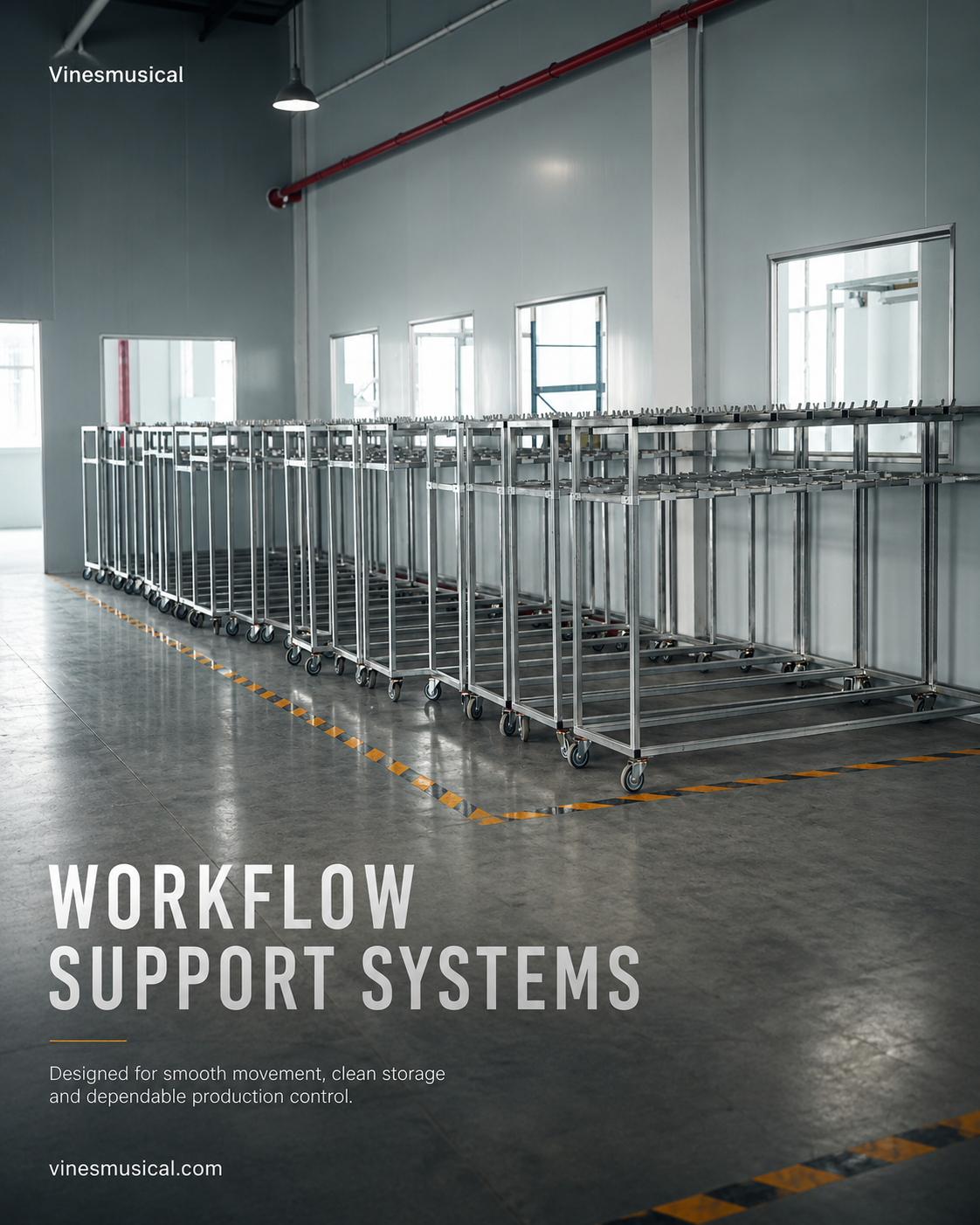
Factory floor area and headcount matter, but neither one tells the whole story. In guitar manufacturing, the slowest stage often sets the pace for the order. Drying and conditioning, neck fitting, binding, painting, polishing, fretwork, electronics testing and final setup can each become a bottleneck depending on the model.
For example, adding more body assembly workers will not shorten the schedule if the finishing area is already full. In the same way, a large number of completed bodies does not mean the shipment is nearly ready if fret dressing and final setup have not been scheduled.
Ask the factory to identify the likely constraint for your specific model. The answer does not need to be perfect, but it should be specific. “The special finish needs more curing and polishing time” is more useful than “Production is no problem.”
Check current workload, not only installed capacity
A capable factory can still have a full schedule. Before confirming a purchase order, buyers should ask what portion of the relevant production line is already committed during the requested period. This is especially important before major retail seasons or when an order includes imported hardware, custom colors or several models in one shipment.
The factory may not disclose other customers’ confidential information, and it should not. It should still be able to explain the available production window, material preparation date, planned start, key inspection points and estimated completion range for your project.
For a first order, it is usually safer to agree on several visible milestones instead of relying on one final ship date. Typical checkpoints include material readiness, first units entering assembly, finish approval, in-line quality review, final inspection and shipment release.
Ask for evidence that matches the claim
A factory introduction is useful, but buyers should request evidence that can be connected to the proposed order. Depending on the stage of supplier qualification, this may include:
- Recent production-floor photos or a live video walk-through showing active work areas.
- A simple process flow for the proposed guitar category.
- Examples of work-in-process identification and production tracking.
- Quality records from key stages such as incoming inspection, fretwork, electronics testing and final setup.
- A production schedule that separates sample approval, material preparation, bulk production, inspection and packing.
- Third-party factory audit documents where appropriate.
The purpose is not to collect the largest possible file package. It is to confirm that the factory’s people, space, workflow and quality controls support the capacity being offered. Our remote guitar factory audit checklist provides a practical sequence for reviewing this evidence when an on-site visit is not immediately possible.
Separate sample capacity from bulk capacity
A good sample proves that a specification can be built once. It does not automatically prove that the same result can be repeated across hundreds of instruments. Before moving from sample approval to bulk production, confirm which sample details become controlled standards: dimensions, material grades, color reference, hardware, electronics, action range, appearance tolerance and packaging.
Then ask how those standards will be transferred to the production team and checked during the run. Capacity without repeatability creates rework, and rework consumes the same production time that was supposed to protect the delivery date.
How Vinesmusical presents capacity to OEM/ODM buyers
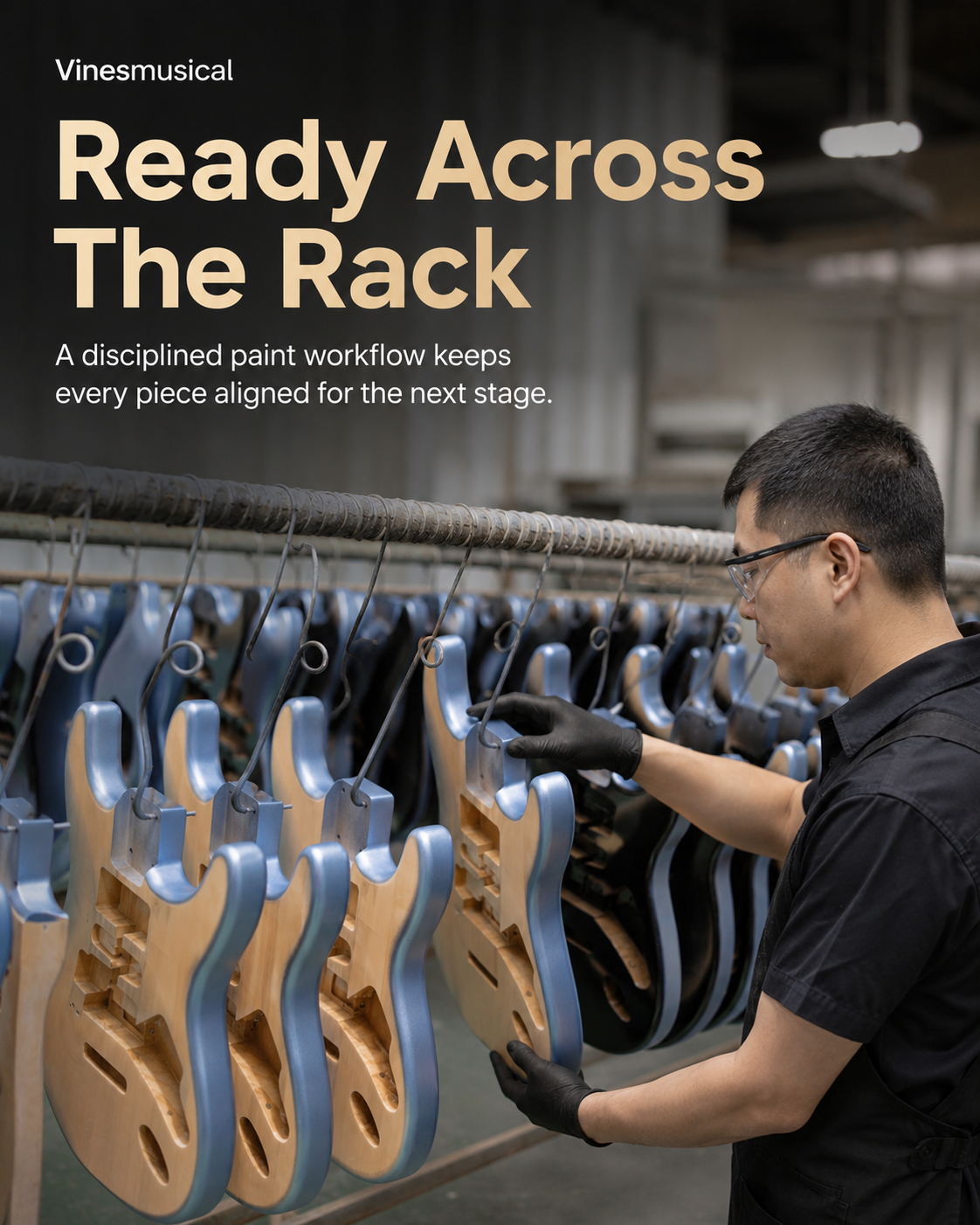
Vinesmusical was established in 2014 and operates a company-owned 10,000-square-metre, five-floor factory with approximately 80 employees. Our stated monthly capacity is up to 7,000 guitars across classical guitars, acoustic guitars and electric guitars.
That figure is a factory-level reference, not a promise that every project follows the same schedule. The practical production plan depends on model mix, construction, finishing system, components, packaging, order quantity and the timing of sample approval. We review those details before confirming the manufacturing window.
For supplier qualification, buyers can also review our BSCI certification information and request the available third-party in-depth factory audit report. Our Guitar Factory & Buyer Verification page brings the main company facts, audit materials and buyer guides into one place.
A short capacity-verification checklist
- Define the exact models, quantities, finish and component requirements.
- Ask what product mix the stated monthly capacity is based on.
- Identify the likely bottleneck for your models.
- Review current workload and the proposed production window.
- Confirm which operations are in-house and which are outsourced.
- Connect the approved sample to written bulk-production standards.
- Agree on in-line checkpoints and pre-shipment inspection requirements.
- Request evidence that supports the schedule, not only general factory photos.
Capacity verification should leave both sides with a more realistic plan. Buyers gain better visibility, while the factory receives clearer specifications and fewer late changes. If you are evaluating a new guitar project, send the product category, target market, estimated quantity, key specifications and expected delivery window to info@vinesmusic.com, or use our contact page. We will review the production route before preparing the quotation.