 EN
EN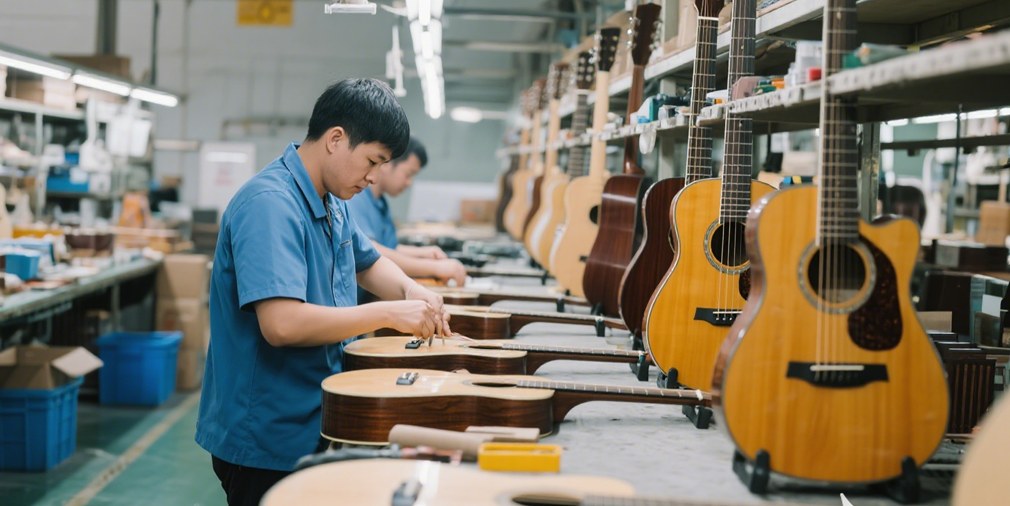
A guitar factory can answer “yes” to almost every question in an introductory email. It can say that it supports OEM, accepts custom finishes and controls quality. Those answers are not useless, but they are not enough to choose a manufacturing partner.
The more useful question is how the factory turns an approved idea into a repeatable production order. Buyers need to see how specifications are recorded, how samples are reviewed, how changes are controlled and what is checked before shipment. Price matters, but these working habits usually determine whether the second order is easier or harder than the first.
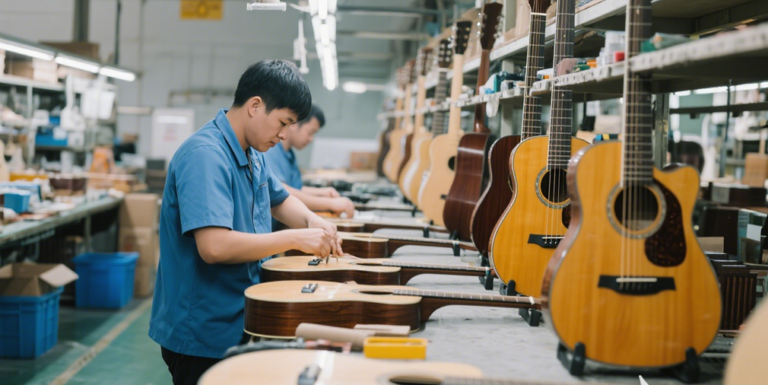
Begin with product fit, not a general factory claim
Ask what the factory makes regularly. A supplier may be experienced with entry-level acoustic guitars but have limited experience with electric guitar electronics or classical guitar construction. Another may be comfortable with standard models but not with a project that requires a new body shape, unusual hardware or a detailed color match.
A practical first discussion should cover:
- The product category: classical, acoustic, electric guitar or bass
- The intended market and product level
- The expected quantity and repeat-order potential
- How much of the design is already fixed
- The parts that require new tooling, sourcing or testing
Do not ask only, “Can you make this?” Ask which parts are familiar, which parts need review and what the factory would want to confirm before quoting. A careful answer is often more valuable than an immediate yes.
Check how the factory handles specifications
Many production problems begin before production. A buyer sends a reference photo, then changes the bridge in one email, the finish in a messaging app and the carton mark in a later file. If nobody brings those decisions into one current specification, both sides can believe they approved a different product.
Ask the factory to show how it records:
- Materials and dimensions
- Neck, fretboard and setup requirements
- Hardware and electronics
- Finish and color references
- Logo artwork, labels and model names
- Packaging and carton information
- Revisions made during sample development
The format does not need to be complicated. A clear spreadsheet, specification sheet and approved artwork can work well. What matters is that production uses the latest confirmed version.
Review the sample process before paying for a sample
A sample is not just a small order. It is the point where decisions become physical. The buyer can check body balance, neck feel, fretwork, color, electronics, logo position, setup and packaging before those details are repeated in a larger quantity.
Before starting, confirm what the sample includes, what it costs, the expected timing and how revisions will be handled. Ask whether a revised sample is required after major changes. If a finish, neck profile or component changes, photographs alone may not be enough for approval.
Our custom guitar sample development guide explains the process in more detail.
Look for a quality-control process you can understand
“We check quality” is not a quality plan. A buyer should be able to understand what is checked when materials arrive, what is checked during production and what is checked on finished instruments.
For guitars, useful control points may include:
- Material condition and visible defects
- Machined dimensions and component fit
- Body and neck alignment
- Fret condition, neck relief and playing setup
- Finish appearance and batch color consistency
- Pickup, control and output testing for electric models
- Logo, labels, accessories and packaging
- Model and quantity confirmation before shipment
The exact checks depend on the model and price level. The factory should not promise the same inspection plan for every project without first reading the specification. Buyers should also agree how defects are classified and what evidence will be provided before shipment.
For a broader view, see our guitar factory quality-control guide.
Understand what production capacity actually means
A monthly capacity number needs context. It does not automatically mean that every model, finish and quantity can be scheduled immediately. Production timing is affected by the product mix, sample approval, component availability, finishing work, packaging and orders already in the schedule.
Ask questions that connect capacity to your project:
- Is this product type part of the factory’s regular production?
- Which components have longer purchasing lead times?
- Does the selected finish require additional sample or production time?
- When must artwork and packaging be approved?
- How will the factory report a possible delay?
A realistic schedule with clear dependencies is more useful than the shortest promise.
Evaluate communication through a real specification question
Communication quality is difficult to judge from a sales introduction. Test it with a real product question. Send a reference model and ask the factory to identify the missing information required for quotation. A useful response should not only repeat your request. It should show where a decision affects cost, production or quality.
Pay attention to whether the contact person:
- Separates confirmed details from open questions
- Summarizes changes after a meeting
- Explains when the technical team needs to review an issue
- Avoids promising an exact price before the specification is clear
- Raises a problem early instead of hiding it until shipment
Good communication does not mean instant agreement. Sometimes the most professional answer is that a request needs more review.
Compare quotations on the same basis
Two prices cannot be compared fairly if they describe different guitars. One quotation may include a solid top, specified tuners and individual packaging, while another leaves those items open. Before comparing unit prices, place the main specifications beside each other.
A useful quotation should clarify the product, quantity, included customization, packaging, payment terms, delivery terms and important assumptions. Tooling, sample charges and special components should be shown separately when applicable.
The guitar quotation request guide contains a checklist that buyers can use before contacting suppliers.
Check packaging and shipment support
A finished guitar is not ready to ship until the packaging and records are also correct. Confirm the inner protection, retail box or plain carton, accessories, labels, model identification, carton marks and shipping destination.
For private-label projects, artwork errors can delay an otherwise finished order. Logo files, labels, manuals and cartons should be approved early enough to avoid last-minute substitutions.
How to conduct a remote factory review
Not every buyer can visit before the first project. A remote review can still be useful if it is specific. Instead of requesting a general promotional video, ask to see the areas or records connected with your product.
Depending on the project, this may include material storage, machining, body preparation, finishing, assembly, inspection and finished-product handling. Ask questions during the call rather than relying only on edited footage. If a certification or test report is important to your market, request the document and verify that it is current and relevant to the products being discussed.
Red flags worth slowing down for
- The quotation is issued before basic specifications are discussed.
- The supplier gives the same MOQ and lead time for every customization level.
- Sample changes are agreed verbally but never recorded.
- The factory cannot explain how the approved sample guides production.
- Important materials or components remain “similar” without an approval process.
- Inspection is described only as a final visual check.
- Brand artwork and packaging are postponed until production is nearly complete.
- Questions about delays or defects receive only reassuring slogans.
One red flag does not always disqualify a supplier. It means the buyer should ask for clearer evidence before committing to a larger order.
A 20-point buyer audit checklist
- Main product category matches the project.
- Customization limits are explained clearly.
- Reference drawings or samples can be reviewed.
- Specifications are recorded in one controlled file.
- Materials and components are identified.
- Open questions are separated from approved details.
- Sample cost and timing are clear.
- Sample revisions are documented.
- The approved sample becomes a production reference.
- Incoming material checks are explained.
- In-process checkpoints are explained.
- Final inspection covers function and appearance.
- Batch color and setup requirements can be recorded.
- Packaging specifications are confirmed.
- Artwork approval has a clear deadline.
- Capacity is discussed in relation to the actual model.
- Long-lead components are identified.
- The quotation lists its assumptions.
- Problems and changes have an escalation path.
- Pre-shipment evidence is agreed in advance.
Where Vinesmusical fits
Vinesmusical is a B2B OEM/ODM manufacturer of classical, acoustic and electric guitars. The company was founded in 2014 and has an 80-person team, monthly capacity of 7,000 guitars and 13 years of OEM/ODM experience.
We normally begin a new discussion by reviewing the product category, available references, expected quantity and the details that still need to be decided. If the project is suitable, the next steps can move from specification review to sample development, production planning, inspection and shipment.
To request a project review, send your specification, reference photos and estimated order quantity to info@vinesmusic.com or use the Vinesmusical contact page.
Common questions
Should I choose the factory with the lowest quotation?
Not before confirming that the quotations describe the same specification, packaging and quality requirements. A lower price based on an incomplete description is not a useful comparison.
Can I evaluate a guitar factory without visiting?
You can complete an initial review through documents, samples, targeted video calls and clear questions. For larger or more complex projects, an on-site or third-party audit may still be appropriate.
What should I send in my first enquiry?
Send the guitar type, reference images or drawings, target market, estimated quantity, customization requirements, packaging expectations and any target timing. Mark undecided items clearly.
When should bulk production begin?
After the sample, written specification, artwork and packaging have been approved and the commercial terms are clear. If important details remain open, production should wait.