 EN
EN Español
 Português do Brasil
 Français
 Deutsch
 Русский
Acoustic guitar materials influence sound through the part in which they are used, their construction and the way the guitar is designed. A solid spruce top, laminated spruce-faced top and rosewood veneer on the back are different specifications. Reading only the wood name leaves too much unexplained.
For a brand, importer or dealer, the first step is to identify the top, back and sides separately. Confirm whether each is solid wood, layered wood or another specified material. Then compare the completed samples for the sound and playing response required by the product range.
Wood descriptions can help shortlist candidates. They cannot establish the quality or voice of a finished guitar on their own. Body geometry, bracing, setup and the player's attack also matter. A good material decision connects an accurately described construction to a useful sample comparison.
For the outline and physical fit, use the body-shape guide. Keep scale and neck measurements in the size and scale-length guide so those differences are not mistaken for material effects.
Read the part before reading the wood name
An inquiry for a "mahogany acoustic guitar" could mean a mahogany top, mahogany back and sides, or a mahogany neck. It might also refer to a visible decorative layer. Those requests would produce different quotations and different products.
Separate the description into a part, construction and material. For example, "solid spruce top with layered wood back and sides" states more than "spruce guitar." A back-and-side description should identify whether the visible wood is the structural solid panel or the outer face of a layered panel.
Apply the same discipline to the neck, fingerboard and bridge. Their material names should not be inferred from the body description. If a particular species or commercial designation is important to the order, establish the agreed identification before approving the sample.
Photographs can show color and grain, but they do not reliably establish the hidden construction. Request the specification and suitable supporting information. Keep the quotation, sample record and final catalogue description consistent so the retailer does not inherit an ambiguous material claim.
Understand solid top, all-solid and layered construction
Solid top
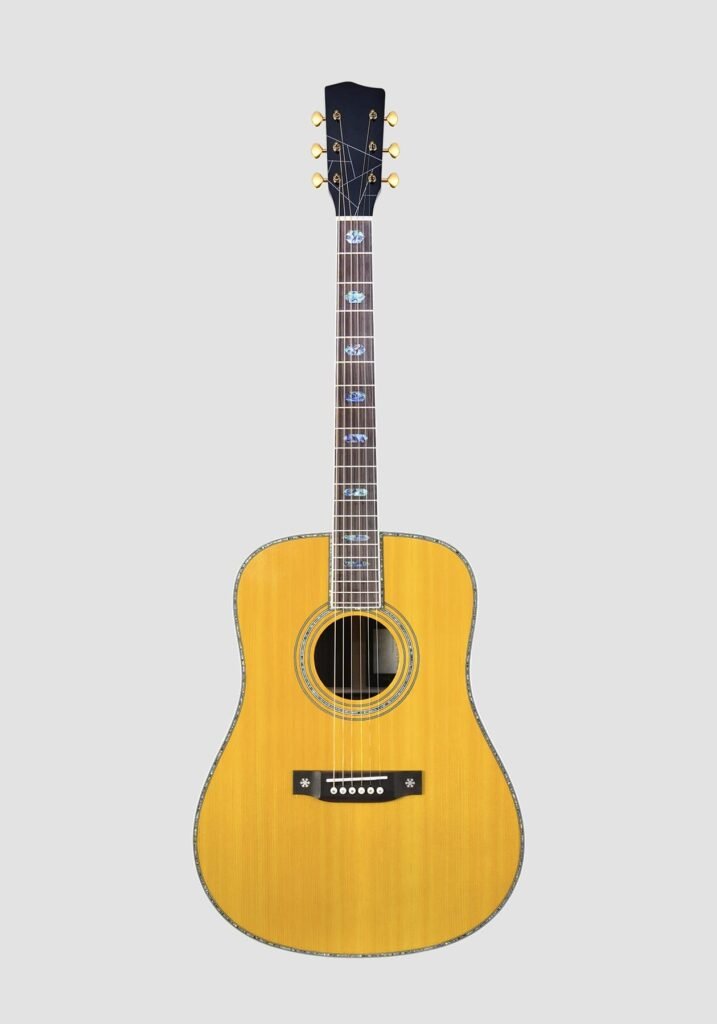
A solid-top specification describes the soundboard. It does not tell you whether the back and sides are solid. Those components need their own entries in the material schedule.
A solid panel can be assembled from matched pieces joined side by side. A visible center seam is therefore not proof of laminated construction. Check the declared structure rather than interpreting one photographed feature as a complete answer.
For an OEM product, also establish whether the approved material description includes a species, visible grade and particular appearance requirements. The word "solid" alone does not specify the finished guitar's response, setup or workmanship.
All-solid body
In acoustic-guitar descriptions, all-solid generally refers to solid top, back and sides. Confirm how the maker uses the term. It does not mean every component of the instrument is one piece of the same wood.
Review this construction against the intended product, maintenance expectations and sample sound. An all-solid label is not a substitute for checking fretwork, action or assembly. It also does not guarantee that every listener will prefer the sample to a different construction.
Layered and laminated wood
Layered wood uses bonded layers rather than a single solid panel through its thickness. The external face can provide a particular grain appearance while the internal layers have another composition. Ask what the layers are and where the construction is used.
Taylor uses "layered wood" for its wood-laminate backs and sides, distinguishing them from other laminate materials. Its construction explanation is helpful for reading those terms. A different supplier's panel should still be described by its own declared composition.
HPL and other specified composites
High-pressure laminate is a separate material category. Do not describe every HPL panel as multiple layers of natural tonewood, or assume its composition from a wood-grain surface.
Identify the manufacturer's declared material, the part in which it is used and any surface treatment. If it forms part of the proposed product, evaluate the complete instrument. An appearance resembling rosewood does not establish solid rosewood construction or the same tonal response.
The top and bracing form a connected design
The top receives energy through the bridge and works with its internal support structure. Its material is important, but the way it is prepared and braced also affects the finished response. A top specification needs to sit beside a construction reference.
Ask what is being held constant when two samples use different tops. If one also has a different body, bracing and setup, a preference between them is a preference between complete instruments. It cannot isolate the effect of the wood species.
Martin's bracing guide explains how brace shaping and placement affect its designs. An OEM buyer can use that relationship to ask better questions about the proposed platform, without requesting another manufacturer's proprietary construction.
Avoid unsupported percentages such as "the top creates 80 percent of the tone." The useful information is which parts and design decisions differ, and what the reviewer hears under known conditions. That information can be recorded and used in the next sample discussion.
Compare top woods through their response
Manufacturers often use a tonal vocabulary to describe their designs. Taylor's tonewood guide describes Sitka spruce in terms of articulation and dynamic range, western red cedar in terms of touch sensitivity, and mahogany tops in terms of a more controlled attack and focused sound. These are manufacturer descriptions, not fixed outcomes for every build.
| Top material | A useful comparison question |
|---|---|
| Spruce | Does the sample stay clear from light playing to the intended stronger attack? |
| Western red cedar | How does it respond to a soft touch, and what happens at the required strumming force? |
| Mahogany | Does the sample's attack and decay suit the desired rhythm or picked part? |
For a spruce candidate, compare the range of playing forces the product is intended to serve. A model presented as all-purpose should be evaluated with both its lighter and stronger uses. "Spruce" by itself does not establish a broad usable dynamic range.
For cedar, review the actual soft-touch response rather than deciding that every cedar guitar is restricted to fingerpicking. Bracing and the complete design still matter when the player strums harder.
For a mahogany-top candidate, keep the top role separate from the back-and-side role. Ask the reviewer to describe the initial note and its decay in the chosen passages. A preference for that response is useful; a blanket statement that mahogany guitars suit only one genre is not.
Listen to back-and-side choices in context
Back and sides are part of the structure and acoustic behavior of the instrument. Their role differs from the soundboard, so a material name should not be transferred from one part to another as if the effect were identical.
Taylor describes Indian rosewood backs and sides with bass, treble and overtone emphasis, mahogany with a more fundamental-focused character, and maple as particularly reflective of the player and design. Sapele appears in its guide as a related comparison to mahogany. Use these as listening prompts with their manufacturer context intact.
When comparing rosewood and mahogany candidates, listen for whether extra ringing sound helps the arrangement or makes a chord less distinct for that purpose. For maple or sapele candidates, evaluate the actual sample's clarity and balance. These are questions to resolve through listening, not promises attached to the species name.
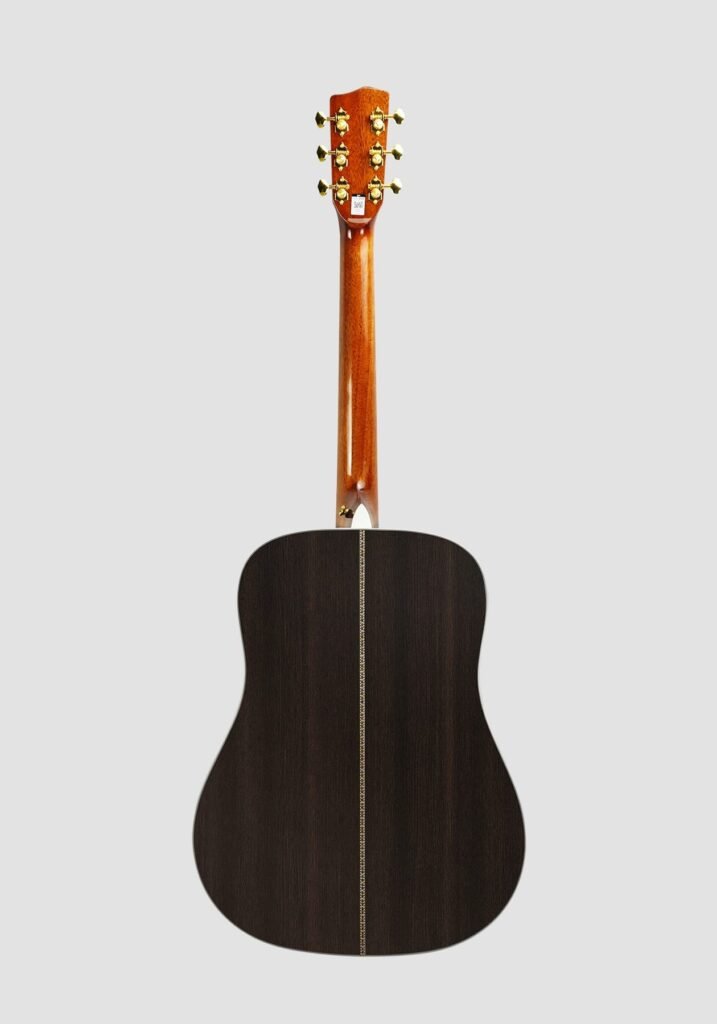
Check construction first. A rosewood-faced layered back is not the same specification as solid rosewood back and sides. Its appearance may be a valid product feature, but the sales copy should state the construction accurately.
Other materials, including walnut or basswood, also need component-level descriptions. If the supplier proposes a substitution, ask what changes in the structure and product description, then review an appropriate sample. Visual similarity is insufficient grounds for treating materials as interchangeable.
Match the construction to the product's purpose
Consider a hypothetical entry-level retail model whose brief prioritizes a consistent price position, manageable setup and straightforward product information. A buyer should assess the available constructions against those needs rather than choose solely by the most prestigious material label.
A different model may use a solid top as a central feature. The buyer still needs to evaluate its response, fretwork and overall feel. The material label belongs in the product story, but the physical instrument must support that story.
For a range built around an all-solid specification, explain what the actual model offers and how its maintenance guidance will be communicated. Compare it with the alternatives under consideration. The construction label cannot guarantee a better sound for every player.
Price can reflect sourcing, appearance, production work, hardware and brand position as well as material. It cannot be used as a direct measure of sonic superiority. Compare the complete quoted configuration with the intended customer need.
Ask about a material configuration
Send Vinesmusical your target product position, preferred top and back-and-side construction, and the sound characteristics you want to compare. Include a reference sample if available. Send Your Requirements for an acoustic guitar OEM/ODM review.
Keep appearance approval separate from sound approval
A highly figured back can attract attention in product photographs. It does not establish a measured advantage in sound. Approve the visible wood range separately from the sample's acoustic response.
For a transparent finish, review representative grain and color variation. The most attractive single photograph can set an unrealistic expectation for the entire order. Agree on the range that fits the model, then use it when reviewing production units.
The natural wood variation guide covers that appearance decision in more detail. Keeping it separate here leaves the material comparison focused on construction and sound, while giving the purchasing team a place to record cosmetic expectations.
A label such as A-grade or premium wood also needs a definition. If it is intended to describe appearance, say so. Do not let a cosmetic grading term become an unsupported guarantee of tone.
Consider the conditions after the guitar leaves the factory
Material selection belongs alongside storage, transport and care planning. Some layered constructions can offer practical structural resilience, but a layered label does not make the whole guitar immune to environmental conditions. The top, neck and joints still need appropriate handling.
Ask for care guidance suitable for the completed construction and intended destination. Agree on packaging and the condition in which samples are compared. Do not copy a humidity or moisture target from an unrelated product and present it as a universal requirement.
If a product is sold across different climates, the importer should discuss that distribution plan before sample approval. Local storage and service arrangements can matter as much to the buyer's experience as a material choice made at quotation.
The guitar wood preparation guide addresses material identification and production handling. It is a separate subject from deciding which completed sample best fits the intended sound.
Make a listening comparison useful to the purchasing team
Choose passages that represent the product: a quiet picked phrase, the intended strumming force, or a vocal accompaniment. Keep player, tuning, string specification and condition as comparable as practical. Record the setup differences that cannot be controlled.
Use the same microphone position and gain for recordings. Listen to an unprocessed comparison before applying effects or equalization. If electronics are part of the product, evaluate the amplified response separately, with the signal chain identified.
Describe what is heard in the passage. "The ringing notes continue into the next chord" can lead to a useful conversation about the preferred decay. "The wood is better" gives the technical team little to act on.
Where practical, review more than one representative sample of a finalist. One favorable instrument does not establish the full range of production variation. Agree on how later samples and bulk units will be compared; do not invent a tolerance for subjective tone without a defined method.
Record the approved materials without ambiguity
The final specification should identify the top, back and sides independently, including their construction and agreed material description. Add the neck, fingerboard, bridge and other model-critical parts. Keep any approved alternatives explicit.
For a substitution, review the effect on construction, sample response, appearance and public product wording. A changed material should not quietly enter the order because its trade name sounds similar to the original.
Use the OEM guitar specification sheet guide to connect those entries to the model revision. At shipment inspection, check the agreed documents and observable construction points against that revision. A product photograph alone cannot prove a hidden material composition.
Frequently asked questions
Does all-solid construction always sound better than a solid-top guitar?
No universal preference can be guaranteed. Compare the actual designs and the intended use. Construction matters, but setup, workmanship, bracing and the listener's preferences also influence the decision.
Does rosewood veneer provide the same specification as solid rosewood?
No. Veneer identifies a layer, while a solid back or side is a different construction. Specify the complete panel and use accurate catalogue wording. Do not infer identical response from similar grain appearance.
Is spruce always bright and cedar always warm?
These are common descriptive shortcuts, not reliable guarantees for every guitar. Identify the wood species and top construction, then listen to the completed design at the playing force it needs to serve.
Can sapele simply be listed as mahogany?
Use the agreed material identification. A comparison in sound or appearance does not justify replacing one material name with another on the specification or product label.
Does solid wood guarantee that the guitar will keep sounding better with age?
Do not promise a fixed improvement. Changes and preferences depend on the individual instrument, its use and its environment. Select the sample for its current suitability and provide appropriate care guidance.
Conclusion
Choose acoustic guitar materials by part and construction, then evaluate the completed instrument. Keep appearance approval, sound review and material identification connected to the same model specification. That gives the importer a clearer product description and a practical basis for sample decisions.
Explore Vinesmusical's Acoustic Guitar reference products and Contact Us with your material preferences and target market. You can also send the brief to info@vinesmusic.com.