 EN
EN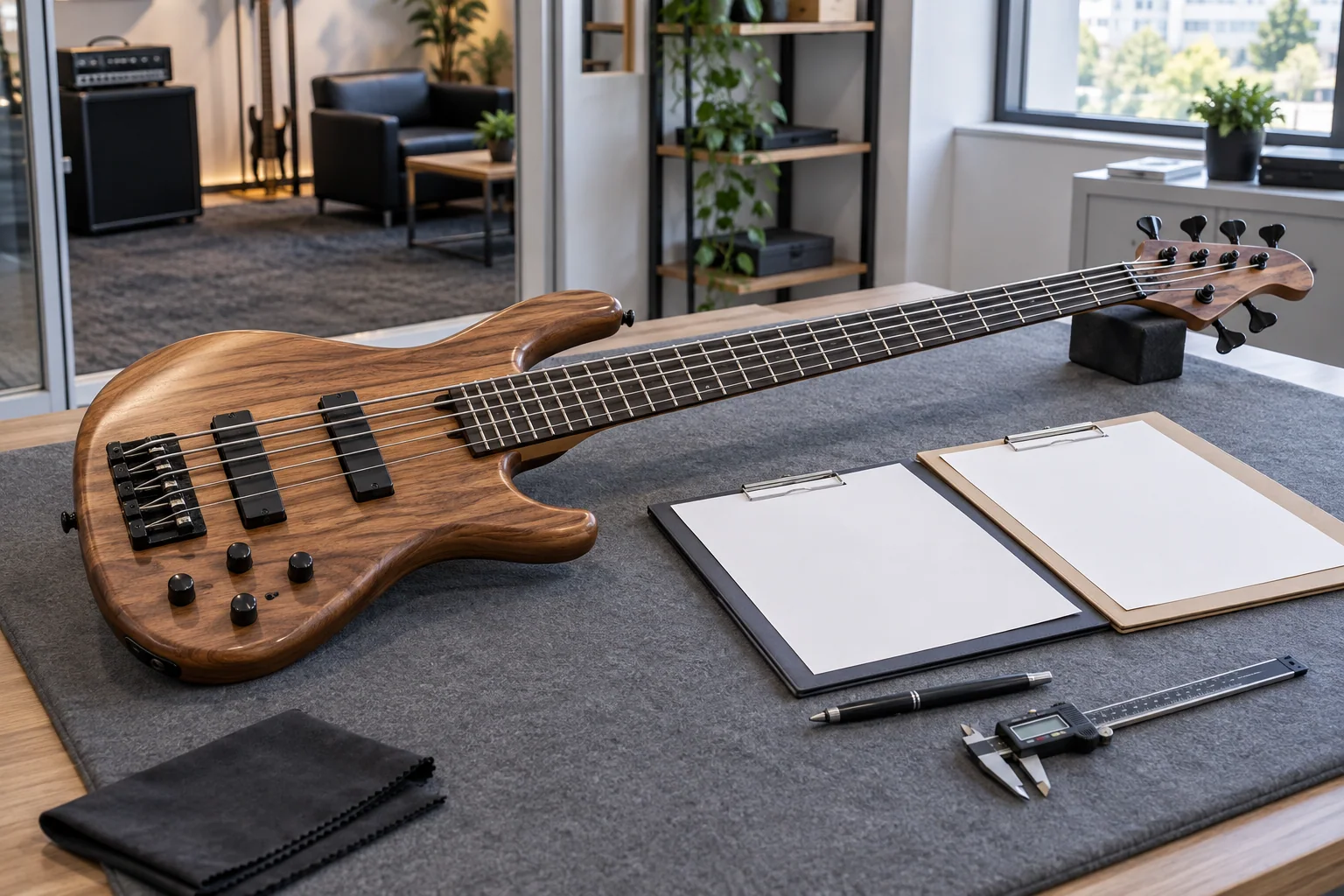
The lowest number on an electric bass quotation is not necessarily the lowest-cost offer. One supplier may include the approved pickup system, complete setup, branded packaging and shipment inspection. Another may quote a similar-looking bass with different electronics, open material choices and only basic packing. The totals appear comparable; the products are not.
This is especially common when the inquiry begins with a photo and a short message such as “Please quote this five-string bass.” The factory has to fill the gaps. Each supplier fills them differently, then the buyer receives prices built on different assumptions.
A fair comparison starts before the quotations arrive. Create one specification baseline, ask every supplier to state inclusions and exceptions, and separate unit cost from development, packaging, tooling, testing and logistics. The goal is not a longer spreadsheet. It is a decision record that shows what the buyer will actually receive.
In brief: compare like with like; lock the bass format, construction, electronics and setup; identify buyer-supplied and factory-proposed parts; separate recurring unit costs from one-time charges; confirm quality and packaging evidence; and treat blank or vague lines as open commercial risk, not as free value.
Why electric bass quotations are easy to misread
An electric bass contains many connected choices. Body and neck materials matter, but so do scale, string spacing, fretwork, bridge, tuners, pickups, active or passive electronics, control layout, finish, branding, setup and packaging.
If the inquiry leaves several of those choices open, a supplier may quote its standard platform. That can be useful when the buyer genuinely wants a factory proposal. It becomes a problem when the buyer assumes every proposal matches the same reference.
Three quotations can differ because suppliers have interpreted any of the following differently:
- Four-string versus five-string platform.
- Standard, short or other scale direction.
- Bolt-on, set-neck, neck-through or another construction.
- Body and neck material grade or substitution policy.
- Fingerboard material and fret specification.
- Passive pickups versus an active system.
- Generic components versus named or buyer-supplied hardware.
- Solid colour, transparent finish, burst or special graphic.
- Logo method and number of branding locations.
- Setup depth and inspection evidence.
- Inner packing, retail carton, bag, case and master carton.
Until these points are aligned, a price ranking is premature.
Build the comparison from one product baseline
The most useful quotation attachment is a compact specification sheet with a revision date. It should show which decisions are fixed, which are open to proposal and which alternatives need separate pricing.
Start with the commercial brief:
- Target country, buyer type and retail channel.
- Intended player and product position.
- Four-, five- or other string format.
- Estimated quantity by model and finish.
- Required branding and packaging.
- Reference product or target characteristics.
- Desired sample and approval process.
Then define the technical baseline. If a detail is unknown, do not leave the cell blank. Mark it “supplier to propose” and ask the supplier to describe the proposed solution. A visible open decision is easier to manage than an invisible assumption.
Our OEM Guitar Specification Sheet guide explains how to separate confirmed requirements from proposals and revisions.
Compare the instrument platform first
Before reviewing decorative details, confirm that every quotation is based on the same bass architecture.
String count, scale and spacing
Record string count, target tuning, intended string set, scale length and measurement method. Add nut width, string spacing at the nut and bridge, fingerboard width and any player-critical neck dimensions.
These choices affect bridge and pickup compatibility. A quotation for a five-string platform cannot be compared directly with a widened four-string design unless the supplier explains the engineering and component changes.
If a short-scale or multi-scale option is being considered, request it as a separate priced version. Combining several scale possibilities in one line makes it difficult to know which hardware, tooling and setup the supplier has included.
Neck construction and joint
State the required construction direction and ask the supplier to identify any proposal. Bolt-on, set-neck and neck-through designs involve different production steps and repair considerations. The quotation should also clarify neck material, reinforcement, truss-rod direction, fingerboard, radius, fret count and fret specification where these points are controlled.
Body construction and material language
Specify body construction accurately. If a veneer or decorative top is required, separate it from the structural body material. If natural grain will be visible, agree how material variation affects selection and finish approval.
Do not accept general phrases such as selected wood or premium material as a substitute for a commercial specification. Ask what is included, what alternatives may be used and how changes will be approved.
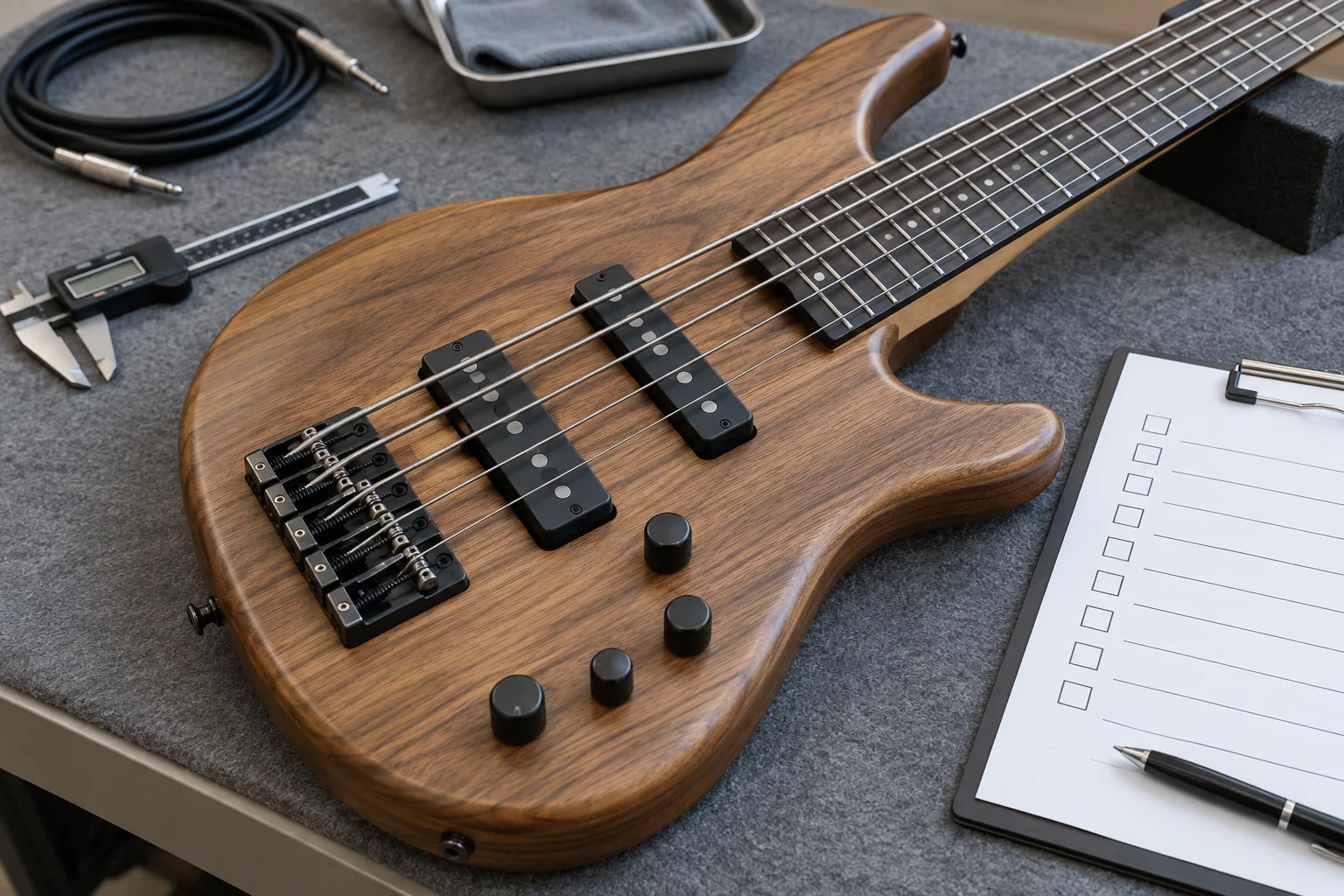
Illustrative visual: string spacing, pickup layout and control functions checked against an electric-bass quotation.
Put components on their own lines
Components can create large differences between offers that look similar in a product photograph. A useful comparison lists them separately.
Bridge and tuners
Ask for bridge format, string spacing, finish and adjustment direction. Confirm tuner type, layout, button style and finish. If the buyer requires branded components, record exact models or approved equivalents and identify who purchases them.
For factory-proposed hardware, ask for clear photos, material descriptions and replacement availability. A lower quotation may rely on a component that is difficult for the retailer to service later.
Pickups and electronics
State pickup configuration, active or passive system, preamp functions, switching and control order. Include battery type and compartment if required. A phrase such as two pickups with EQ is not enough for a comparable quote.
Ask the supplier to identify:
- Pickup source and format.
- Preamp or circuit source.
- Potentiometer and switch direction where controlled.
- Control functions in physical order.
- Output-jack type and location.
- Battery compartment and access.
- Shielding and grounding method.
- Whether electronics are included in sample and bulk prices.
If the buyer supplies pickups or preamps, separate the factory's installation and test cost from the component cost. Also clarify who carries risk for late delivery, incompatible parts or units that fail incoming inspection.
Strings and consumable items
The string set used for final setup should appear in the quotation. It affects cost, nut preparation, intonation and the buyer's first playing impression. If alternatives are acceptable, define them before sampling.
Our Electric Bass OEM Specifications guide covers the connected scale, spacing and pickup decisions in more detail.
Separate finish and branding from the base model
Finish is often where a simple unit-price comparison breaks down. Solid colours, transparent finishes, bursts, metallics, open-pore directions and graphics can involve different materials, preparation and inspection.
Ask each supplier to state:
- Finish type and gloss direction.
- Colour reference method.
- Whether the quoted price covers all requested colours.
- Any surcharge or minimum tied to a finish.
- Acceptable natural variation.
- Number and method of logo applications.
- Custom plates, inlays, headstock marks or packaging graphics.
- Sample revisions included in the development charge.
A supplier should not be penalized for identifying a real cost that another supplier has left open. The unanswered line is not necessarily cheaper; it is simply unresolved.
Approve colour and logo with physical or controlled references. Screen images can support communication but should not be the only standard. For natural and transparent finishes, approve a range that reflects real wood variation.
Compare setup and quality control as deliverables
“QC included” is too vague for a buying decision. Every factory performs some checking. The useful question is what is checked, when it is checked and what evidence is available.
For an electric bass, the quotation or quality appendix should clarify:
- Incoming material and component checks.
- Neck, fret and joint checks during production.
- Finish and cosmetic inspection.
- Electronics function test.
- Final tuning, neck relief and action checks.
- Intonation and pickup-balance review.
- Hardware torque and loose-part check.
- Packaging and carton verification.
- Inspection records, photographs or buyer inspection access.
Ask which criteria are measured and which rely on visual or playing judgement. Measurable items need defined methods and tolerances. Judgement items need approved references and clear defect language.
The factory should also explain how nonconforming units are handled. Rework, re-inspection and final release responsibilities affect schedule and consistency even when they do not appear as a separate price line.
Comparing bass suppliers now? Send the same specification and quotation files through the Vinesmusical contact page. Include the intended market, string count, scale, electronics, finish, estimated quantity and packaging so open assumptions can be identified before prices are compared.
Do not hide sample and development costs
Sample cost is not always a simple multiple of the bulk unit price. A new sample may require drawing review, component sourcing, finish preparation, custom logo work, tooling or several setup rounds.
Ask every supplier to separate:
- Sample instrument cost.
- Custom component or material cost.
- Tooling, fixture or mould cost if applicable.
- Artwork or logo setup.
- Packaging sample and printing setup.
- Buyer-supplied component handling.
- Shipping for the sample.
- Revision or remake conditions.
- Whether any charge is credited after a bulk order, if offered.
Do not assume a supplier will provide unlimited revisions. Agree on how feedback is consolidated, which changes correct a supplier error and which changes represent a new buyer request.
The approved sample should be supported by a dated specification. Otherwise, both sides may remember the reason for a change differently when bulk production begins.
Read commercial terms with the product lines
Unit price is only one part of the quotation. The buyer should place commercial terms beside the specification, not on a separate page that is reviewed later.
Confirm:
- Currency and quotation validity.
- Trade term and named place or port.
- Payment stages.
- Estimated quantity and allowed model or colour mix.
- Packaging included in the unit price.
- Sample, tooling and printing charges.
- Production schedule confirmation method.
- Inspection timing and release conditions.
- Spare parts or agreed after-sales support.
- Documentation supplied with shipment.
Avoid treating an estimated production window as a permanent promise. Schedules depend on final specifications, material readiness, sample approval and order timing. A responsible quotation should explain when the schedule becomes confirmed.
MOQ should also be read carefully. One supplier may quote by model, another by finish, and another by component batch. If the buyer needs several colours or mixed pickup systems, ask how the quantity applies to each variation.
Normalize packaging and logistics
Two unit prices can include very different packaging. One may cover a basic individual carton; another may include a branded retail box, protective bag, accessories and reinforced master carton.
Request a packaging line that describes:
- Inner protection and contact points.
- Bag, case or individual carton.
- Accessory pack and placement.
- Printed retail packaging.
- Product label and barcode.
- Master-carton quantity and dimensions.
- Gross and net weight basis.
- Carton marks and documentation.
- Any pallet or special loading requirement.
The details affect product protection, freight planning, warehouse handling and customer presentation. They also affect the buyer's landed cost.
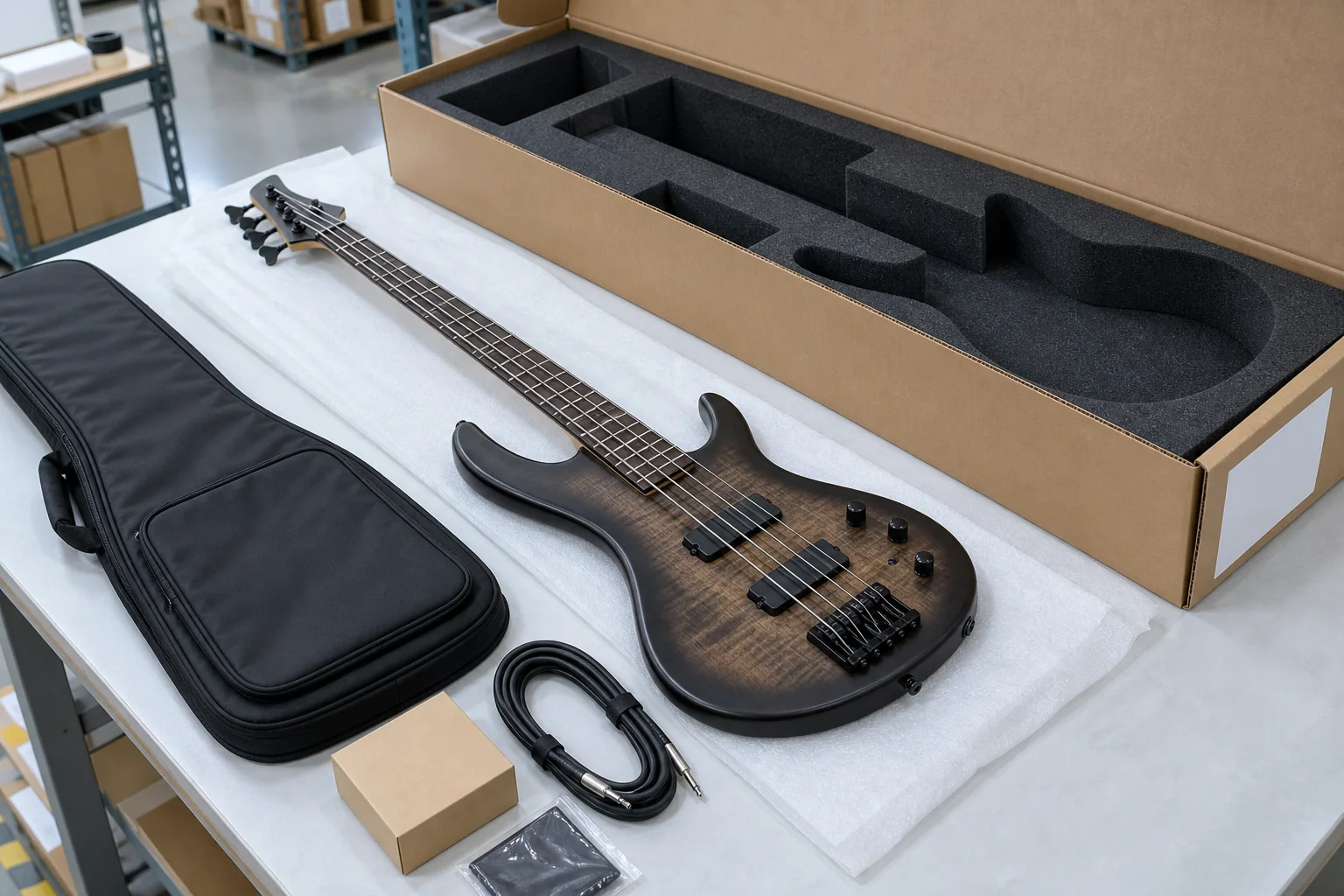
Illustrative visual: bass protection, accessories and carton information reviewed before shipment release.
For a structured packaging review, see the OEM Guitar Packaging Approval guide.
Compare total commercial impact, not only landed arithmetic
Landed-cost calculations are important, but some quotation differences are operational rather than purely financial.
Consider the work required from the buyer:
- How many decisions remain open?
- Are component sources clear?
- Can the supplier provide a complete sample record?
- Is the control layout documented?
- Are packaging dimensions available for freight planning?
- Can the buyer or a third party inspect production and shipment?
- Are changes controlled through one revision?
- Is communication specific enough to close technical questions?
A slightly higher but complete quotation may be easier to approve, finance and launch than a lower offer with many undefined lines. This does not mean choosing the highest price. It means assigning value to clarity and risk.
Our OEM Guitar Pricing Factors guide explains why construction, materials, components, finish, order structure and packaging influence quoted cost.
Use a line-by-line comparison table
A practical comparison sheet can use five columns:
- Requirement.
- Buyer baseline.
- Supplier A offer and exception.
- Supplier B offer and exception.
- Decision or question owner.
Organize the rows into sections:
- Commercial brief and quantity.
- String count, tuning and scale.
- Body, neck and fingerboard.
- Bridge, tuners and other hardware.
- Pickups, preamp and controls.
- Finish and branding.
- Setup and quality inspection.
- Sample, tooling and revisions.
- Accessories and packaging.
- Trade terms, payment and documentation.
Use separate rows for alternatives. Do not place three pickup choices in one cell with one price unless the supplier confirms they cost the same. Mark missing information clearly and return questions in one consolidated list.
Warning signs in a quotation
An incomplete quotation is not automatically a bad quotation. Early discussions often contain open points. The concern is whether the supplier identifies and closes them.
Look more carefully when:
- The product description repeats the inquiry without adding specifications.
- Material names are vague or inconsistent.
- Electronics are shown in photos but absent from the price lines.
- Branding and packaging are described as included without a method.
- The sample and bulk specifications are different.
- Quality control is promised without criteria or evidence.
- Commercial terms conflict between the quotation and messages.
- A very low price depends on unlisted substitutions.
- Schedule language remains fixed even after major customization changes.
The right response is usually a clarification request, not an immediate rejection. A supplier that answers clearly and updates the revision may still be a strong candidate.
Electric bass quotation checklist
Before selecting a supplier, confirm that each offer states:
- Target model, string count, tuning and scale.
- Neck, fingerboard, fret and joint construction.
- Body construction and material alternatives.
- Bridge, tuners and hardware details.
- Pickup, preamp, controls, jack and battery system.
- String set and final setup requirements.
- Finish, colours, logo methods and artwork.
- Sample, tooling and revision charges.
- Quality-control points and inspection evidence.
- Accessories, retail packaging and master carton.
- Quantity application by model and finish.
- Trade terms, payment, schedule confirmation and documents.
Frequently asked questions
Why do two electric bass OEM quotations differ so much?
They may be based on different materials, components, electronics, finishes, setup work, packaging or commercial assumptions. Compare every offer against one written specification before judging the unit-price difference.
Should a buyer ask for the lowest-cost version first?
Ask for a version that fits the intended market. If cost reduction is needed, request clearly described alternatives as separate options. That keeps the performance and presentation trade-offs visible.
What should be included in a five-string bass quotation?
At minimum: tuning, scale, string spacing, neck and body construction, bridge, tuners, pickups, electronics, finish, branding, strings, setup, inspection, accessories, packaging, quantity and trade terms.
How should buyer-supplied pickups be handled?
Clarify who buys and ships them, incoming-inspection responsibility, installation and test cost, treatment of defective or late components, and whether sample and bulk production use the same parts.
Is a sample price supposed to match the bulk unit price?
Not necessarily. A sample can include one-time development, sourcing, artwork, setup or tooling work. Ask the supplier to separate those charges and state any conditions for later credit.
The best comparison removes assumptions
A strong sourcing decision is not based on the quotation with the most detail or the lowest total alone. It is based on an offer that matches the buyer's product, commercial and quality requirements—and makes exceptions visible.
Use one baseline, compare every line, and close open questions before the supplier ranking is final. That process makes price negotiation more useful because both sides understand which value is being changed.
Vinesmusical supports B2B OEM/ODM projects for brands, importers, distributors and private-label buyers. Established in 2014, the company operates a company-owned factory of approximately 10,000 square metres across five floors. Its 80-person team has monthly production capacity of approximately 7,000 guitars, backed by 13 years of OEM/ODM experience, third-party BSCI certification and an independent in-depth factory audit report.
Review the Electric Bass category and send your project requirements. Include the string count, target tuning, scale, electronics, finish, estimated quantity, branding and packaging. We will review the specification basis so the quotation can be evaluated on clear, comparable terms.