 EN
EN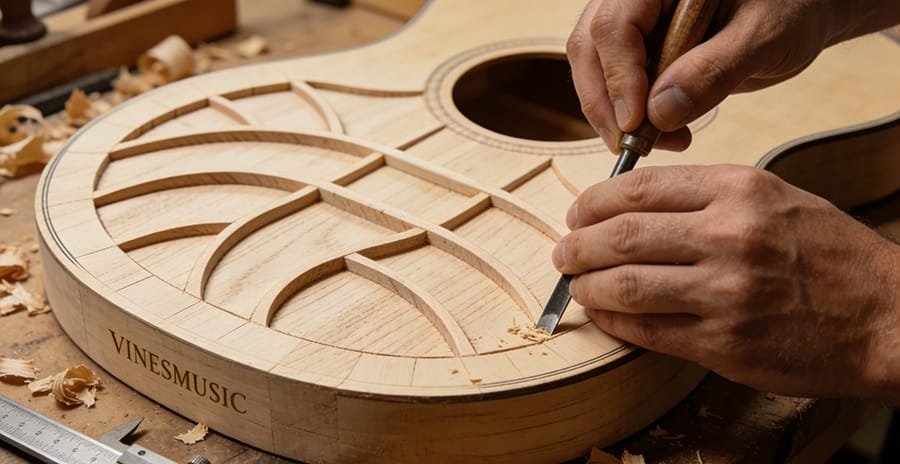
Counting machining operations does not tell an OEM buyer whether guitar parts will fit. A body can pass through many tools and still have the wrong bridge location. A neck can look smooth while its heel, pocket or scale reference is incorrect.
The useful evaluation is simple: does the factory work from the approved revision, control the dimensions that matter and check the first pieces before the complete batch moves forward?
Begin with drawings and revision control
Component machining should follow a released drawing, program or physical reference identified to the model. The buyer and factory need one current version.
Record body outline, scale reference, neck joint, pickup or soundhole locations, bridge position, control routing, headstock details and any dimensions critical to compatible hardware.
If the buyer changes a component, the team should check every connected feature. A new bridge may change drilling. A pickup can change routing. A tuner can require different holes and headstock thickness.
CNC and handwork have different strengths
CNC equipment can repeat programmed geometry efficiently. Hand operations remain important for fitting, shaping, surface preparation and final detail. Neither method guarantees quality without a correct reference and inspection.
Buyers should avoid asking whether a component is “100% CNC” as a shortcut for quality. Ask which features are machine-controlled, which are hand-finished and where the factory checks the result.
Body machining control points
For solid-body electric guitars, relevant points may include:
- Body outline and thickness.
- Neck pocket or joint area.
- Pickup and electronics cavities.
- Bridge, tailpiece and string-through locations.
- Jack, control and switch openings.
- Hardware and pickguard hole patterns.
- Edge radius, bevels and carved surfaces.
Not every dimension needs the same tolerance. The factory should identify features that affect fit, scale and function separately from purely cosmetic shaping.
Acoustic and classical component preparation
For acoustic and classical guitars, component work includes a different set of references: body molds, sides, top and back parts, braces, blocks, linings, necks, fingerboards and bridges.
Useful checks occur before assembly hides the work. The factory may confirm body geometry, brace layout, bridge reference and neck components against the model file.
Wood is not metal. Natural material and later conditioning can influence the process, so the control method should suit the part and production stage.
Neck machining and shaping
The neck connects the player, scale length and body. Key points can include:
- Heel or neck-joint geometry.
- Truss-rod channel and access.
- Fingerboard surface and scale reference.
- Headstock thickness, angle or outline.
- Tuner holes.
- Neck profile and transition areas.
- Nut width and alignment.
A profile drawing helps, but the buyer should also approve the physical neck feel. During bulk review, compare several necks rather than relying on one sample.
Fingerboards, fret slots and inlays
Fingerboard work affects scale accuracy and later fretwork. The factory controls slot location, radius where applicable, edge shape, inlay position and fit to the neck.
Decorative inlays should be reviewed for artwork revision, orientation and acceptable visual finish. If the design changes after cutting has begun, the buyer and factory need a clear disposition for existing parts.
First-piece approval reduces batch risk
For a new model or revised drawing, inspect the first completed body, neck or relevant component before running the full quantity. The check may compare dimensions, hardware fit, mating parts and visual shape.
A first-piece record does not need to be complicated. It should identify the model, revision, part, date, result and approver. If an adjustment is made, update the program or work reference before production continues.
Tooling and wear should not become the buyer’s hidden problem
Cutting tools, fixtures and templates change through use. Factories need a practical method to notice when edges, holes, surfaces or fit begin to drift.
Buyers can ask how operators check parts during a batch and what triggers tool replacement, adjustment or reinspection. An answer connected to the actual component is more useful than a general maintenance presentation.
Measurement must match the feature
Different features require different checks. A caliper may be suitable for one dimension, while a fixture, template or assembly fit is more useful for another.
Ask which measurements are recorded and which are verified at the workstation. More recorded numbers do not automatically mean better control; the selected points should predict whether the guitar will assemble and function correctly.
From machining to assembly
A part can meet its own drawing and still conflict with another component. Before finishing or assembly, the factory should check relevant mating parts: neck and body, bridge and drilling, pickup and route, pickguard and holes, or fingerboard and neck.
This is especially important when the buyer supplies hardware. Agree on sample components, quantity, delivery timing and the responsibility for unusable pieces.
Evidence buyers can request
- Current part drawing or specification revision.
- Photos of the first piece with confidential information protected.
- Selected measurement or fit-check records.
- An explanation of machine-controlled and hand-finished features.
- Comparison of several parts from the batch.
- Confirmation that approved hardware fits before finishing.
- Disposition of any nonconforming parts.
Vinesmusical manufacturing base
Vinesmusical operates a company-owned factory of approximately 10,000㎡ across five floors. The company was established in 2014 and has an 80-person team, monthly capacity of approximately 7,000 guitars and 13 years of OEM/ODM experience.
We hold third-party BSCI certification, and a third-party company has completed an in-depth factory audit report. Buyers may request relevant current information during supplier qualification.
To review a classical, acoustic or electric guitar project, email info@vinesmusic.com or use our contact page.